• Contact info@abtriva.com for inquiries and orders.
  • Chinese (Simplified)

  • English

  • German

  • Korean

  • Spanish

United States (English / $ USD)

Rabbit anti-Human DST Polyclonal Antibody

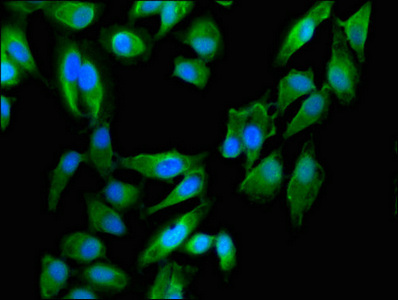
The antibody against DST was raised in rabbit using the Recombinant Human Dystonin protein (1-195AA) as the immunogen. This antibody exists as a non-conjugated isotype IgG, purified by protein G with a purity greater than 95%. This antibody has been validated on ELISA, WB, IF.

ADC-12262A

The antibody against DST was raised in rabbit using the Recombinant Human Dystonin protein (1-195AA) as the immunogen. This antibody exists as a non-conjugated isotype IgG, purified by protein G with a purity greater than 95%. This antibody has been validated on ELISA, WB, IF.

$299.00

Number
Order Exclusive Products Now

Request a Quote
High Purity LevelsPrecision and ReliabilityCustomization Options

Specifications


Cat.No ADC-12262A ClonalityPolyclonal
Host SpeciesRabbitTarget NameDST
FormLiquidSpecies ReactivityHuman
IsotypeIgGStorage Buffer0.01M PBS, 0.03% Proclin 300; Constituents: 50% Glycerol, PH 7.4
Purification Method>95%, Protein G purifiedConjugateNon-conjugated
ApplicationELISA, IF, WBStorageUpon receipt

Immunogen Information


Immunogen DescriptionRecombinant Human Dystonin protein (1-195AA)Target SpeciesHuman
Immunogen SequenceComplete sequences for the immunogen, target protein, and peptides are available upon request.Uniprot IDQ03001
Background Information
  • Uniprot Id

    Q03001

  • Target Species

    Human

  • Target Name

    DST

  • Target Full Name

    Dystonin

  • Target Function

    Cytoskeletal linker protein. Acts as an integrator of intermediate filaments, actin and microtubule cytoskeleton networks. Required for anchoring either intermediate filaments to the actin cytoskeleton in neural and muscle cells or keratin-containing intermediate filaments to hemidesmosomes in epithelial cells. The proteins may self-aggregate to form filaments or a two-dimensional mesh. Regulates the organization and stability of the microtubule network of sensory neurons to allow axonal transport. Mediates docking of the dynein/dynactin motor complex to vesicle cargos for retrograde axonal transport through its interaction with TMEM108 and DCTN1.; plays a structural role in the assembly of hemidesmosomes of epithelial cells; anchors keratin-containing intermediate filaments to the inner plaque of hemidesmosomes. Required for the regulation of keratinocyte polarity and motility; mediates integrin ITGB4 regulation of RAC1 activity.; required for bundling actin filaments around the nucleus.; regulates the organization and stability of the microtubule network of sensory neurons to allow axonal transport.

  • Target Involvement

    Neuropathy, hereditary sensory and autonomic, 6 (HSAN6); Epidermolysis bullosa simplex, autosomal recessive 2 (EBSB2)

  • Target Subcellular Location

    Cytoplasm, cytoskeleton. Cytoplasm, cytoskeleton, stress fiber. Cell projection, axon.; [Isoform 1]: Cytoplasm, cytoskeleton. Cytoplasm, myofibril, sarcomere, Z line. Cytoplasm, myofibril, sarcomere, H zone.; [Isoform 2]: Cytoplasm, cytoskeleton.; [Isoform 3]: Cytoplasm, cytoskeleton. Cell junction, hemidesmosome.; [Isoform 6]: Nucleus. Nucleus envelope. Membrane; Single-pass membrane protein. Endoplasmic reticulum membrane; Single-pass membrane protein. Cytoplasm, cytoskeleton. Cytoplasm, cytoskeleton, stress fiber.; [Isoform 7]: Cytoplasm, cytoskeleton. Cell projection, axon. Membrane. Note=Associates with axonal microtubules and intermediate filaments, but not with actin cytoskeleton, in sensory neurons.; [Isoform 8]: Cytoplasm, cytoskeleton. Cytoplasm, cell cortex. Cell membrane; Lipid-anchor.

  • Target Tissue Specificity

    Isoform 1 is expressed in myoblasts (at protein level). Isoform 3 is expressed in the skin. Isoform 6 is expressed in the brain. Highly expressed in skeletal muscle and cultured keratinocytes.

  • Target Research Area

    Signal Transduction

  • Target Synonyms

    DST; BP230; BP240; BPAG1; DMH; DT; KIAA0728Dystonin; 230 kDa bullous pemphigoid antigen; 230/240 kDa bullous pemphigoid antigen; Bullous pemphigoid antigen 1; BPA; Bullous pemphigoid antigen; Dystonia musculorum protein; Hemidesmosomal plaque protein

  • Target Background

    This gene encodes a member of the plakin protein family of adhesion junction plaque proteins. Multiple alternatively spliced transcript variants encoding distinct isoforms have been found for this gene, but the full-length nature of some variants has not been defined. It has been reported that some isoforms are expressed in neural and muscle tissue, anchoring neural intermediate filaments to the actin cytoskeleton, and some isoforms are expressed in epithelial tissue, anchoring keratin-containing intermediate filaments to hemidesmosomes. Consistent with the expression, mice defective for this gene show skin blistering and neurodegeneration.

Inquire Rabbit anti-Human DST Polyclonal Antibody Now


AbTriva respects your privacy and protects your personal data in accordance with AbTriva. For more information, please see our data protection statement. *

Notification