-
Chinese (Simplified)
-
English
-
German
-
Korean
-
Spanish
Chinese (Simplified)
English
German
Korean
Spanish
Sign up for an account to enjoy easy online shopping and instant order tracking.
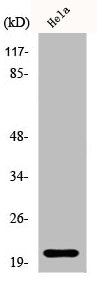
The antibody against EID1 was raised in rabbit using the Synthesized peptide derived from the Internal region of Human EID-1. as the immunogen. This antibody exists as a non-conjugated isotype IgG. The antibody was affinity-purified from rabbit antiserum by affinity-chromatography using epitope-specific immunogen. This antibody has been validated on WB, IHC, IF, ELISA.
$167.00
| Cat.No | ADC-38768A | Clonality | Polyclonal |
|---|---|---|---|
| Host Species | Rabbit | Target Name | EID1 |
| Form | Liquid | Species Reactivity | Human |
| Isotype | IgG | Storage Buffer | 0.5% BSA and 0.02% sodium azide., Liquid in PBS containing 50% glycerol |
| Purification Method | The antibody was affinity-purified from rabbit antiserum by affinity-chromatography using epitope-specific immunogen. | Conjugate | Non-conjugated |
| Application | ELISA, IF, IHC, WB | Storage | Upon receipt |
| Immunogen Description | Synthesized peptide derived from the Internal region of Human EID-1. | Target Species | Human |
|---|---|---|---|
| Immunogen Sequence | Complete sequences for the immunogen, target protein, and peptides are available upon request. | Uniprot ID | Q9Y6B2 |
Uniprot Id
Q9Y6B2
Target Species
Human
Target Name
EID1
Target Full Name
EP300-interacting inhibitor of differentiation 1
Target Function
Interacts with RB1 and EP300 and acts as a repressor of MYOD1 transactivation. Inhibits EP300 and CBP histone acetyltransferase activity. May be involved in coupling cell cycle exit to the transcriptional activation of genes required for cellular differentiation. May act as a candidate coinhibitory factor for NR0B2 that can be directly linked to transcription inhibitory mechanisms.
Target Subcellular Location
Nucleus. Cytoplasm.
Target Tissue Specificity
Widely expressed. Most abundantly expressed in heart, skeletal muscle, pancreas, brain and testis. Expressed at much lower levels in placenta and peripheral blood leukocyte. Barely detectable in lung. Also weakly expressed in lung carcinoma A-549 and vari
Notification