• Contact info@abtriva.com for inquiries and orders.
  • Chinese (Simplified)

  • English

  • German

  • Korean

  • Spanish

United States (English / $ USD)

Rabbit anti-Human EIF2S3 Polyclonal Antibody

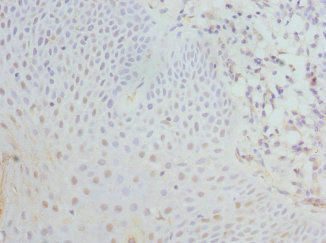
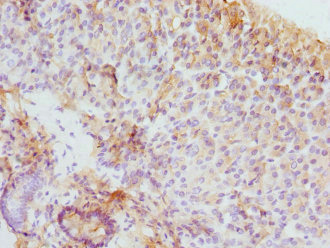
The antibody against EIF2S3 was raised in rabbit using the Recombinant Human Eukaryotic translation initiation factor 2 subunit 3 protein (173-472AA) as the immunogen. This antibody exists as a non-conjugated isotype IgG, Antigen affinity purified. This antibody has been validated on ELISA, WB, IHC.

ADC-17457A

The antibody against EIF2S3 was raised in rabbit using the Recombinant Human Eukaryotic translation initiation factor 2 subunit 3 protein (173-472AA) as the immunogen. This antibody exists as a non-conjugated isotype IgG, Antigen affinity purified. This antibody has been validated on ELISA, WB, IHC.

$299.00

Number
Order Exclusive Products Now

Request a Quote
High Purity LevelsPrecision and ReliabilityCustomization Options

Specifications


Cat.No ADC-17457A ClonalityPolyclonal
Host SpeciesRabbitTarget NameEIF2S3
FormLiquidSpecies ReactivityHuman
IsotypeIgGStorage Buffer50% Glycerol, PBS with 0.02% sodium azide, pH7.3.
Purification MethodAntigen affinity purifiedConjugateNon-conjugated
ApplicationELISA, IHC, WBStorageUpon receipt

Immunogen Information


Immunogen DescriptionRecombinant Human Eukaryotic translation initiation factor 2 subunit 3 protein (173-472AA)Target SpeciesHuman
Immunogen SequenceComplete sequences for the immunogen, target protein, and peptides are available upon request.Uniprot IDP41091
Background Information
  • Uniprot Id

    P41091

  • Target Species

    Human

  • Target Name

    EIF2S3

  • Target Full Name

    Eukaryotic translation initiation factor 2 subunit 3

  • Target Function

    As a subunit of eukaryotic initiation factor 2 (eIF-2), involved in the early steps of protein synthesis. In the presence of GTP, eIF-2 forms a ternary complex with initiator tRNA Met-tRNAi and then recruits the 40S ribosomal complex and initiation factors eIF-1, eIF-1A and eIF-3 to form the 43S pre-initiation complex (43S PIC), a step that determines the rate of protein translation. The 43S PIC binds to mRNA and scans downstream to the initiation codon, where it forms a 48S initiation complex by codon-anticodon base pairing. This leads to the displacement of eIF-1 to allow GTPase-activating protein (GAP) eIF-5-mediated hydrolysis of eIF2-bound GTP. Hydrolysis of GTP and release of Pi, which makes GTP hydrolysis irreversible, causes the release of the eIF-2-GDP binary complex from the 40S subunit, an event that is essential for the subsequent joining of the 60S ribosomal subunit to form an elongation-competent 80S ribosome. In order for eIF-2 to recycle and catalyze another round of initiation, the GDP bound to eIF-2 must be exchanged with GTP by way of a reaction catalyzed by GDP-GTP exchange factor (GEF) eIF-2B. Along with its paralog on chromosome Y, may contribute to spermatogenesis up to the round spermatid stage.

  • Target Involvement

    MEHMO syndrome (MEHMO)

  • Target Protein Families

    TRAFAC class translation factor GTPase superfamily, Classic translation factor GTPase family, EIF2G subfamily

  • Target Tissue Specificity

    Expressed in testis, brain, liver and muscle.

  • Target Synonyms

    eIF-2-gamma X; eIF-2gA; eIF-2gX; EIF2; EIF2G; EIF2gamma; EIF2S3; Eukaryotic translation initiation factor 2 gamma; Eukaryotic translation initiation factor 2 gamma subunit; Eukaryotic translation initiation factor 2 subunit 3; Eukaryotic translation initiation factor 2 subunit 3 gamma 52kDa; Eukaryotic translation initiation factor 2 subunit gamma X; IF2G_HUMAN

  • Target Background

    The protein encoded by this gene is the largest subunit of a heterotrimeric GTP-binding protein involved in the recruitment of methionyl-tRNA(i) to the 40 S ribosomal subunit.

Inquire Rabbit anti-Human EIF2S3 Polyclonal Antibody Now


AbTriva respects your privacy and protects your personal data in accordance with AbTriva. For more information, please see our data protection statement. *

Notification