-
Chinese (Simplified)
-
English
-
German
-
Korean
-
Spanish

Chinese (Simplified)
English
German
Korean
Spanish
Sign up for an account to enjoy easy online shopping and instant order tracking.
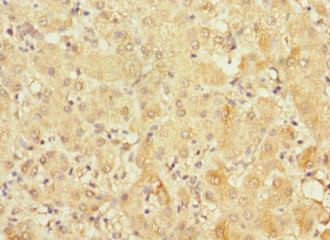
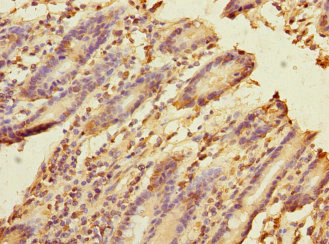
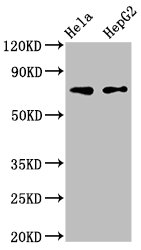
The antibody against FRMD6 was raised in rabbit using the Recombinant Human FERM domain-containing protein 6 protein (413-622AA) as the immunogen. This antibody exists as a non-conjugated isotype IgG, Antigen affinity purified. This antibody has been validated on ELISA, WB, IHC.
$299.00
| Cat.No | ADC-16552A | Clonality | Polyclonal |
|---|---|---|---|
| Host Species | Rabbit | Target Name | FRMD6 |
| Target Synonyms | FRMD6 antibody; C14orf31FERM domain-containing protein 6 antibody; Willin antibody | Form | Liquid |
| Species Reactivity | Human | Isotype | IgG |
| Storage Buffer | 50% Glycerol, PBS with 0.02% sodium azide, pH7.3. | Purification Method | Antigen affinity purified |
| Conjugate | Non-conjugated | Application | ELISA, IHC, WB |
| Storage | Upon receipt |
| Immunogen Description | Recombinant Human FERM domain-containing protein 6 protein (413-622AA) | Target Species | Human |
|---|---|---|---|
| Immunogen Sequence | Complete sequences for the immunogen, target protein, and peptides are available upon request. | Uniprot ID | Q96NE9 |
Uniprot Id
Q96NE9
Target Species
Human
Target Name
FRMD6
Target Full Name
FERM domain-containing protein 6
Target Subcellular Location
Cytoplasm. Cell membrane; Peripheral membrane protein; Cytoplasmic side. Note=Can colocalize with actin.
Target Synonyms
FRMD6; C14orf31FERM domain-containing protein 6; Willin
Target Background
Predicted to be involved in actomyosin structure organization. Predicted to act upstream of or within apical constriction; cellular protein localization; and regulation of actin filament-based process. Predicted to be located in apical junction complex. Predicted to be active in cytoskeleton.
Notification