-
Chinese (Simplified)
-
English
-
German
-
Korean
-
Spanish
Chinese (Simplified)
English
German
Korean
Spanish
Sign up for an account to enjoy easy online shopping and instant order tracking.
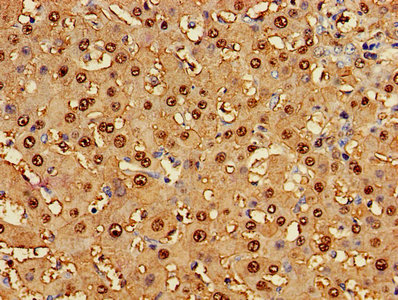
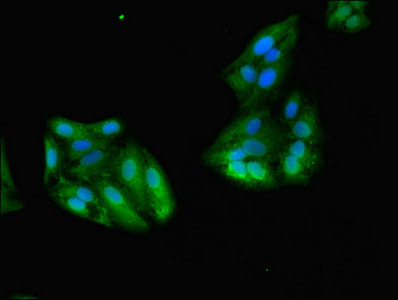
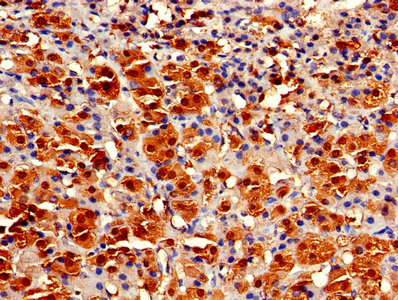
The antibody against GSTA1 was raised in rabbit using the Recombinant Human Glutathione S-transferase A1 protein (2-222AA) as the immunogen. This antibody exists as a non-conjugated isotype IgG, purified by protein G with a purity greater than 95%. This antibody has been validated on ELISA, IHC, IF.
$299.00
| Cat.No | ADC-22009A | Clonality | Polyclonal |
|---|---|---|---|
| Host Species | Rabbit | Target Name | Gsta1 |
| Form | Liquid | Species Reactivity | Human |
| Isotype | IgG | Storage Buffer | 0.01M PBS, 0.03% Proclin 300; Constituents: 50% Glycerol, PH 7.4 |
| Purification Method | >95%, Protein G purified | Conjugate | Non-conjugated |
| Application | ELISA, IF, IHC | Storage | Upon receipt |
| Immunogen Description | Recombinant Human Glutathione S-transferase A1 protein (2-222AA) | Target Species | Human |
|---|---|---|---|
| Immunogen Sequence | Complete sequences for the immunogen, target protein, and peptides are available upon request. | Uniprot ID | P08263 |
Uniprot Id
P08263
Target Species
Human
Target Name
GSTA1
Target Full Name
Glutathione S-transferase A1
Target Function
Glutathione S-transferase that catalyzes the nucleophilic attack of the sulfur atom of glutathione on the electrophilic groups of a wide range of exogenous and endogenous compounds (Probable). Involved in the formation of glutathione conjugates of both prostaglandin A2 (PGA2) and prostaglandin J2 (PGJ2). It also catalyzes the isomerization of D5-androstene-3,17-dione (AD) into D4-androstene-3,17-dione and may therefore play an important role in hormone biosynthesis. Through its glutathione-dependent peroxidase activity toward the fatty acid hydroperoxide (13S)-hydroperoxy-(9Z,11E)-octadecadienoate/13-HPODE it is also involved in the metabolism of oxidized linoleic acid.
Target Subcellular Location
Cytoplasm.
Target Protein Families
GST superfamily, Alpha family
Target Tissue Specificity
Liver.
Target Synonyms
Glutathione S alkyltransferase A1; Glutathione S aryltransferase A1; Glutathione S transferase 2; Glutathione S transferase A1; Glutathione S transferase alpha 1; Glutathione S transferase Ha subunit 1; Glutathione S-transferase A1; GST class-alpha member 1; GST epsilon; GST HA subunit 1; GST; class alpha; 1; GST-epsilon; GST2; GSTA1 1; GSTA1; GSTA1-1; GSTA1_HUMAN; GTH1; HA subunit 1; MGC131939; OTTHUMP00000016611; S (hydroxyalkyl)glutathione lyase A1
Target Background
This gene encodes a member of a family of enzymes that function to add glutathione to target electrophilic compounds, including carcinogens, therapeutic drugs, environmental toxins, and products of oxidative stress. This action is an important step in detoxification of these compounds. This subfamily of enzymes has a particular role in protecting cells from reactive oxygen species and the products of peroxidation. Polymorphisms in this gene influence the ability of individuals to metabolize different drugs. This gene is located in a cluster of similar genes and pseudogenes on chromosome 6. Alternative splicing results in multiple transcript variants.
Notification