• Contact info@abtriva.com for inquiries and orders.
  • Chinese (Simplified)

  • English

  • German

  • Korean

  • Spanish

United States (English / $ USD)

Rabbit anti-Human HTRA1 Polyclonal Antibody

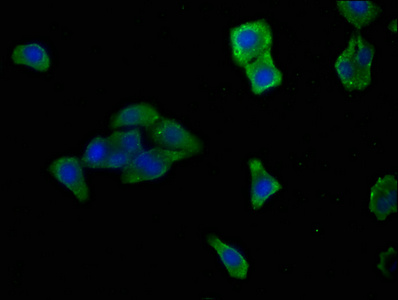
The antibody against HTRA1 was raised in rabbit using the Recombinant Human Serine protease HTRA1 protein (23-248AA) as the immunogen. This antibody exists as a non-conjugated isotype IgG, purified by protein G with a purity greater than 95%. This antibody has been validated on ELISA, IHC, IF.

ADC-00827A

The antibody against HTRA1 was raised in rabbit using the Recombinant Human Serine protease HTRA1 protein (23-248AA) as the immunogen. This antibody exists as a non-conjugated isotype IgG, purified by protein G with a purity greater than 95%. This antibody has been validated on ELISA, IHC, IF.

$299.00

Number
Order Exclusive Products Now

Request a Quote
High Purity LevelsPrecision and ReliabilityCustomization Options

Specifications


Cat.No ADC-00827A ClonalityPolyclonal
Host SpeciesRabbitTarget NameHTRA1
FormLiquidSpecies ReactivityHuman
IsotypeIgGStorage Buffer0.01M PBS, 0.03% Proclin 300; Constituents: 50% Glycerol, PH 7.4
Purification Method>95%, Protein G purifiedConjugateNon-conjugated
ApplicationELISA, IF, IHCStorageUpon receipt

Immunogen Information


Immunogen DescriptionRecombinant Human Serine protease HTRA1 protein (23-248AA)Target SpeciesHuman
Immunogen SequenceComplete sequences for the immunogen, target protein, and peptides are available upon request.Uniprot IDQ92743
Background Information
  • Uniprot Id

    Q92743

  • Target Species

    Human

  • Target Name

    HTRA1

  • Target Full Name

    Serine protease HTRA1

  • Target Function

    Serine protease with a variety of targets, including extracellular matrix proteins such as fibronectin. HTRA1-generated fibronectin fragments further induce synovial cells to up-regulate MMP1 and MMP3 production. May also degrade proteoglycans, such as aggrecan, decorin and fibromodulin. Through cleavage of proteoglycans, may release soluble FGF-glycosaminoglycan complexes that promote the range and intensity of FGF signals in the extracellular space. Regulates the availability of insulin-like growth factors (IGFs) by cleaving IGF-binding proteins. Inhibits signaling mediated by TGF-beta family members. This activity requires the integrity of the catalytic site, although it is unclear whether TGF-beta proteins are themselves degraded. By acting on TGF-beta signaling, may regulate many physiological processes, including retinal angiogenesis and neuronal survival and maturation during development. Intracellularly, degrades TSC2, leading to the activation of TSC2 downstream targets.

  • Target Involvement

    Macular degeneration, age-related, 7 (ARMD7); Cerebral arteriopathy, autosomal recessive, with subcortical infarcts and leukoencephalopathy (CARASIL); Cerebral arteriopathy, autosomal dominant, with subcortical infarcts and leukoencephalopathy, 2 (CADASIL2)

  • Target Subcellular Location

    Cell membrane. Secreted. Cytoplasm, cytosol.

  • Target Protein Families

    Peptidase S1C family

  • Target Tissue Specificity

    Widely expressed, with strongest expression in placenta (at protein level). Secreted by synovial fibroblasts. Up-regulated in osteoarthritis and rheumatoid arthritis synovial fluids and cartilage as compared with non-arthritic (at protein level).

  • Target Research Area

    Signal Transduction

  • Target Synonyms

    ARMD7; CARASIL; High-temperature requirement A serine peptidase 1; HtrA; HtrA serine peptidase 1; HTRA1; HTRA1_HUMAN; IGFBP5 protease; L56; ORF480; Protease serine 11 (IGF binding); protease serine 11; PRSS11 ; Serine protease 11; Serine protease HTRA1; Serine protease HTRA1 precursor

  • Target Background

    This gene encodes a member of the trypsin family of serine proteases. This protein is a secreted enzyme that is proposed to regulate the availability of insulin-like growth factors (IGFs) by cleaving IGF-binding proteins. It has also been suggested to be a regulator of cell growth. Variations in the promoter region of this gene are the cause of susceptibility to age-related macular degeneration type 7.

Inquire Rabbit anti-Human HTRA1 Polyclonal Antibody Now


AbTriva respects your privacy and protects your personal data in accordance with AbTriva. For more information, please see our data protection statement. *

Notification