• Contact info@abtriva.com for inquiries and orders.
  • Chinese (Simplified)

  • English

  • German

  • Korean

  • Spanish

United States (English / $ USD)

Rabbit anti-Human IL36G Polyclonal Antibody

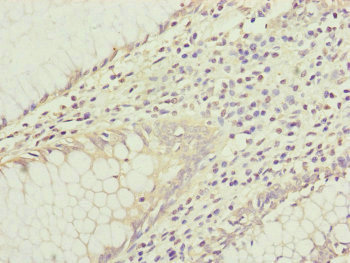
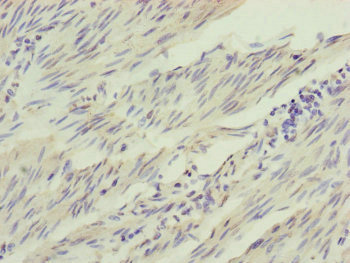
The antibody against IL36G was raised in rabbit using the Recombinant Human Interleukin-36 gamma protein (1-169AA) as the immunogen. This antibody exists as a non-conjugated isotype IgG, Antigen affinity purified. This antibody has been validated on ELISA, IHC.

ADC-16707A

The antibody against IL36G was raised in rabbit using the Recombinant Human Interleukin-36 gamma protein (1-169AA) as the immunogen. This antibody exists as a non-conjugated isotype IgG, Antigen affinity purified. This antibody has been validated on ELISA, IHC.

$299.00

Number
Order Exclusive Products Now

Request a Quote
High Purity LevelsPrecision and ReliabilityCustomization Options

Specifications


Cat.No ADC-16707A ClonalityPolyclonal
Host SpeciesRabbitTarget NameIL36G
FormLiquidSpecies ReactivityHuman
IsotypeIgGStorage Buffer50% Glycerol, PBS with 0.02% sodium azide, pH7.3.
Purification MethodAntigen affinity purifiedConjugateNon-conjugated
ApplicationELISA, IHCStorageUpon receipt

Immunogen Information


Immunogen DescriptionRecombinant Human Interleukin-36 gamma protein (1-169AA)Target SpeciesHuman
Immunogen SequenceComplete sequences for the immunogen, target protein, and peptides are available upon request.Uniprot IDQ9NZH8
Background Information
  • Uniprot Id

    Q9NZH8

  • Target Species

    Human

  • Target Name

    IL36G

  • Target Full Name

    Interleukin-36 gamma

  • Target Function

    Cytokine that binds to and signals through the IL1RL2/IL-36R receptor which in turn activates NF-kappa-B and MAPK signaling pathways in target cells. Part of the IL-36 signaling system that is thought to be present in epithelial barriers and to take part in local inflammatory response; similar to the IL-1 system with which it shares the coreceptor IL1RAP. Seems to be involved in skin inflammatory response by acting on keratinocytes, dendritic cells and indirectly on T-cells to drive tissue infiltration, cell maturation and cell proliferation. In cultured keratinocytes induces the expression of macrophage, T-cell, and neutrophil chemokines, such as CCL3, CCL4, CCL5, CCL2, CCL17, CCL22, CL20, CCL5, CCL2, CCL17, CCL22, CXCL8, CCL20 and CXCL1; also stimulates its own expression and that of the prototypic cutaneous proinflammatory parameters TNF-alpha, S100A7/psoriasin and inducible NOS. May play a role in proinflammatory responses during particular neutrophilic airway inflammation: activates mitogen-activated protein kinases and NF-kappa B in primary lung fibroblasts, and stimulates the expression of IL-8 and CXCL3 and Th17 chemokine CCL20 in lung fibroblasts. May be involved in the innate immune response to fungal pathogens, such as Aspergillus fumigatus.

  • Target Subcellular Location

    Cytoplasm. Secreted.

  • Target Protein Families

    IL-1 family

  • Target Tissue Specificity

    Highly expressed in tissues containing epithelial cells: skin, lung, stomach and esophagus. Expressed in bronchial epithelial. In skin is expressed only in keratinocytes but not in fibroblasts, endothelial cells or melanocytes. Up-regulated in lesional ps

  • Target Research Area

    Immunology

  • Target Synonyms

    IL 1 epsilon; IL 1 related protein 2; IL 1(EPSILON); IL 1F9; IL 1H1; IL 1RP2; IL-1 epsilon; IL-1-related protein 2; IL-1F9; IL-1H1; IL-1RP2; IL1E; Il1f9; IL1F9_HUMAN; IL1H1; IL1RP2; IL36 gamma; IL36G; Interleukin 1 epsilon; Interleukin 1 family member 9; Interleukin 1 homolog 1; Interleukin 1 related protein 2; Interleukin 36 gamma; Interleukin-1 epsilon; Interleukin-1 family member 9; Interleukin-1 homolog 1

  • Target Background

    The protein encoded by this gene is a member of the interleukin 1 cytokine family. The activity of this cytokine is mediated by interleukin 1 receptor-like 2 (IL1RL2/IL1R-rp2), and is specifically inhibited by interleukin 1 family, member 5 (IL1F5/IL-1 delta). Interferon-gamma, tumor necrosis factor-alpha and interleukin 1, beta (IL1B) are reported to stimulate the expression of this cytokine in keratinocytes. The expression of this cytokine in keratinocytes can also be induced by a contact hypersensitivity reaction or herpes simplex virus infection. This gene and eight other interleukin 1 family genes form a cytokine gene cluster on chromosome 2.

Inquire Rabbit anti-Human IL36G Polyclonal Antibody Now


AbTriva respects your privacy and protects your personal data in accordance with AbTriva. For more information, please see our data protection statement. *

Notification