-
Chinese (Simplified)
-
English
-
German
-
Korean
-
Spanish
Chinese (Simplified)
English
German
Korean
Spanish
Sign up for an account to enjoy easy online shopping and instant order tracking.
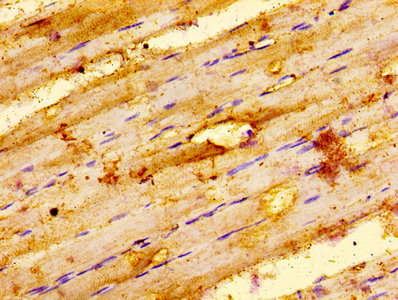
The antibody against ILK was raised in rabbit using the Recombinant Human Integrin-linked protein kinase protein (1-228AA) as the immunogen. This antibody exists as a non-conjugated isotype IgG, purified by protein G with a purity greater than 95%. This antibody has been validated on ELISA, WB, IHC, IF.
$299.00
| Cat.No | ADC-46351A | Clonality | Polyclonal |
|---|---|---|---|
| Host Species | Rabbit | Target Name | ILK |
| Form | Liquid | Species Reactivity | Human, Mouse, Rat |
| Isotype | IgG | Storage Buffer | 0.01M PBS, 0.03% Proclin 300; Constituents: 50% Glycerol, PH 7.4 |
| Purification Method | >95%, Protein G purified | Conjugate | Non-conjugated |
| Application | ELISA, IF, IHC, WB | Storage | Upon receipt |
| Immunogen Description | Recombinant Human Integrin-linked protein kinase protein (1-228AA) | Target Species | Human |
|---|---|---|---|
| Immunogen Sequence | Complete sequences for the immunogen, target protein, and peptides are available upon request. | Uniprot ID | Q13418 |
Uniprot Id
Q13418
Target Species
Human
Target Name
ILK
Target Full Name
Scaffold protein ILK
Target Function
Receptor-proximal protein kinase regulating integrin-mediated signal transduction. May act as a mediator of inside-out integrin signaling. Focal adhesion protein part of the complex ILK-PINCH. This complex is considered to be one of the convergence points of integrin- and growth factor-signaling pathway. Could be implicated in mediating cell architecture, adhesion to integrin substrates and anchorage-dependent growth in epithelial cells. Regulates cell motility by forming a complex with PARVB. Phosphorylates beta-1 and beta-3 integrin subunit on serine and threonine residues, but also AKT1 and GSK3B.
Target Subcellular Location
Cell junction, focal adhesion. Cell membrane; Peripheral membrane protein; Cytoplasmic side. Cell projection, lamellipodium. Cytoplasm, myofibril, sarcomere.
Target Protein Families
Protein kinase superfamily, TKL Ser/Thr protein kinase family
Target Tissue Specificity
Highly expressed in heart followed by skeletal muscle, pancreas and kidney. Weakly expressed in placenta, lung and liver.
Target Research Area
Signal Transduction
Target Synonyms
59 kDa serine/threonine protein kinase; 59 kDa serine/threonine-protein kinase; DKFZp686F1765 ; Epididymis secretory protein Li 28; HEL S 28; ILK 1; ILK 2; ILK; ILK-1; ILK-2; ILK_HUMAN; ILK1; ILK2; Integrin linked kinase 2; Integrin linked Kinase; Integrin linked protein kinase; Integrin-linked protein kinase; p59; p59ILK
Target Background
This gene encodes a protein with a kinase-like domain and four ankyrin-like repeats. The encoded protein associates at the cell membrane with the cytoplasmic domain of beta integrins, where it regulates integrin-mediated signal transduction. Activity of this protein is important in the epithelial to mesenchymal transition, and over-expression of this gene is implicated in tumor growth and metastasis. Alternative splicing results in multiple transcript variants.
Notification