• Contact info@abtriva.com for inquiries and orders.
  • Chinese (Simplified)

  • English

  • German

  • Korean

  • Spanish

United States (English / $ USD)

Rabbit anti-Human INVS Polyclonal Antibody

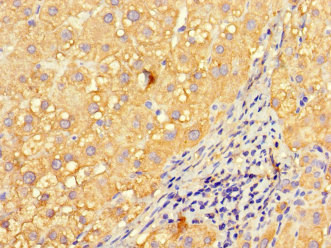
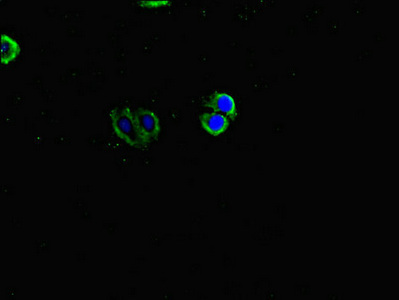
The antibody against INVS was raised in rabbit using the Recombinant Human Inversin protein (1-101AA) as the immunogen. This antibody exists as a non-conjugated isotype IgG, purified by protein G with a purity greater than 95%. This antibody has been validated on ELISA, WB, IHC, IF.

ADC-15947A

The antibody against INVS was raised in rabbit using the Recombinant Human Inversin protein (1-101AA) as the immunogen. This antibody exists as a non-conjugated isotype IgG, purified by protein G with a purity greater than 95%. This antibody has been validated on ELISA, WB, IHC, IF.

$299.00

Number
Order Exclusive Products Now

Request a Quote
High Purity LevelsPrecision and ReliabilityCustomization Options

Specifications


Cat.No ADC-15947A ClonalityPolyclonal
Host SpeciesRabbitTarget NameINVS
Target SynonymsINVS antibody; INV antibody; NPHP2 antibody; Inversin antibody; Inversion of embryo turning homolog antibody; Nephrocystin-2 antibodyFormLiquid
Species ReactivityHumanIsotypeIgG
Storage Buffer0.01M PBS, 0.03% Proclin 300; Constituents: 50% Glycerol, PH 7.4Purification Method>95%, Protein G purified
ConjugateNon-conjugatedApplicationELISA, IF, IHC, WB
StorageUpon receipt

Immunogen Information


Immunogen DescriptionRecombinant Human Inversin protein (1-101AA)Target SpeciesHuman
Immunogen SequenceComplete sequences for the immunogen, target protein, and peptides are available upon request.Uniprot IDQ9Y283
Background Information
  • Uniprot Id

    Q9Y283

  • Target Species

    Human

  • Target Name

    INVS

  • Target Full Name

    Inversin

  • Target Function

    Required for normal renal development and establishment of left-right axis. Probably acts as a molecular switch between different Wnt signaling pathways. Inhibits the canonical Wnt pathway by targeting cytoplasmic disheveled (DVL1) for degradation by the ubiquitin-proteasome. This suggests that it is required in renal development to oppose the repression of terminal differentiation of tubular epithelial cells by Wnt signaling. Involved in the organization of apical junctions in kidney cells together with NPHP1, NPHP4 and RPGRIP1L/NPHP8. Does not seem to be strictly required for ciliogenesis.

  • Target Involvement

    Nephronophthisis 2 (NPHP2)

  • Target Subcellular Location

    Cytoplasm. Cytoplasm, cytoskeleton. Cytoplasm, cytoskeleton, spindle. Membrane; Peripheral membrane protein. Nucleus. Cell projection, cilium. Note=Associates with several components of the cytoskeleton including ciliary, random and polarized microtubules. During mitosis, it is recruited to mitotic spindle. Frequently membrane-associated, membrane localization is dependent upon cell-cell contacts and is redistributed when cell adhesion is disrupted after incubation of the cell monolayer with low-calcium/EGTA medium.

  • Target Tissue Specificity

    Widely expressed. Strongly expressed in the primary cilia of renal tubular cells.

  • Target Synonyms

    INVS; INV; NPHP2; Inversin; Inversion of embryo turning homolog; Nephrocystin-2

  • Target Background

    This gene encodes a protein containing multiple ankyrin domains and two IQ calmodulin-binding domains. The encoded protein may function in renal tubular development and function, and in left-right axis determination. This protein interacts with nephrocystin and infers a connection between primary cilia function and left-right axis determination. A similar protein in mice interacts with calmodulin. Mutations in this gene have been associated with nephronophthisis type 2. Multiple transcript variants encoding distinct isoforms have been identified for this gene.

Inquire Rabbit anti-Human INVS Polyclonal Antibody Now


AbTriva respects your privacy and protects your personal data in accordance with AbTriva. For more information, please see our data protection statement. *

Notification