-
Chinese (Simplified)
-
English
-
German
-
Korean
-
Spanish
Chinese (Simplified)
English
German
Korean
Spanish
Sign up for an account to enjoy easy online shopping and instant order tracking.
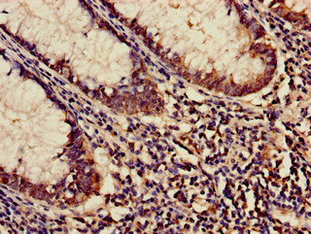
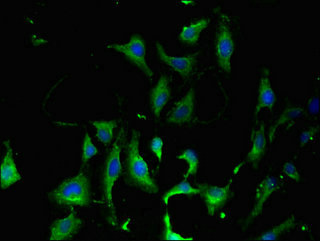
The antibody against KARS was raised in rabbit using the Recombinant Human Lysine--tRNA ligase protein (101-400AA) as the immunogen. This antibody exists as a non-conjugated isotype IgG, purified by protein G with a purity greater than 95%. This antibody has been validated on ELISA, WB, IHC, IF.
The antibody against KARS was raised in rabbit using the Recombinant Human Lysine–tRNA ligase protein (101-400AA) as the immunogen. This antibody exists as a non-conjugated isotype IgG, purified by protein G with a purity greater than 95%. This antibody has been validated on ELISA, WB, IHC, IF.
$299.00
| Cat.No | ADC-20856A | Clonality | Polyclonal |
|---|---|---|---|
| Host Species | Rabbit | Target Name | KARS |
| Form | Liquid | Species Reactivity | Human |
| Isotype | IgG | Storage Buffer | 0.01M PBS, 0.03% Proclin 300; Constituents: 50% Glycerol, PH 7.4 |
| Purification Method | >95%, Protein G purified | Conjugate | Non-conjugated |
| Application | ELISA, IF, IHC, WB | Storage | Upon receipt |
| Immunogen Description | Recombinant Human Lysine--tRNA ligase protein (101-400AA) | Target Species | Human |
|---|---|---|---|
| Immunogen Sequence | Complete sequences for the immunogen, target protein, and peptides are available upon request. | Uniprot ID | Q15046 |
Uniprot Id
Q15046
Target Species
Human
Target Name
KARS1
Target Full Name
Lysine--tRNA ligase
Target Function
Catalyzes the specific attachment of an amino acid to its cognate tRNA in a 2 step reaction: the amino acid (AA) is first activated by ATP to form AA-AMP and then transferred to the acceptor end of the tRNA. When secreted, acts as a signaling molecule that induces immune response through the activation of monocyte/macrophages. Catalyzes the synthesis of the signaling molecule diadenosine tetraphosphate (Ap4A), and thereby mediates disruption of the complex between HINT1 and MITF and the concomitant activation of MITF transcriptional activity.; (Microbial infection) Interacts with HIV-1 virus GAG protein, facilitating the selective packaging of tRNA(3)(Lys), the primer for reverse transcription initiation.
Target Involvement
Charcot-Marie-Tooth disease, recessive, intermediate type, B (CMTRIB); Deafness, autosomal recessive, 89 (DFNB89)
Target Subcellular Location
[Isoform Cytoplasmic]: Cytoplasm, cytosol. Cytoplasm. Nucleus. Cell membrane; Peripheral membrane protein. Secreted.; [Isoform Mitochondrial]: Mitochondrion.
Target Protein Families
Class-II aminoacyl-tRNA synthetase family
Target Synonyms
CMTRIB; DFNB89; EC 6.1.1.6; KARS 1; KARS 2; KARS; KARS1; KARS2; KIAA0070; KRS; Lysine tRNA ligase; Lysine--tRNA ligase; LysRS; Lysyl tRNA synthetase; Lysyl-tRNA synthetase; SYK_HUMAN
Target Background
Aminoacyl-tRNA synthetases are a class of enzymes that charge tRNAs with their cognate amino acids. Lysyl-tRNA synthetase is a homodimer localized to the cytoplasm which belongs to the class II family of tRNA synthetases. It has been shown to be a target of autoantibodies in the human autoimmune diseases, polymyositis or dermatomyositis. Alternatively spliced transcript variants encoding different isoforms have been found for this gene.
Notification