• Contact info@abtriva.com for inquiries and orders.
  • Chinese (Simplified)

  • English

  • German

  • Korean

  • Spanish

United States (English / $ USD)

Rabbit anti-Human KLRD1 Polyclonal Antibody

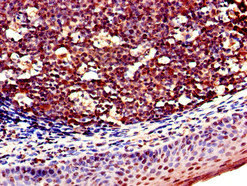
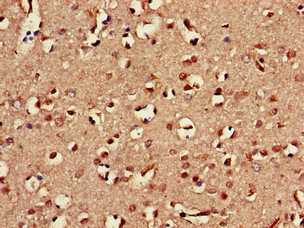
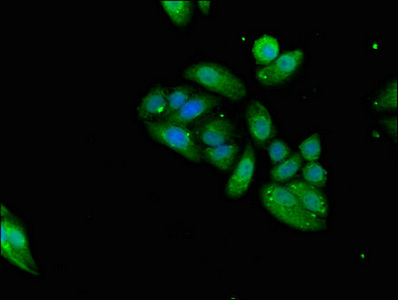
The antibody against KLRD1 was raised in rabbit using the Recombinant Human Natural killer cells antigen CD94 protein (42-168AA) as the immunogen. This antibody exists as a non-conjugated isotype IgG, purified by protein G with a purity greater than 95%. This antibody has been validated on ELISA, IHC, IF.

ADC-11353A

The antibody against KLRD1 was raised in rabbit using the Recombinant Human Natural killer cells antigen CD94 protein (42-168AA) as the immunogen. This antibody exists as a non-conjugated isotype IgG, purified by protein G with a purity greater than 95%. This antibody has been validated on ELISA, IHC, IF.

$299.00

Number
Order Exclusive Products Now

Request a Quote
High Purity LevelsPrecision and ReliabilityCustomization Options

Specifications


Cat.No ADC-11353A ClonalityPolyclonal
Host SpeciesRabbitTarget NameKLRD1
FormLiquidSpecies ReactivityHuman
IsotypeIgGStorage Buffer0.01M PBS, 0.03% Proclin 300; Constituents: 50% Glycerol, PH 7.4
Purification Method>95%, Protein G purifiedConjugateNon-conjugated
ApplicationELISA, IF, IHCStorageUpon receipt

Immunogen Information


Immunogen DescriptionRecombinant Human Natural killer cells antigen CD94 protein (42-168AA)Target SpeciesHuman
Immunogen SequenceComplete sequences for the immunogen, target protein, and peptides are available upon request.Uniprot IDQ13241
Background Information
  • Uniprot Id

    Q13241

  • Target Species

    Human

  • Target Name

    KLRD1

  • Target Full Name

    Natural killer cells antigen CD94

  • Target Function

    Immune receptor involved in self-nonself discrimination. In complex with KLRC1 or KLRC2 on cytotoxic and regulatory lymphocyte subsets, recognizes non-classical major histocompatibility (MHC) class Ib molecule HLA-E loaded with self-peptides derived from the signal sequence of classical MHC class Ia and non-classical MHC class Ib molecules. Enables cytotoxic cells to monitor the expression of MHC class I molecules in healthy cells and to tolerate self. Primarily functions as a ligand binding subunit as it lacks the capacity to signal.; KLRD1-KLRC1 acts as an immune inhibitory receptor. Key inhibitory receptor on natural killer (NK) cells that regulates their activation and effector functions. Dominantly counteracts T cell receptor signaling on a subset of memory/effector CD8-positive T cells as part of an antigen-driven response to avoid autoimmunity. On intraepithelial CD8-positive gamma-delta regulatory T cells triggers TGFB1 secretion, which in turn limits the cytotoxic programming of intraepithelial CD8-positive alpha-beta T cells, distinguishing harmless from pathogenic antigens. In HLA-E-rich tumor microenvironment, acts as an immune inhibitory checkpoint and may contribute to progressive loss of effector functions of NK cells and tumor-specific T cells, a state known as cell exhaustion. Upon HLA-E-peptide binding, transmits intracellular signals through KLRC1 immunoreceptor tyrosine-based inhibition motifs (ITIMs) by recruiting INPP5D/SHIP-1 and INPPL1/SHIP-2 tyrosine phosphatases to ITIMs, and ultimately opposing signals transmitted by activating receptors through dephosphorylation of proximal signaling molecules.; KLRD1-KLRC2 acts as an immune activating receptor. On cytotoxic lymphocyte subsets recognizes HLA-E loaded with signal sequence-derived peptides from non-classical MHC class Ib HLA-G molecules, likely playing a role in the generation and effector functions of adaptive NK cells and in maternal-fetal tolerance during pregnancy. Regulates the effector functions of terminally differentiated cytotoxic lymphocyte subsets, and in particular may play a role in adaptive NK cell response to viral infection. Upon HLA-E-peptide binding, transmits intracellular signals via the adapter protein TYROBP/DAP12, triggering the phosphorylation of proximal signaling molecules and cell activation.; (Microbial infection) Viruses like human cytomegalovirus have evolved an escape mechanism whereby virus-induced down-regulation of host MHC class I molecules is coupled to the binding of viral peptides to HLA-E, restoring HLA-E expression and inducing HLA-E-dependent NK cell immune tolerance to infected cells. Recognizes HLA-E in complex with human cytomegalovirus UL40-derived peptide (VMAPRTLIL) and inhibits NK cell cytotoxicity.; (Microbial infection) May recognize HLA-E in complex with HIV-1 gag/Capsid protein p24-derived peptide (AISPRTLNA) on infected cells and may inhibit NK cell cytotoxicity, a mechanism that allows HIV-1 to escape immune recognition.; (Microbial infection) Upon SARS-CoV-2 infection, may contribute to functional exhaustion of cytotoxic NK cells and CD8-positive T cells. On NK cells, may recognize HLA-E in complex with SARS-CoV-2 S/Spike protein S1-derived peptide (LQPRTFLL) expressed on the surface of lung epithelial cells, inducing NK cell exhaustion and dampening antiviral immune surveillance.

  • Target Subcellular Location

    Cell membrane; Single-pass type II membrane protein.

  • Target Tissue Specificity

    Expressed in NK cell subsets (at protein level). Expressed in memory/effector CD8-positive alpha-beta T cell subsets (at protein level). Expressed in melanoma-specific cytotoxic T cell clones (at protein level). Expressed in terminally differentiated cyto

  • Target Synonyms

    CD 94; CD94; CD94 antigen; Killer cell lectin like receptor subfamily D member 1; Killer cell lectin-like receptor subfamily D member 1; KLRD 1; KLRD1; KLRD1 protein; KLRD1_HUMAN; KP 43; KP43; Natural killer cells antigen CD94; NK cell receptor; OTTHUMP00000238754; OTTHUMP00000238755; OTTHUMP00000238756; OTTHUMP00000238758; OTTHUMP00000239093

  • Target Background

    Natural killer (NK) cells are a distinct lineage of lymphocytes that mediate cytotoxic activity and secrete cytokines upon immune stimulation. Several genes of the C-type lectin superfamily, including members of the NKG2 family, are expressed by NK cells and may be involved in the regulation of NK cell function. KLRD1 (CD94) is an antigen preferentially expressed on NK cells and is classified as a type II membrane protein because it has an external C terminus. Several transcript variants encoding different isoforms have been found for this gene.

Inquire Rabbit anti-Human KLRD1 Polyclonal Antibody Now


AbTriva respects your privacy and protects your personal data in accordance with AbTriva. For more information, please see our data protection statement. *

Notification