• Contact info@abtriva.com for inquiries and orders.
  • Chinese (Simplified)

  • English

  • German

  • Korean

  • Spanish

United States (English / $ USD)

Rabbit anti-Human NAIP Polyclonal Antibody

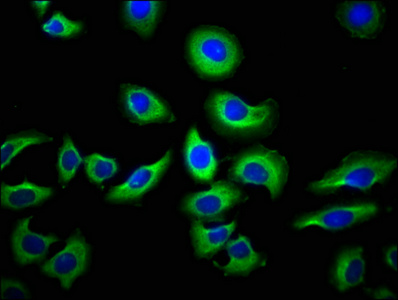
The antibody against NAIP was raised in rabbit using the Recombinant Human Baculoviral IAP repeat-containing protein 1 protein (147-242AA) as the immunogen. This antibody exists as a non-conjugated isotype IgG, purified by protein G with a purity greater than 95%. This antibody has been validated on ELISA, WB, IHC, IF.

ADC-03062A

The antibody against NAIP was raised in rabbit using the Recombinant Human Baculoviral IAP repeat-containing protein 1 protein (147-242AA) as the immunogen. This antibody exists as a non-conjugated isotype IgG, purified by protein G with a purity greater than 95%. This antibody has been validated on ELISA, WB, IHC, IF.

$299.00

Number
Order Exclusive Products Now

Request a Quote
High Purity LevelsPrecision and ReliabilityCustomization Options

Specifications


Cat.No ADC-03062A ClonalityPolyclonal
Host SpeciesRabbitTarget NameNAIP
FormLiquidSpecies ReactivityHuman
IsotypeIgGStorage Buffer0.01M PBS, 0.03% Proclin 300; Constituents: 50% Glycerol, PH 7.4
Purification Method>95%, Protein G purifiedConjugateNon-conjugated
ApplicationELISA, IF, IHC, WBStorageUpon receipt

Immunogen Information


Immunogen DescriptionRecombinant Human Baculoviral IAP repeat-containing protein 1 protein (147-242AA)Target SpeciesHuman
Immunogen SequenceComplete sequences for the immunogen, target protein, and peptides are available upon request.Uniprot IDQ13075
Background Information
  • Uniprot Id

    Q13075

  • Target Species

    Human

  • Target Name

    NAIP

  • Target Full Name

    Baculoviral IAP repeat-containing protein 1

  • Target Function

    Anti-apoptotic protein which acts by inhibiting the activities of CASP3, CASP7 and CASP9. Can inhibit the autocleavage of pro-CASP9 and cleavage of pro-CASP3 by CASP9. Capable of inhibiting CASP9 autoproteolysis at 'Asp-315' and decreasing the rate of auto proteolysis at 'Asp-330'. Acts as a mediator of neuronal survival in pathological conditions. Prevents motor-neuron apoptosis induced by a variety of signals. Possible role in the prevention of spinal muscular atrophy that seems to be caused by inappropriate persistence of motor-neuron apoptosis: mutated or deleted forms of NAIP have been found in individuals with severe spinal muscular atrophy.; Acts as a sensor component of the NLRC4 inflammasome that specifically recognizes and binds needle protein CprI from pathogenic bacteria C.violaceum. Association of pathogenic bacteria proteins drives in turn drive assembly and activation of the NLRC4 inflammasome, promoting caspase-1 activation, cytokine production and macrophage pyroptosis. The NLRC4 inflammasome is activated as part of the innate immune response to a range of intracellular bacteria such as C.violaceum and L.pneumophila.

  • Target Tissue Specificity

    Expressed in motor neurons, but not in sensory neurons. Found in liver and placenta, and to a lesser extent in spinal cord.

  • Target Research Area

    Cancer

  • Target Synonyms

    Baculoviral IAP repeat containing 1; Baculoviral IAP repeat-containing protein 1; BIRC 1; BIRC1; BIRC1_HUMAN; Birc1a; FLJ42520; NAIP; Naip1; Neuronal apoptosis inhibitory protein; NLR family apoptosis inhibitory protein; NLR family BIR domain containing 1; NLRB 1; NLRB1; Nucleotide binding oligomerization domain leucine rich repeat and BIR domain containing 1; Psi neuronal apoptosis inhibitory protein; psiNAIP; Similar to occludin

  • Target Background

    This gene is part of a 500 kb inverted duplication on chromosome 5q13. This duplicated region contains at least four genes and repetitive elements which make it prone to rearrangements and deletions. The repetitiveness and complexity of the sequence have also caused difficulty in determining the organization of this genomic region. This copy of the gene is full length; additional copies with truncations and internal deletions are also present in this region of chromosome 5q13. It is thought that this gene is a modifier of spinal muscular atrophy caused by mutations in a neighboring gene, SMN1. The protein encoded by this gene contains regions of homology to two baculovirus inhibitor of apoptosis proteins, and it is able to suppress apoptosis induced by various signals. Alternative splicing and the use of alternative promoters results in multiple transcript variants.

Inquire Rabbit anti-Human NAIP Polyclonal Antibody Now


AbTriva respects your privacy and protects your personal data in accordance with AbTriva. For more information, please see our data protection statement. *

Notification