-
Chinese (Simplified)
-
English
-
German
-
Korean
-
Spanish
Chinese (Simplified)
English
German
Korean
Spanish
Sign up for an account to enjoy easy online shopping and instant order tracking.
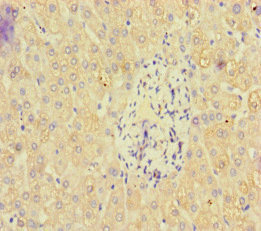
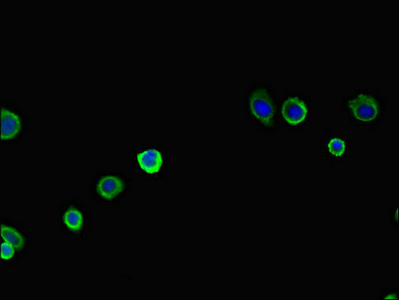
The antibody against PAN2 was raised in rabbit using the Recombinant Human PAB-dependent poly(A)-specific ribonuclease subunit PAN2 protein (628-908AA) as the immunogen. This antibody exists as a non-conjugated isotype IgG, purified by protein G with a purity greater than 95%. This antibody has been validated on ELISA, IHC, IF.
$299.00
| Cat.No | ADC-15392A | Clonality | Polyclonal |
|---|---|---|---|
| Host Species | Rabbit | Target Name | PAN2 |
| Form | Liquid | Species Reactivity | Human |
| Isotype | IgG | Storage Buffer | 0.01M PBS, 0.03% Proclin 300; Constituents: 50% Glycerol, PH 7.4 |
| Purification Method | >95%, Protein G purified | Conjugate | Non-conjugated |
| Application | ELISA, IF, IHC | Storage | Upon receipt |
| Immunogen Description | Recombinant Human PAB-dependent poly(A)-specific ribonuclease subunit PAN2 protein (628-908AA) | Target Species | Human |
|---|---|---|---|
| Immunogen Sequence | Complete sequences for the immunogen, target protein, and peptides are available upon request. | Uniprot ID | Q504Q3 |
Uniprot Id
Q504Q3
Target Species
Human
Target Name
PAN2
Target Full Name
PAN2-PAN3 deadenylation complex catalytic subunit PAN2
Target Function
Catalytic subunit of the poly(A)-nuclease (PAN) deadenylation complex, one of two cytoplasmic mRNA deadenylases involved in general and miRNA-mediated mRNA turnover. PAN specifically shortens poly(A) tails of RNA and the activity is stimulated by poly(A)-binding protein (PABP). PAN deadenylation is followed by rapid degradation of the shortened mRNA tails by the CCR4-NOT complex. Deadenylated mRNAs are then degraded by two alternative mechanisms, namely exosome-mediated 3'-5' exonucleolytic degradation, or deadenlyation-dependent mRNA decaping and subsequent 5'-3' exonucleolytic degradation by XRN1. Also acts as an important regulator of the HIF1A-mediated hypoxic response. Required for HIF1A mRNA stability independent of poly(A) tail length regulation.
Target Subcellular Location
Cytoplasm. Cytoplasm, P-body. Nucleus.
Target Protein Families
Peptidase C19 family, PAN2 subfamily
Target Synonyms
hPan2; Inactive ubiquitin carboxyl terminal hydrolase 52; Inactive ubiquitin carboxyl-terminal hydrolase 52; KIAA0710; PAB dependent poly(A) specific ribonuclease subunit 2; PAB-dependent poly(A)-specific ribonuclease subunit 2; PABP dependent poly(A) nuclease 2; PAN 2; PAN2; PAN2 homolog PABP1 dependent poly A specific ribonuclease subunit; PAN2 poly(A) specific ribonuclease subunit homolog; PAN2 polyA specific ribonuclease subunit homolog; PAN2_HUMAN; Ubiquitin specific peptidase 52; Ubiquitin specific protease 52; USP 52; USP52
Target Background
This gene encodes a deadenylase that functions as the catalytic subunit of the polyadenylate binding protein dependent poly(A) nuclease complex. The encoded protein is a magnesium dependent 3' to 5' exoribonuclease that is involved in the degradation of cytoplasmic mRNAs. Alternate splicing results in multiple transcript variants.
Notification