-
Chinese (Simplified)
-
English
-
German
-
Korean
-
Spanish

Chinese (Simplified)
English
German
Korean
Spanish
Sign up for an account to enjoy easy online shopping and instant order tracking.
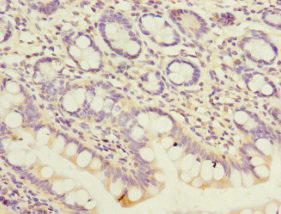
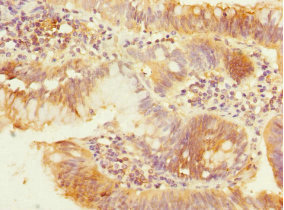
The antibody against PEX19 was raised in rabbit using the Recombinant Human Peroxisomal biogenesis factor 19 protein (1-299AA) as the immunogen. This antibody exists as a non-conjugated isotype IgG, Antigen affinity purified. This antibody has been validated on ELISA, IHC.
$299.00
| Cat.No | ADC-17593A | Clonality | Polyclonal |
|---|---|---|---|
| Host Species | Rabbit | Target Name | PEX19 |
| Form | Liquid | Species Reactivity | Human |
| Isotype | IgG | Storage Buffer | 50% Glycerol, PBS with 0.02% sodium azide, pH7.3. |
| Purification Method | Antigen affinity purified | Conjugate | Non-conjugated |
| Application | ELISA, IHC | Storage | Upon receipt |
| Immunogen Description | Recombinant Human Peroxisomal biogenesis factor 19 protein (1-299AA) | Target Species | Human |
|---|---|---|---|
| Immunogen Sequence | Complete sequences for the immunogen, target protein, and peptides are available upon request. | Uniprot ID | P40855 |
Uniprot Id
P40855
Target Species
Human
Target Name
PEX19
Target Full Name
Peroxisomal biogenesis factor 19
Target Function
Necessary for early peroxisomal biogenesis. Acts both as a cytosolic chaperone and as an import receptor for peroxisomal membrane proteins (PMPs). Binds and stabilizes newly synthesized PMPs in the cytoplasm by interacting with their hydrophobic membrane-spanning domains, and targets them to the peroxisome membrane by binding to the integral membrane protein PEX3. Excludes CDKN2A from the nucleus and prevents its interaction with MDM2, which results in active degradation of TP53.
Target Involvement
Peroxisome biogenesis disorder complementation group 14 (PBD-CG14); Peroxisome biogenesis disorder 12A (PBD12A)
Target Subcellular Location
Cytoplasm. Peroxisome membrane; Lipid-anchor; Cytoplasmic side.
Target Protein Families
Peroxin-19 family
Target Tissue Specificity
Ubiquitously expressed. Isoform 1 is strongly predominant in all tissues except in utero where isoform 2 is the main form.
Target Synonyms
33 kDa housekeeping protein; D1S2223E; HK33; Housekeeping gene 33kD; OK/SW-cl.22; PBD12A; Peroxin 19; Peroxin-19; Peroxisomal biogenesis factor 19; Peroxisomal farnesylated protein; PEX19; PEX19_HUMAN; PMP1; PMPI; PXF; PXMP1
Target Background
This gene is necessary for early peroxisomal biogenesis. It acts both as a cytosolic chaperone and as an import receptor for peroxisomal membrane proteins (PMPs). Peroxins (PEXs) are proteins that are essential for the assembly of functional peroxisomes. The peroxisome biogenesis disorders (PBDs) are a group of genetically heterogeneous autosomal recessive, lethal diseases characterized by multiple defects in peroxisome function. These disorders have at least 14 complementation groups, with more than one phenotype being observed for some complementation groups. Although the clinical features of PBD patients vary, cells from all PBD patients exhibit a defect in the import of one or more classes of peroxisomal matrix proteins into the organelle. Defects in this gene are a cause of Zellweger syndrome (ZWS), as well as peroxisome biogenesis disorder complementation group 14 (PBD-CG14), which is also known as PBD-CGJ. Alternative splicing results in multiple transcript variants.
Notification