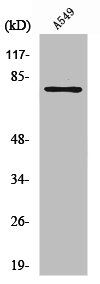
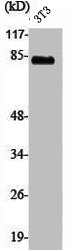
-
Chinese (Simplified)
-
English
-
German
-
Korean
-
Spanish
Chinese (Simplified)
English
German
Korean
Spanish
Sign up for an account to enjoy easy online shopping and instant order tracking.
The antibody against PFKL was raised in rabbit using the Synthesized peptide derived from the C-terminal region of Human PFK-B. as the immunogen. This antibody exists as a non-conjugated isotype IgG. The antibody was affinity-purified from rabbit antiserum by affinity-chromatography using epitope-specific immunogen. This antibody has been validated on WB, IHC, ELISA.
$167.00
| Cat.No | ADC-37869A | Clonality | Polyclonal |
|---|---|---|---|
| Host Species | Rabbit | Target Name | PFKL |
| Form | Liquid | Species Reactivity | Human, Mouse, Rat |
| Isotype | IgG | Storage Buffer | 0.5% BSA and 0.02% sodium azide., Liquid in PBS containing 50% glycerol |
| Purification Method | The antibody was affinity-purified from rabbit antiserum by affinity-chromatography using epitope-specific immunogen. | Conjugate | Non-conjugated |
| Application | ELISA, IHC, WB | Storage | Upon receipt |
| Immunogen Description | Synthesized peptide derived from the C-terminal region of Human PFK-B. | Target Species | Human |
|---|---|---|---|
| Immunogen Sequence | Complete sequences for the immunogen, target protein, and peptides are available upon request. | Uniprot ID | P17858 |
Uniprot Id
P17858
Target Species
Human
Target Name
PFKL
Target Full Name
ATP-dependent 6-phosphofructokinase, liver type
Target Function
Catalyzes the phosphorylation of D-fructose 6-phosphate to fructose 1,6-bisphosphate by ATP, the first committing step of glycolysis. Negatively regulates the phagocyte oxidative burst in response to bacterial infection by controlling cellular NADPH biosynthesis and NADPH oxidase-derived reactive oxygen species. Upon macrophage activation, drives the metabolic switch toward glycolysis, thus preventing glucose turnover that produces NADPH via pentose phosphate pathway.
Target Subcellular Location
Cytoplasm.
Target Protein Families
Phosphofructokinase type A (PFKA) family, ATP-dependent PFK group I subfamily, Eukaryotic two domain clade "E" sub-subfamily
Target Synonyms
PFKL; ATP-dependent 6-phosphofructokinase; liver type; ATP-PFK; PFK-L; EC 2.7.1.11; 6-phosphofructokinase type B; Phosphofructo-1-kinase isozyme B; PFK-B; Phosphohexokinase
Target Background
This gene encodes the liver (L) subunit of an enzyme that catalyzes the conversion of D-fructose 6-phosphate to D-fructose 1, 6-bisphosphate, which is a key step in glucose metabolism (glycolysis). This enzyme is a tetramer that may be composed of different subunits encoded by distinct genes in different tissues. Alternative splicing results in multiple transcript variants.
Notification