-
Chinese (Simplified)
-
English
-
German
-
Korean
-
Spanish
Chinese (Simplified)
English
German
Korean
Spanish
Sign up for an account to enjoy easy online shopping and instant order tracking.
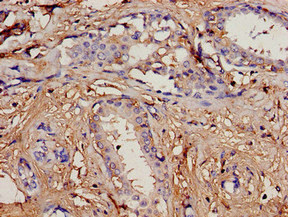
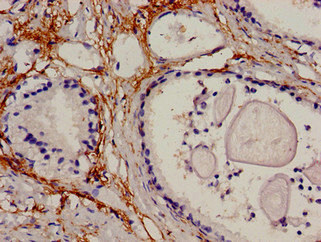
The antibody against PIP was raised in rabbit using the Recombinant Human Prolactin-inducible protein (29-146AA) as the immunogen. This antibody exists as a non-conjugated isotype IgG, purified by protein G with a purity greater than 95%. This antibody has been validated on ELISA, IHC.
$299.00
| Cat.No | ADC-49663A | Clonality | Polyclonal |
|---|---|---|---|
| Host Species | Rabbit | Target Name | PIP |
| Form | Liquid | Species Reactivity | Human |
| Isotype | IgG | Storage Buffer | 0.01M PBS, 0.03% Proclin 300; Constituents: 50% Glycerol, PH 7.4 |
| Purification Method | >95%, Protein G purified | Conjugate | Non-conjugated |
| Application | ELISA, IHC | Storage | Upon receipt |
| Immunogen Description | Recombinant Human Prolactin-inducible protein (29-146AA) | Target Species | Human |
|---|---|---|---|
| Immunogen Sequence | Complete sequences for the immunogen, target protein, and peptides are available upon request. | Uniprot ID | P12273 |
Uniprot Id
P12273
Target Species
Human
Target Name
PIP
Target Full Name
Prolactin-inducible protein
Target Subcellular Location
Secreted.
Target Protein Families
PIP family
Target Tissue Specificity
Expressed in pathological conditions of the mammary gland and in several exocrine tissues, such as the lacrimal, salivary, and sweat glands.
Target Research Area
Signal Transduction
Target Synonyms
BRST-2; BRST2; GCDFP-15; GCDGP15; gp17; GPIP4; Gross cystic disease fluid protein 15; PIP; PIP_HUMAN; Prolactin induced protein; Prolactin inducible protein precursor; Prolactin-induced protein; Prolactin-inducible protein; SABP; Secretory actin binding protein; Secretory actin-binding protein
Target Background
Enables IgG binding activity; aspartic-type endopeptidase activity; and identical protein binding activity. Involved in several processes, including detection of chemical stimulus involved in sensory perception of bitter taste; negative regulation of T cell apoptotic process; and proteolysis. Located in extracellular space and nucleus.
Notification