• Contact info@abtriva.com for inquiries and orders.
  • Chinese (Simplified)

  • English

  • German

  • Korean

  • Spanish

United States (English / $ USD)

Rabbit anti-Human POLD3 Polyclonal Antibody

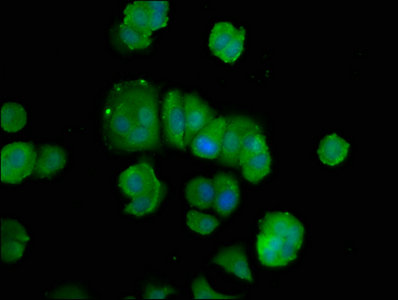
The antibody against POLD3 was raised in rabbit using the Recombinant Human DNA polymerase delta subunit 3 protein (203-275AA) as the immunogen. This antibody exists as a non-conjugated isotype IgG, purified by protein G with a purity greater than 95%. This antibody has been validated on ELISA, WB, IHC, IF.

ADC-07653A

The antibody against POLD3 was raised in rabbit using the Recombinant Human DNA polymerase delta subunit 3 protein (203-275AA) as the immunogen. This antibody exists as a non-conjugated isotype IgG, purified by protein G with a purity greater than 95%. This antibody has been validated on ELISA, WB, IHC, IF.

$299.00

Number
Order Exclusive Products Now

Request a Quote
High Purity LevelsPrecision and ReliabilityCustomization Options

Specifications


Cat.No ADC-07653A ClonalityPolyclonal
Host SpeciesRabbitTarget NamePOLD3
FormLiquidSpecies ReactivityHuman, Mouse
IsotypeIgGStorage Buffer0.01M PBS, 0.03% Proclin 300; Constituents: 50% Glycerol, PH 7.4
Purification Method>95%, Protein G purifiedConjugateNon-conjugated
ApplicationELISA, IF, IHC, WBStorageUpon receipt

Immunogen Information


Immunogen DescriptionRecombinant Human DNA polymerase delta subunit 3 protein (203-275AA)Target SpeciesHuman
Immunogen SequenceComplete sequences for the immunogen, target protein, and peptides are available upon request.Uniprot IDQ15054
Background Information
  • Uniprot Id

    Q15054

  • Target Species

    Human

  • Target Name

    POLD3

  • Target Full Name

    DNA polymerase delta subunit 3

  • Target Function

    Accessory component of both the DNA polymerase delta complex and the DNA polymerase zeta complex. As a component of the trimeric and tetrameric DNA polymerase delta complexes (Pol-delta3 and Pol-delta4, respectively), plays a role in high fidelity genome replication, including in lagging strand synthesis, and repair. Required for optimal Pol-delta activity. Stabilizes the Pol-delta complex and plays a major role in Pol-delta stimulation by PCNA. Pol-delta3 and Pol-delta4 are characterized by the absence or the presence of POLD4. They exhibit differences in catalytic activity. Most notably, Pol-delta3 shows higher proofreading activity than Pol-delta4. Although both Pol-delta3 and Pol-delta4 process Okazaki fragments in vitro, Pol-delta3 may also be better suited to fulfill this task, exhibiting near-absence of strand displacement activity compared to Pol-delta4 and stalling on encounter with the 5'-blocking oligonucleotides. Pol-delta3 idling process may avoid the formation of a gap, while maintaining a nick that can be readily ligated. Along with DNA polymerase kappa, DNA polymerase delta carries out approximately half of nucleotide excision repair (NER) synthesis following UV irradiation. In this context, POLD3, along with PCNA and RFC1-replication factor C complex, is required to recruit POLD1, the catalytic subunit of the polymerase delta complex, to DNA damage sites. Under conditions of DNA replication stress, required for the repair of broken replication forks through break-induced replication (BIR). Involved in the translesion synthesis (TLS) of templates carrying O6-methylguanine or abasic sites performed by Pol-delta4, independently of DNA polymerase zeta (REV3L) or eta (POLH). Facilitates abasic site bypass by DNA polymerase delta by promoting extension from the nucleotide inserted opposite the lesion. Also involved in TLS, as a component of the tetrametric DNA polymerase zeta complex. Along with POLD2, dramatically increases the efficiency and processivity of DNA synthesis of the DNA polymerase zeta complex compared to the minimal zeta complex, consisting of only REV3L and REV7.

  • Target Subcellular Location

    Cytoplasm. Nucleus.

  • Target Synonyms

    DNA polymerase delta subunit 3; DNA polymerase delta subunit p66; DNA polymerase delta; subunit 3; DNA polymerase subunit delta p66; DPOD3_HUMAN; KIAA0039; P66; P68; Pol delta C subunit (p66); Pold3; Polymerase (DNA directed); delta 3; Polymerase (DNA-directed); delta 3; accessory subunit; PPP1R128; Protein phosphatase 1; regulatory subunit 128

  • Target Background

    This gene encodes the 66-kDa subunit of DNA polymerase delta. DNA polymerase delta possesses both polymerase and 3' to 5' exonuclease activity and plays a critical role in DNA replication and repair. The encoded protein plays a role in regulating the activity of DNA polymerase delta through interactions with other subunits and the processivity cofactor proliferating cell nuclear antigen (PCNA). Alternatively spliced transcript variants have been observed for this gene.

Inquire Rabbit anti-Human POLD3 Polyclonal Antibody Now


AbTriva respects your privacy and protects your personal data in accordance with AbTriva. For more information, please see our data protection statement. *

Notification