-
Chinese (Simplified)
-
English
-
German
-
Korean
-
Spanish
Chinese (Simplified)
English
German
Korean
Spanish
Sign up for an account to enjoy easy online shopping and instant order tracking.
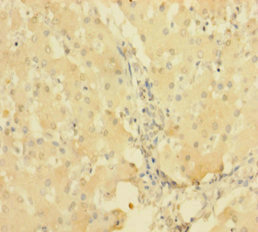
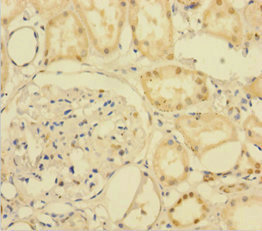
The antibody against PTPRR was raised in rabbit using the Recombinant Human Receptor-type tyrosine-protein phosphatase R protein (1-412AA) as the immunogen. This antibody exists as a non-conjugated isotype IgG, purified by protein G with a purity greater than 95%. This antibody has been validated on ELISA, IHC.
$299.00
| Cat.No | ADC-49721A | Clonality | Polyclonal |
|---|---|---|---|
| Host Species | Rabbit | Target Name | PTPRR |
| Form | Liquid | Species Reactivity | Human |
| Isotype | IgG | Storage Buffer | 0.01M PBS, 0.03% Proclin 300; Constituents: 50% Glycerol, PH 7.4 |
| Purification Method | >95%, Protein G purified | Conjugate | Non-conjugated |
| Application | ELISA, IHC | Storage | Upon receipt |
| Immunogen Description | Recombinant Human Receptor-type tyrosine-protein phosphatase R protein (1-412AA) | Target Species | Human |
|---|---|---|---|
| Immunogen Sequence | Complete sequences for the immunogen, target protein, and peptides are available upon request. | Uniprot ID | Q15256 |
Uniprot Id
Q15256
Target Species
Human
Target Name
PTPRR
Target Full Name
Receptor-type tyrosine-protein phosphatase R
Target Function
Sequesters mitogen-activated protein kinases (MAPKs) such as MAPK1, MAPK3 and MAPK14 in the cytoplasm in an inactive form. The MAPKs bind to a dephosphorylated kinase interacting motif, phosphorylation of which by the protein kinase A complex releases the MAPKs for activation and translocation into the nucleus.
Target Subcellular Location
[Isoform Alpha]: Cell membrane; Single-pass type I membrane protein.; [Isoform Delta]: Cytoplasm, perinuclear region. Note=Locates to the perinuclear areas within the cytoplasm.; [Isoform Gamma]: Cytoplasm, perinuclear region. Note=Locates to the perinuclear areas within the cytoplasm.
Target Protein Families
Protein-tyrosine phosphatase family, Receptor class 7 subfamily
Target Tissue Specificity
Expressed in brain, placenta, small intestine, stomach, uterus and weakly in the prostate. Isoform alpha has been observed only in the brain. Isoform gamma is expressed in brain, placenta and uterus. Isoform delta is expressed in brain, kidney, placenta,
Target Synonyms
Ch-1PTPase; Ch1 PTPase; DKFZp781C1038; EC PTP; ECPTP; FLJ34328; MGC131968; MGC148170; NC PTPCOM1; NC-PTPCOM1; Protein tyrosine phosphatase Cr1PTPase precursor; Protein tyrosine phosphatase NC PTPCOM1; Protein tyrosine phosphatase PCPTP1; Protein tyrosine phosphatase receptor type R; Protein-tyrosine phosphatase PCPTP1; PTP SL; PTPBR7; PTPRQ; PTPRR; PTPRR_HUMAN; PTPSL; R-PTP-R; Receptor type tyrosine protein phosphatase R; Receptor-type tyrosine-protein phosphatase R
Target Background
The protein encoded by this gene is a member of the protein tyrosine phosphatase (PTP) family. PTPs are known to be signaling molecules that regulate a variety of cellular processes including cell growth, differentiation, mitotic cycle, and oncogenic transformation. This PTP possesses an extracellular region, a single transmembrane region, and a single intracellular catalytic domain, and thus represents a receptor-type PTP. Silencing of this gene has been associated with colorectal cancer. Multiple transcript variants encoding different isoforms have been found for this gene. This gene shares a symbol (PTPRQ) with another gene, protein tyrosine phosphatase, receptor type, Q (GeneID 374462), which is also located on chromosome 12.
Notification