• Contact info@abtriva.com for inquiries and orders.
  • Chinese (Simplified)

  • English

  • German

  • Korean

  • Spanish

United States (English / $ USD)

Rabbit anti-Human PTRH2 Polyclonal Antibody

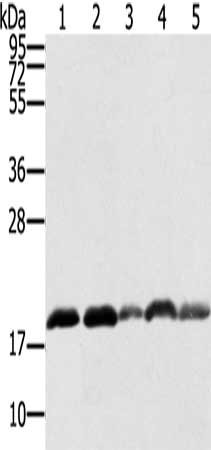
The antibody against PTRH2 was raised in rabbit using the Fusion protein of Human PTRH2 as the immunogen. This antibody exists as a non-conjugated isotype IgG, Antigen affinity purified. This antibody has been validated on ELISA, WB, IHC.

ADC-29461A

The antibody against PTRH2 was raised in rabbit using the Fusion protein of Human PTRH2 as the immunogen. This antibody exists as a non-conjugated isotype IgG, Antigen affinity purified. This antibody has been validated on ELISA, WB, IHC.

$299.00

Number
Order Exclusive Products Now

Request a Quote
High Purity LevelsPrecision and ReliabilityCustomization Options

Specifications


Cat.No ADC-29461A ClonalityPolyclonal
Host SpeciesRabbitTarget NamePTRH2
FormLiquidSpecies ReactivityHuman, Mouse
IsotypeIgGStorage Buffer0.05% NaN3, 40% Glycerol., pH7.4 PBS
Purification MethodAntigen affinity purifiedConjugateNon-conjugated
ApplicationELISA, IHC, WBStorageUpon receipt

Immunogen Information


Immunogen DescriptionFusion protein of Human PTRH2Target SpeciesHuman
Immunogen SequenceComplete sequences for the immunogen, target protein, and peptides are available upon request.Uniprot IDQ9Y3E5
Background Information
  • Uniprot Id

    Q9Y3E5

  • Target Species

    Human

  • Target Name

    PTRH2

  • Target Full Name

    Peptidyl-tRNA hydrolase 2, mitochondrial

  • Target Function

    The natural substrate for this enzyme may be peptidyl-tRNAs which drop off the ribosome during protein synthesis.; Promotes caspase-independent apoptosis by regulating the function of two transcriptional regulators, AES and TLE1.

  • Target Involvement

    Neurologic, endocrine, and pancreatic disease, multisystem, infantile-onset (IMNEPD)

  • Target Subcellular Location

    Mitochondrion.

  • Target Protein Families

    PTH2 family

  • Target Synonyms

    PTH; BIT1; PTH2; PTH 2; CFAP37; IMNEPD; CGI-147; PTRH2

  • Target Background

    The protein encoded by this gene is a mitochondrial protein with two putative domains, an N-terminal mitochondrial localization sequence, and a UPF0099 domain. In vitro assays suggest that this protein possesses peptidyl-tRNA hydrolase activity, to release the peptidyl moiety from tRNA, thereby preventing the accumulation of dissociated peptidyl-tRNA that could reduce the efficiency of translation. This protein also plays a role regulating cell survival and death. It promotes survival as part of an integrin-signaling pathway for cells attached to the extracellular matrix (ECM), but also promotes apoptosis in cells that have lost their attachment to the ECM, a process called anoikos. After loss of cell attachment to the ECM, this protein is phosphorylated, is released from the mitochondria into the cytosol, and promotes caspase-independent apoptosis through interactions with transcriptional regulators. This gene has been implicated in the development and progression of tumors, and mutations in this gene have been associated with an infantile multisystem neurologic, endocrine, and pancreatic disease (INMEPD) characterized by intellectual disability, postnatal microcephaly, progressive cerebellar atrophy, hearing impairment, polyneuropathy, failure to thrive, and organ fibrosis with exocrine pancreas insufficiency (PMID: 25574476). Alternative splicing results in multiple transcript variants encoding different isoforms.

Inquire Rabbit anti-Human PTRH2 Polyclonal Antibody Now


AbTriva respects your privacy and protects your personal data in accordance with AbTriva. For more information, please see our data protection statement. *

Notification