-
Chinese (Simplified)
-
English
-
German
-
Korean
-
Spanish
Chinese (Simplified)
English
German
Korean
Spanish
Sign up for an account to enjoy easy online shopping and instant order tracking.
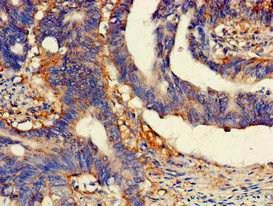
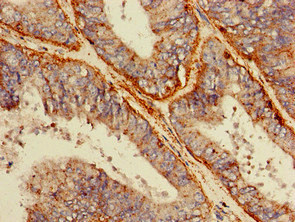
The antibody against SCARB2 was raised in rabbit using the Recombinant Human Lysosome membrane protein 2 protein (47-128AA) as the immunogen. This antibody exists as a non-conjugated isotype IgG, purified by protein G with a purity greater than 95%. This antibody has been validated on ELISA, WB, IHC, IF.
$299.00
| Cat.No | ADC-11951A | Clonality | Polyclonal |
|---|---|---|---|
| Host Species | Rabbit | Target Name | SCARB2 |
| Form | Liquid | Species Reactivity | Human, Mouse |
| Isotype | IgG | Storage Buffer | 0.01M PBS, 0.03% Proclin 300; Constituents: 50% Glycerol, PH 7.4 |
| Purification Method | >95%, Protein G purified | Conjugate | Non-conjugated |
| Application | ELISA, IF, IHC, WB | Storage | Upon receipt |
| Immunogen Description | Recombinant Human Lysosome membrane protein 2 protein (47-128AA) | Target Species | Human |
|---|---|---|---|
| Immunogen Sequence | Complete sequences for the immunogen, target protein, and peptides are available upon request. | Uniprot ID | Q14108 |
Uniprot Id
Q14108
Target Species
Human
Target Name
SCARB2
Target Full Name
Lysosome membrane protein 2
Target Function
Acts as a lysosomal receptor for glucosylceramidase (GBA) targeting.; (Microbial infection) Acts as a receptor for enterovirus 71.
Target Involvement
Epilepsy, progressive myoclonic 4, with or without renal failure (EPM4)
Target Subcellular Location
Lysosome membrane; Multi-pass membrane protein.
Target Protein Families
CD36 family
Target Synonyms
85 kDa lysosomal membrane sialoglycoprotein; 85 kDa lysosomal sialoglycoprotein scavenger receptor class B member 2; AMRF; CD36; CD36 antigen (collagen type I receptor; thrombospondin receptor)-like 2 (lysosomal integral membrane protein II); CD36 antigen; CD36 antigen-like 2; CD36L2; EPM4; HLGP85; LGP85; LIMP 2; LIMP II; LIMP2; LIMPII; Lysosomal integral membrane protein II; Lysosome membrane protein 2; Lysosome membrane protein II; OTTHUMP00000160590; OTTHUMP00000219176; Scarb2; Scavenger receptor class B member 2; Scavenger receptor class B; member 2; SCRB2_HUMAN; SR BII; SRBII
Target Background
The protein encoded by this gene is a type III glycoprotein that is located primarily in limiting membranes of lysosomes and endosomes. Earlier studies in mice and rat suggested that this protein may participate in membrane transportation and the reorganization of endosomal/lysosomal compartment. The protein deficiency in mice was reported to impair cell membrane transport processes and cause pelvic junction obstruction, deafness, and peripheral neuropathy. Further studies in human showed that this protein is a ubiquitously expressed protein and that it is involved in the pathogenesis of HFMD (hand, foot, and mouth disease) caused by enterovirus-71 and possibly by coxsackievirus A16. Mutations in this gene caused an autosomal recessive progressive myoclonic epilepsy-4 (EPM4), also known as action myoclonus-renal failure syndrome (AMRF). Alternatively spliced transcript variants encoding different isoforms have been found for this gene.
Notification