• Contact info@abtriva.com for inquiries and orders.
  • Chinese (Simplified)

  • English

  • German

  • Korean

  • Spanish

United States (English / $ USD)

Rabbit anti-Human SEPN1 Polyclonal Antibody

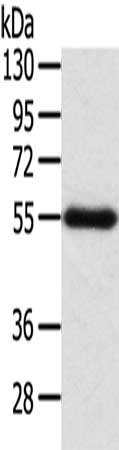
The antibody against SELENON was raised in rabbit using the Synthetic peptide of Human SEPN1 as the immunogen. This antibody exists as a non-conjugated isotype IgG, Antigen affinity purified. This antibody has been validated on ELISA, WB, IHC.

ADC-25963A

The antibody against SELENON was raised in rabbit using the Synthetic peptide of Human SEPN1 as the immunogen. This antibody exists as a non-conjugated isotype IgG, Antigen affinity purified. This antibody has been validated on ELISA, WB, IHC.

$299.00

Number
Order Exclusive Products Now

Request a Quote
High Purity LevelsPrecision and ReliabilityCustomization Options

Specifications


Cat.No ADC-25963A ClonalityPolyclonal
Host SpeciesRabbitTarget NameSELENON
Target Synonyms1 antibody; SelN antibody; SELN_HUMAN antibody; sepn1 antibody, CFTD antibody; MDRS1 antibody; RSMD1 antibody; RSS antibody; Selenoprotein N antibody; Selenoprotein NFormLiquid
Species ReactivityHumanIsotypeIgG
Storage Buffer0.05% NaN3, 40% Glycerol., pH7.4 PBSPurification MethodAntigen affinity purified
ConjugateNon-conjugatedApplicationELISA, IHC, WB
StorageUpon receipt

Immunogen Information


Immunogen DescriptionSynthetic peptide of Human SEPN1Target SpeciesHuman
Immunogen SequenceComplete sequences for the immunogen, target protein, and peptides are available upon request.Uniprot IDQ9NZV5
Background Information
  • Uniprot Id

    Q9NZV5

  • Target Species

    Human

  • Target Name

    SELENON

  • Target Full Name

    Selenoprotein N

  • Target Function

    Plays an important role in cell protection against oxidative stress and in the regulation of redox-related calcium homeostasis. Regulates the calcium level of the ER by protecting the calcium pump ATP2A2 against the oxidoreductase ERO1A-mediated oxidative damage. Within the ER, ERO1A activity increases the concentration of H(2)O(2), which attacks the luminal thiols in ATP2A2 and thus leads to cysteinyl sulfenic acid formation (-SOH) and SEPN1 reduces the SOH back to free thiol (-SH), thus restoring ATP2A2 activity. Acts as a modulator of ryanodine receptor (RyR) activity: protects RyR from oxidation due to increased oxidative stress, or directly controls the RyR redox state, regulating the RyR-mediated calcium mobilization required for normal muscle development and differentiation.; Essential for muscle regeneration and satellite cell maintenance in skeletal muscle.

  • Target Involvement

    Rigid spine muscular dystrophy 1 (RSMD1); Myopathy, congenital, with fiber-type disproportion (CFTD)

  • Target Subcellular Location

    [Isoform 2]: Endoplasmic reticulum membrane.

  • Target Tissue Specificity

    Isoform 1 and isoform 2 are expressed in skeletal muscle, brain, lung and placenta. Isoform 2 is also expressed in heart, diaphragm and stomach.

  • Target Synonyms

    CFTD; MDRS1; RSMD1; RSS; Selenoprotein N; Selenoprotein N, 1; SelN; SELN_HUMAN; sepn1

  • Target Background

    This gene encodes a glycoprotein that is localized in the endoplasmic reticulum. It plays an important role in cell protection against oxidative stress, and in the regulation of redox-related calcium homeostasis. Mutations in this gene are associated with early onset muscle disorders, referred to as SEPN1-related myopathy. SEPN1-related myopathy consists of 4 autosomal recessive disorders, originally thought to be separate entities: rigid spine muscular dystrophy (RSMD1), the classical form of multiminicore disease, desmin related myopathy with Mallory-body like inclusions, and congenital fiber-type disproportion (CFTD). This protein is a selenoprotein, containing the rare amino acid selenocysteine (Sec). Sec is encoded by the UGA codon, which normally signals translation termination. The 3' UTRs of selenoprotein mRNAs contain a conserved stem-loop structure, designated the Sec insertion sequence (SECIS) element, that is necessary for the recognition of UGA as a Sec codon, rather than as a stop signal. A second stop-codon redefinition element (SRE) adjacent to the UGA codon has been identified in this gene (PMID:15791204). SRE is a phylogenetically conserved stem-loop structure that stimulates readthrough at the UGA codon, and augments the Sec insertion efficiency by SECIS. Alternatively spliced transcript variants have been found for this gene.

Inquire Rabbit anti-Human SEPN1 Polyclonal Antibody Now


AbTriva respects your privacy and protects your personal data in accordance with AbTriva. For more information, please see our data protection statement. *

Notification