-
Chinese (Simplified)
-
English
-
German
-
Korean
-
Spanish
Chinese (Simplified)
English
German
Korean
Spanish
Sign up for an account to enjoy easy online shopping and instant order tracking.
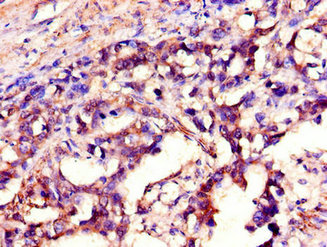
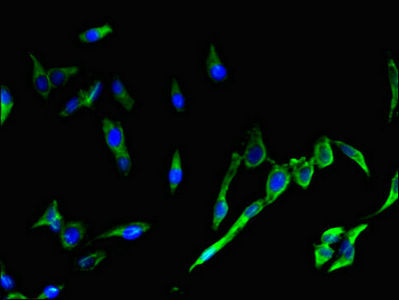
The antibody against SH2D1A was raised in rabbit using the Recombinant Human SH2 domain-containing protein 1A protein (11-124AA) as the immunogen. This antibody exists as a non-conjugated isotype IgG, purified by protein G with a purity greater than 95%. This antibody has been validated on ELISA, IHC, IF.
$299.00
| Cat.No | ADC-14570A | Clonality | Polyclonal |
|---|---|---|---|
| Host Species | Rabbit | Target Name | SH2D1A |
| Form | Liquid | Species Reactivity | Human |
| Isotype | IgG | Storage Buffer | 0.01M PBS, 0.03% Proclin 300; Constituents: 50% Glycerol, PH 7.4 |
| Purification Method | >95%, Protein G purified | Conjugate | Non-conjugated |
| Application | ELISA, IF, IHC | Storage | Upon receipt |
| Immunogen Description | Recombinant Human SH2 domain-containing protein 1A protein (11-124AA) | Target Species | Human |
|---|---|---|---|
| Immunogen Sequence | Complete sequences for the immunogen, target protein, and peptides are available upon request. | Uniprot ID | O60880 |
Uniprot Id
O60880
Target Species
Human
Target Name
SH2D1A
Target Full Name
SH2 domain-containing protein 1A
Target Function
Cytoplasmic adapter regulating receptors of the signaling lymphocytic activation molecule (SLAM) family such as SLAMF1, CD244, LY9, CD84, SLAMF6 and SLAMF7. In SLAM signaling seems to cooperate with SH2D1B/EAT-2. Initially it has been proposed that association with SLAMF1 prevents SLAMF1 binding to inhibitory effectors including INPP5D/SHIP1 and PTPN11/SHP-2. However, by simultaneous interactions, recruits FYN which subsequently phosphorylates and activates SLAMF1. Positively regulates CD244/2B4- and CD84-mediated natural killer (NK) cell functions. Can also promote CD48-, SLAMF6 -, LY9-, and SLAMF7-mediated NK cell activation. In the context of NK cell-mediated cytotoxicity enhances conjugate formation with target cells. May also regulate the activity of the neurotrophin receptors NTRK1, NTRK2 and NTRK3.
Target Involvement
Lymphoproliferative syndrome, X-linked, 1 (XLP1)
Target Subcellular Location
Cytoplasm.
Target Tissue Specificity
Expressed at a high level in thymus and lung, with a lower level of expression in spleen and liver. Expressed in peripheral blood leukocytes, including T-lymphocytes. Tends to be expressed at lower levels in peripheral blood leukocytes in patients with rh
Target Synonyms
DSHP; Duncan disease SH2 protein; Duncan disease SH2-protein; EBVS; IMD5; LYP; MTCP1; SAP; SAP/SH2D1A; SH2 domain containing 1A; SH2 domain protein 1A; SH2 domain-containing protein 1A; SH21A_HUMAN; SH2D1A; Signaling lymphocyte activation molecule associated protein; Signaling lymphocytic activation molecule-associated protein; SLAM associated protein; SLAM associated protein/SH2 domain protein 1A; SLAM-associated protein; T cell signal transduction molecule SAP; T-cell signal transduction molecule SAP; XLP; XLPD
Target Background
This gene encodes a protein that plays a major role in the bidirectional stimulation of T and B cells. This protein contains an SH2 domain and a short tail. It associates with the signaling lymphocyte-activation molecule, thereby acting as an inhibitor of this transmembrane protein by blocking the recruitment of the SH2-domain-containing signal-transduction molecule SHP-2 to its docking site. This protein can also bind to other related surface molecules that are expressed on activated T, B and NK cells, thereby modifying signal transduction pathways in these cells. Mutations in this gene cause lymphoproliferative syndrome X-linked type 1 or Duncan disease, a rare immunodeficiency characterized by extreme susceptibility to infection with Epstein-Barr virus, with symptoms including severe mononucleosis and malignant lymphoma. Multiple transcript variants encoding different isoforms have been found for this gene.
Notification