-
Chinese (Simplified)
-
English
-
German
-
Korean
-
Spanish
Chinese (Simplified)
English
German
Korean
Spanish
Sign up for an account to enjoy easy online shopping and instant order tracking.
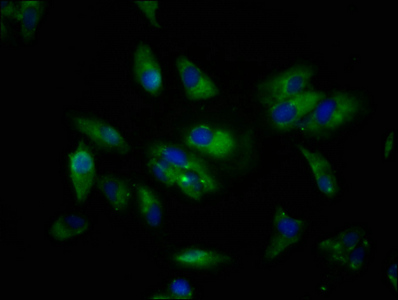
The antibody against SIGLEC10 was raised in rabbit using the Recombinant Human Sialic acid-binding Ig-like lectin 10 protein (572-697AA) as the immunogen. This antibody exists as a non-conjugated isotype IgG, purified by protein G with a purity greater than 95%. This antibody has been validated on ELISA, IHC, IF.
$299.00
| Cat.No | ADC-05547A | Clonality | Polyclonal |
|---|---|---|---|
| Host Species | Rabbit | Target Name | SIGLEC10 |
| Form | Liquid | Species Reactivity | Human |
| Isotype | IgG | Storage Buffer | 0.01M PBS, 0.03% Proclin 300; Constituents: 50% Glycerol, PH 7.4 |
| Purification Method | >95%, Protein G purified | Conjugate | Non-conjugated |
| Application | ELISA, IF, IHC | Storage | Upon receipt |
| Immunogen Description | Recombinant Human Sialic acid-binding Ig-like lectin 10 protein (572-697AA) | Target Species | Human |
|---|---|---|---|
| Immunogen Sequence | Complete sequences for the immunogen, target protein, and peptides are available upon request. | Uniprot ID | Q96LC7 |
Uniprot Id
Q96LC7
Target Species
Human
Target Name
SIGLEC10
Target Full Name
Sialic acid-binding Ig-like lectin 10
Target Function
Putative adhesion molecule that mediates sialic-acid dependent binding to cells. Preferentially binds to alpha-2,3- or alpha-2,6-linked sialic acid. The sialic acid recognition site may be masked by cis interactions with sialic acids on the same cell surface. In the immune response, seems to act as an inhibitory receptor upon ligand induced tyrosine phosphorylation by recruiting cytoplasmic phosphatase(s) via their SH2 domain(s) that block signal transduction through dephosphorylation of signaling molecules. Involved in negative regulation of B-cell antigen receptor signaling. The inhibition of B cell activation is dependent on PTPN6/SHP-1. In association with CD24 may be involved in the selective suppression of the immune response to danger-associated molecular patterns (DAMPs) such as HMGB1, HSP70 and HSP90. In association with CD24 may regulate the immune repsonse of natural killer (NK) cells. Plays a role in the control of autoimmunity. During initiation of adaptive immune responses by CD8-alpha(+) dendritic cells inhibits cross-presentation by impairing the formation of MHC class I-peptide complexes. The function seems to implicate recruitment of PTPN6/SHP-1, which dephosphorylates NCF1 of the NADPH oxidase complex consequently promoting phagosomal acidification.
Target Subcellular Location
[Isoform 1]: Cell membrane; Single-pass type I membrane protein.; [Isoform 2]: Cell membrane; Single-pass type I membrane protein.; [Isoform 3]: Cell membrane; Single-pass type I membrane protein.; [Isoform 4]: Cell membrane; Single-pass type I membrane protein.; [Isoform 5]: Secreted.
Target Protein Families
Immunoglobulin superfamily, SIGLEC (sialic acid binding Ig-like lectin) family
Target Tissue Specificity
Expressed by peripheral blood leukocytes (eosinophils, monocytes and a natural killer cell subpopulation). Isoform 5 is found to be the most abundant isoform. Found in lymph node, lung, ovary and appendix. Isoform 1 is found at high levels and isoform 2 a
Target Synonyms
mSiglec G; PRO940; Sialic acid binding Ig like lectin 10; Sialic acid binding Ig like lectin 10; sialic acid binding Ig like lectin 10 Ig like lectin 7; sialic acid binding Ig like lectin G; Sialic acid binding Immunoglobulin like lectin 10; Sialic acid-binding Ig-like lectin 10; SIG10_HUMAN; SIGLEC 10; Siglec G; siglec like gene 2; Siglec like protein 2; Siglec like protein 2; Siglec-10; Siglec-like protein 2; SIGLEC10; Siglecg; SLG2
Target Background
SIGLECs are members of the immunoglobulin superfamily that are expressed on the cell surface. Most SIGLECs have 1 or more cytoplasmic immune receptor tyrosine-based inhibitory motifs, or ITIMs. SIGLECs are typically expressed on cells of the innate immune system, with the exception of the B-cell expressed SIGLEC6 (MIM 604405).
Notification