-
Chinese (Simplified)
-
English
-
German
-
Korean
-
Spanish

Chinese (Simplified)
English
German
Korean
Spanish
Sign up for an account to enjoy easy online shopping and instant order tracking.
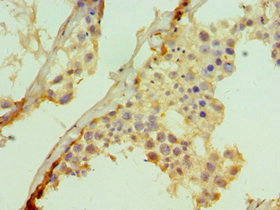
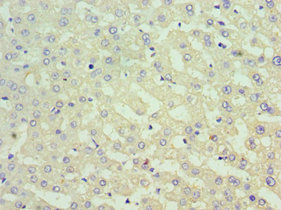
The antibody against SUFU was raised in rabbit using the Recombinant Human Suppressor of fused homolog protein (325-484AA) as the immunogen. This antibody exists as a non-conjugated isotype IgG, Antigen affinity purified. This antibody has been validated on ELISA, WB, IHC.
$299.00
| Cat.No | ADC-44509A | Clonality | Polyclonal |
|---|---|---|---|
| Host Species | Rabbit | Target Name | SUFU |
| Form | Liquid | Species Reactivity | Human, Mouse |
| Isotype | IgG | Storage Buffer | 50% Glycerol, PBS with 0.02% sodium azide, pH7.3. |
| Purification Method | Antigen affinity purified | Conjugate | Non-conjugated |
| Application | ELISA, IHC, WB | Storage | Upon receipt |
| Immunogen Description | Recombinant Human Suppressor of fused homolog protein (325-484AA) | Target Species | Human |
|---|---|---|---|
| Immunogen Sequence | Complete sequences for the immunogen, target protein, and peptides are available upon request. | Uniprot ID | Q9UMX1 |
Uniprot Id
Q9UMX1
Target Species
Human
Target Name
SUFU
Target Full Name
Suppressor of fused homolog
Target Function
Negative regulator in the hedgehog/smoothened signaling pathway. Down-regulates GLI1-mediated transactivation of target genes. Down-regulates GLI2-mediated transactivation of target genes. Part of a corepressor complex that acts on DNA-bound GLI1. May also act by linking GLI1 to BTRC and thereby targeting GLI1 to degradation by the proteasome. Sequesters GLI1, GLI2 and GLI3 in the cytoplasm, this effect is overcome by binding of STK36 to both SUFU and a GLI protein. Negative regulator of beta-catenin signaling. Regulates the formation of either the repressor form (GLI3R) or the activator form (GLI3A) of the full-length form of GLI3 (GLI3FL). GLI3FL is complexed with SUFU in the cytoplasm and is maintained in a neutral state. Without the Hh signal, the SUFU-GLI3 complex is recruited to cilia, leading to the efficient processing of GLI3FL into GLI3R. When Hh signaling is initiated, SUFU dissociates from GLI3FL and the latter translocates to the nucleus, where it is phosphorylated, destabilized, and converted to a transcriptional activator (GLI3A). Required for normal embryonic development. Required for the proper formation of hair follicles and the control of epidermal differentiation.
Target Involvement
Medulloblastoma (MDB); Joubert syndrome 32 (JBTS32)
Target Subcellular Location
Cytoplasm. Nucleus.
Target Protein Families
SUFU family
Target Tissue Specificity
Ubiquitous in adult tissues. Detected in osteoblasts of the perichondrium in the developing limb of 12-week old embryos. Isoform 1 is detected in fetal brain, lung, kidney and testis. Isoform 2 is detected in fetal testis, and at much lower levels in feta
Target Synonyms
OTTHUMP00000020374; OTTHUMP00000020377; OTTHUMP00000020379; PRO1280; SU FU; SU(F)U; Su(fu); SUFU; SUFU negative regulator of hedgehog signaling; SUFU_HUMAN; SUFUH; SUFUXL; Suppressor of Fused; Suppressor of fused homolog (Drosophila); Suppressor of fused homolog
Target Background
The Hedgehog signaling pathway plays an important role in early human development. The pathway is a signaling cascade that plays a role in pattern formation and cellular proliferation during development. This gene encodes a negative regulator of the hedgehog signaling pathway. Defects in this gene are a cause of medulloblastoma. Alternative splicing results in multiple transcript variants.
Notification