• Contact info@abtriva.com for inquiries and orders.
  • Chinese (Simplified)

  • English

  • German

  • Korean

  • Spanish

United States (English / $ USD)

Rabbit anti-Human TTN Polyclonal Antibody

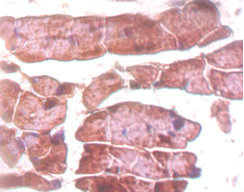
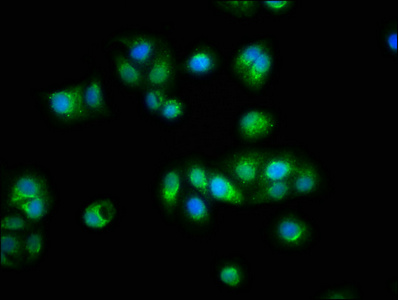
The antibody against TTN was raised in rabbit using the Recombinant Human Titin protein (5398-5604AA) as the immunogen. This antibody exists as a non-conjugated isotype IgG, purified by protein G with a purity greater than 95%. This antibody has been validated on ELISA, IHC, IF.

ADC-50775A

The antibody against TTN was raised in rabbit using the Recombinant Human Titin protein (5398-5604AA) as the immunogen. This antibody exists as a non-conjugated isotype IgG, purified by protein G with a purity greater than 95%. This antibody has been validated on ELISA, IHC, IF.

$299.00

Number
Order Exclusive Products Now

Request a Quote
High Purity LevelsPrecision and ReliabilityCustomization Options

Specifications


Cat.No ADC-50775A ClonalityPolyclonal
Host SpeciesRabbitTarget NameTTN
FormLiquidSpecies ReactivityHuman
IsotypeIgGStorage Buffer0.01M PBS, 0.03% Proclin 300; Constituents: 50% Glycerol, PH 7.4
Purification Method>95%, Protein G purifiedConjugateNon-conjugated
ApplicationELISA, IF, IHCStorageUpon receipt

Immunogen Information


Immunogen DescriptionRecombinant Human Titin protein (5398-5604AA)Target SpeciesHuman
Immunogen SequenceComplete sequences for the immunogen, target protein, and peptides are available upon request.Uniprot IDQ8WZ42
Background Information
  • Uniprot Id

    Q8WZ42

  • Target Species

    Human

  • Target Name

    TTN

  • Target Full Name

    Titin

  • Target Function

    Key component in the assembly and functioning of vertebrate striated muscles. By providing connections at the level of individual microfilaments, it contributes to the fine balance of forces between the two halves of the sarcomere. The size and extensibility of the cross-links are the main determinants of sarcomere extensibility properties of muscle. In non-muscle cells, seems to play a role in chromosome condensation and chromosome segregation during mitosis. Might link the lamina network to chromatin or nuclear actin, or both during interphase.

  • Target Involvement

    Hereditary myopathy with early respiratory failure (HMERF); Cardiomyopathy, familial hypertrophic 9 (CMH9); Cardiomyopathy, dilated 1G (CMD1G); Tardive tibial muscular dystrophy (TMD); Limb-girdle muscular dystrophy 2J (LGMD2J); Salih myopathy (SALMY)

  • Target Subcellular Location

    Cytoplasm. Nucleus.

  • Target Protein Families

    Protein kinase superfamily, CAMK Ser/Thr protein kinase family

  • Target Tissue Specificity

    Isoforms 3, 7 and 8 are expressed in cardiac muscle. Isoform 4 is expressed in vertebrate skeletal muscle. Isoform 6 is expressed in skeletal muscle (at protein level).

  • Target Research Area

    Epigenetics and Nuclear Signaling, Cardiovascular

  • Target Synonyms

    MPRM; Cardiomyopathy dilated 1G (autosomal dominant); CMD1G; CMH 9; CMH9; CMPD 4; CMPD4; Connectin; DKFZp451N061; EOMFC; FLJ26020; FLJ26409; FLJ32040; FLJ34413; FLJ39564; FLJ43066; HMERF; LGMD2J; MU RMS 40.14; MYLK5; Rhabdomyosarcoma antigen; Rhabdomyosarcoma antigen MU RMS 40.14; Rhabdomyosarcoma antigen MU-RMS-40.14; Titin; TITIN_HUMAN; TMD; TTN

  • Target Background

    This gene encodes a large abundant protein of striated muscle. The product of this gene is divided into two regions, a N-terminal I-band and a C-terminal A-band. The I-band, which is the elastic part of the molecule, contains two regions of tandem immunoglobulin domains on either side of a PEVK region that is rich in proline, glutamate, valine and lysine. The A-band, which is thought to act as a protein-ruler, contains a mixture of immunoglobulin and fibronectin repeats, and possesses kinase activity. An N-terminal Z-disc region and a C-terminal M-line region bind to the Z-line and M-line of the sarcomere, respectively, so that a single titin molecule spans half the length of a sarcomere. Titin also contains binding sites for muscle associated proteins so it serves as an adhesion template for the assembly of contractile machinery in muscle cells. It has also been identified as a structural protein for chromosomes. Alternative splicing of this gene results in multiple transcript variants. Considerable variability exists in the I-band, the M-line and the Z-disc regions of titin. Variability in the I-band region contributes to the differences in elasticity of different titin isoforms and, therefore, to the differences in elasticity of different muscle types. Mutations in this gene are associated with familial hypertrophic cardiomyopathy 9, and autoantibodies to titin are produced in patients with the autoimmune disease scleroderma.

Inquire Rabbit anti-Human TTN Polyclonal Antibody Now


AbTriva respects your privacy and protects your personal data in accordance with AbTriva. For more information, please see our data protection statement. *

Notification