-
Chinese (Simplified)
-
English
-
German
-
Korean
-
Spanish
Chinese (Simplified)
English
German
Korean
Spanish
Sign up for an account to enjoy easy online shopping and instant order tracking.
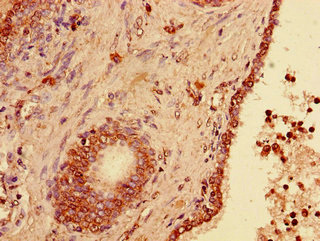
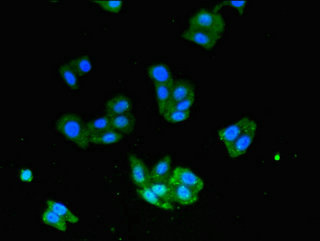
The antibody against USP33 was raised in rabbit using the Recombinant Human Ubiquitin carboxyl-terminal hydrolase 33 protein (251-550AA) as the immunogen. This antibody exists as a non-conjugated isotype IgG, purified by protein G with a purity greater than 95%. This antibody has been validated on ELISA, WB, IHC, IF.
$299.00
| Cat.No | ADC-18873A | Clonality | Polyclonal |
|---|---|---|---|
| Host Species | Rabbit | Target Name | USP33 |
| Form | Liquid | Species Reactivity | Human |
| Isotype | IgG | Storage Buffer | 0.01M PBS, 0.03% Proclin 300; Constituents: 50% Glycerol, PH 7.4 |
| Purification Method | >95%, Protein G purified | Conjugate | Non-conjugated |
| Application | ELISA, IF, IHC, WB | Storage | Upon receipt |
| Immunogen Description | Recombinant Human Ubiquitin carboxyl-terminal hydrolase 33 protein (251-550AA) | Target Species | Human |
|---|---|---|---|
| Immunogen Sequence | Complete sequences for the immunogen, target protein, and peptides are available upon request. | Uniprot ID | Q8TEY7 |
Uniprot Id
Q8TEY7
Target Species
Human
Target Name
USP33
Target Full Name
Ubiquitin carboxyl-terminal hydrolase 33
Target Function
Deubiquitinating enzyme involved in various processes such as centrosome duplication, cellular migration and beta-2 adrenergic receptor/ADRB2 recycling. Involved in regulation of centrosome duplication by mediating deubiquitination of CCP110 in S and G2/M phase, leading to stabilize CCP110 during the period which centrioles duplicate and elongate. Involved in cell migration via its interaction with intracellular domain of ROBO1, leading to regulate the Slit signaling. Plays a role in commissural axon guidance cross the ventral midline of the neural tube in a Slit-dependent manner, possibly by mediating the deubiquitination of ROBO1. Acts as a regulator of G-protein coupled receptor (GPCR) signaling by mediating the deubiquitination of beta-arrestins (ARRB1 and ARRB2) and beta-2 adrenergic receptor (ADRB2). Plays a central role in ADRB2 recycling and resensitization after prolonged agonist stimulation by constitutively binding ADRB2, mediating deubiquitination of ADRB2 and inhibiting lysosomal trafficking of ADRB2. Upon dissociation, it is probably transferred to the translocated beta-arrestins, leading to beta-arrestins deubiquitination and disengagement from ADRB2. This suggests the existence of a dynamic exchange between the ADRB2 and beta-arrestins. Deubiquitinates DIO2, thereby regulating thyroid hormone regulation. Mediates deubiquitination of both 'Lys-48'- and 'Lys-63'-linked polyubiquitin chains.
Target Subcellular Location
Cytoplasm, perinuclear region. Cytoplasm, cytoskeleton, microtubule organizing center, centrosome.; [Isoform 3]: Golgi apparatus.
Target Protein Families
Peptidase C19 family, USP20/USP33 subfamily
Target Tissue Specificity
Widely expressed.
Target Synonyms
Deubiquitinating enzyme 33; EC 3 1 2 15; hVDU1; KIAA1097; MGC16868; OTTHUMP00000011234; OTTHUMP00000011330; OTTHUMP00000011331; pVHL interacting deubiquitinating enzyme 1; Ubiquitin carboxyl terminal hydrolase 33; Ubiquitin carboxyl-terminal hydrolase 33; Ubiquitin specific peptidase 33; Ubiquitin specific processing protease 33; ubiquitin specific protease 33; Ubiquitin thioesterase 33; Ubiquitin thiolesterase 33; Ubiquitin-specific-processing protease 33; UBP33_HUMAN; USP 33; Usp33; VDU 1; VDU1; VHL interacting deubiquitinating enzyme 1; VHL-interacting deubiquitinating enzyme 1
Target Background
This gene encodes a deubiquinating enzyme important in a variety of processes, including Slit-dependent cell migration and beta-2 adrenergic receptor signaling. The protein is negatively regulated through ubiquitination by von Hippel-Lindau tumor protein (VHL). Alternative splicing results in multiple transcript variants and protein isoforms.
Notification