-
Chinese (Simplified)
-
English
-
German
-
Korean
-
Spanish
Chinese (Simplified)
English
German
Korean
Spanish
Sign up for an account to enjoy easy online shopping and instant order tracking.
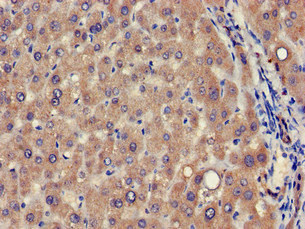
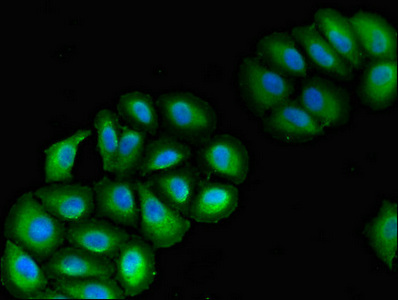
The antibody against VPS39 was raised in rabbit using the Recombinant Human Vam6/Vps39-like protein (263-490AA) as the immunogen. This antibody exists as a non-conjugated isotype IgG, purified by protein G with a purity greater than 95%. This antibody has been validated on ELISA, WB, IHC, IF.
$299.00
| Cat.No | ADC-10255A | Clonality | Polyclonal |
|---|---|---|---|
| Host Species | Rabbit | Target Name | VPS39 |
| Form | Liquid | Species Reactivity | Human, Mouse |
| Isotype | IgG | Storage Buffer | 0.01M PBS, 0.03% Proclin 300; Constituents: 50% Glycerol, PH 7.4 |
| Purification Method | >95%, Protein G purified | Conjugate | Non-conjugated |
| Application | ELISA, IF, IHC, WB | Storage | Upon receipt |
| Immunogen Description | Recombinant Human Vam6/Vps39-like protein (263-490AA) | Target Species | Human |
|---|---|---|---|
| Immunogen Sequence | Complete sequences for the immunogen, target protein, and peptides are available upon request. | Uniprot ID | Q96JC1 |
Uniprot Id
Q96JC1
Target Species
Human
Target Name
VPS39
Target Full Name
Vam6/Vps39-like protein
Target Function
Regulator of TGF-beta/activin signaling, inhibiting SMAD3- and activating SMAD2-dependent transcription. Acts by interfering with SMAD3/SMAD4 complex formation, this would lead to inhibition of SMAD3-dependent transcription and relieve SMAD3 inhibition of SMAD2-dependent promoters, thus increasing SMAD2-dependent transcription. Does not affect TGF-beta-induced SMAD2 or SMAD3 phosphorylation, nor SMAD2/SMAD4 complex formation.; Plays a role in vesicle-mediated protein trafficking to lysosomal compartments including the endocytic membrane transport and autophagic pathways. Acts as a component of the putative HOPS endosomal tethering complex which is proposed to be involved in the Rab5-to-Rab7 endosome conversion probably implicating MON1A/B, and via binding SNAREs and SNARE complexes to mediate tethering and docking events during SNARE-mediated membrane fusion. The HOPS complex is proposed to be recruited to Rab7 on the late endosomal membrane and to regulate late endocytic, phagocytic and autophagic traffic towards lysosomes. Involved in homotypic vesicle fusions between late endosomes and in heterotypic fusions between late endosomes and lysosomes. Required for fusion of endosomes and autophagosomes with lysosomes.
Target Subcellular Location
Cytoplasm. Lysosome membrane; Peripheral membrane protein. Late endosome membrane; Peripheral membrane protein.;
Target Protein Families
VAM6/VPS39 family
Target Tissue Specificity
Widely expressed, with highest levels in heart, skeletal muscle, kidney, pancreas, brain, placenta and spleen.
Target Synonyms
A230065P22Rik; AW743070; FLJ21681; FLJ46546; hVam6p; KIAA0770; RP23-348L16.12; TLP; TRAP1 like protein; Vacuolar protein sorting 39; Vacuolar protein sorting 39 homolog; VAM6; Vam6/Vps39 like; Vam6/Vps39 like protein; Vam6/Vps39-like protein; VPS 39; Vps39; VPS39_HUMAN
Target Background
This gene encodes a protein that may promote clustering and fusion of late endosomes and lysosomes. The protein may also act as an adaptor protein that modulates the transforming growth factor-beta response by coupling the transforming growth factor-beta receptor complex to the Smad pathway. Alternative splicing results in multiple transcript variants.
Notification