-
Chinese (Simplified)
-
English
-
German
-
Korean
-
Spanish
Chinese (Simplified)
English
German
Korean
Spanish
Sign up for an account to enjoy easy online shopping and instant order tracking.
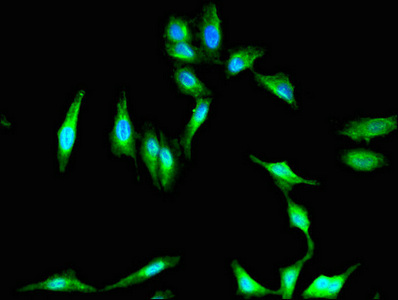
The antibody against PKHD1 was raised in rabbit using the Recombinant Human Fibrocystin protein (520-743AA) as the immunogen. This antibody exists as a non-conjugated isotype IgG, purified by protein G with a purity greater than 95%. This antibody has been validated on ELISA, WB, IF.
$299.00
| Cat.No | ADC-12122A | Clonality | Polyclonal |
|---|---|---|---|
| Host Species | Rabbit | Target Name | PKHD1 |
| Form | Liquid | Species Reactivity | Human |
| Isotype | IgG | Storage Buffer | 0.01M PBS, 0.03% Proclin 300; Constituents: 50% Glycerol, PH 7.4 |
| Purification Method | >95%, Protein G purified | Conjugate | Non-conjugated |
| Application | ELISA, IF, WB | Storage | Upon receipt |
| Immunogen Description | Recombinant Human Fibrocystin protein (520-743AA) | Target Species | Human |
|---|---|---|---|
| Immunogen Sequence | Complete sequences for the immunogen, target protein, and peptides are available upon request. | Uniprot ID | P08F94 |
Uniprot Id
P08F94
Target Species
Human
Target Name
PKHD1
Target Full Name
Fibrocystin
Target Function
Promotes ciliogenesis in renal epithelial cells and therefore participates in the tubules formation and/ or ensures the maintenance of the architecture of the lumen of the kidney. Has an impact on cellular symmetry by ensuring correct bipolar cell division through the regulation of centrosome duplication and mitotic spindle assembly and by maintaining oriented cell division (OCD) during tubular elongation through planar cell polarity (PCP) pathway. During epithelial cell morphogenesis regulates also cell-cell and cell-matrix adhesion and participates in cell motility. Promotes cell-cell contact through the positive regulation of PTK2 kinase activity leading to either positive regulation of epithelial cell proliferation through the HRAS/RAF1 pathways, or negative regulation of apoptosis through the PDK1/AKT1 pathway. May act in collecting-duct and biliary differentiation. May participate in the regulation of the cholangiocytes proliferation and the CCN2 production in an CXCL8-dependent manner.
Target Involvement
Polycystic kidney disease 4, with or without hepatic disease (PKD4)
Target Subcellular Location
Cell membrane; Single-pass type I membrane protein. Cytoplasm. Cell projection, cilium. Cytoplasm, cytoskeleton, cilium basal body. Cytoplasm, cytoskeleton, spindle. Chromosome, centromere. Apical cell membrane. Nucleus. Secreted, extracellular exosome. Secreted. Endoplasmic reticulum. Golgi apparatus.
Target Tissue Specificity
Predominantly expressed in fetal and adult kidney. In the kidney, it is found in the cortical and medullary collecting ducts. Also present in the adult pancreas, but at much lower levels. Detectable in fetal and adult liver. Rather indistinct signal in fe
Target Synonyms
ARPKD; FCYT; Fibrocystin; FPC; PKHD1; PKHD1_HUMAN; Polycystic kidney and hepatic disease 1 protein; Polyductin; TIGM1; Tigmin
Notification