• Contact info@abtriva.com for inquiries and orders.
  • Chinese (Simplified)

  • English

  • German

  • Korean

  • Spanish

United States (English / $ USD)

Rabbit anti-Human BANF1 Polyclonal Antibody

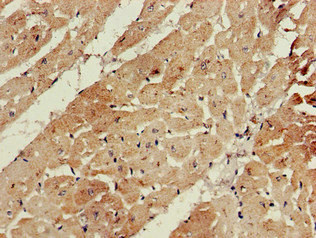
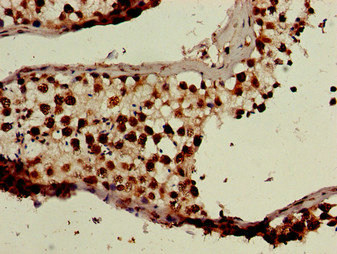
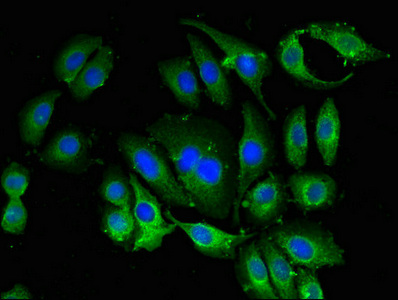
The antibody against BANF1 was raised in rabbit using the Recombinant Human Barrier-to-autointegration factor protein (2-89AA) as the immunogen. This antibody exists as a non-conjugated isotype IgG, purified by protein G with a purity greater than 95%. This antibody has been validated on ELISA, IHC, IF.

ADC-12846A

The antibody against BANF1 was raised in rabbit using the Recombinant Human Barrier-to-autointegration factor protein (2-89AA) as the immunogen. This antibody exists as a non-conjugated isotype IgG, purified by protein G with a purity greater than 95%. This antibody has been validated on ELISA, IHC, IF.

$299.00

Number
Order Exclusive Products Now

Request a Quote
High Purity LevelsPrecision and ReliabilityCustomization Options

Specifications


Cat.No ADC-12846A ClonalityPolyclonal
Host SpeciesRabbitTarget NameBANF1
FormLiquidSpecies ReactivityHuman
IsotypeIgGStorage Buffer0.01M PBS, 0.03% Proclin 300; Constituents: 50% Glycerol, PH 7.4
Purification Method>95%, Protein G purifiedConjugateNon-conjugated
ApplicationELISA, IF, IHCStorageUpon receipt

Immunogen Information


Immunogen DescriptionRecombinant Human Barrier-to-autointegration factor protein (2-89AA)Target SpeciesHuman
Immunogen SequenceComplete sequences for the immunogen, target protein, and peptides are available upon request.Uniprot IDO75531
Background Information
  • Uniprot Id

    O75531

  • Target Species

    Human

  • Target Name

    BANF1

  • Target Full Name

    Barrier-to-autointegration factor

  • Target Function

    Plays fundamental roles in nuclear assembly, chromatin organization, gene expression and gonad development. May potently compress chromatin structure and be involved in membrane recruitment and chromatin decondensation during nuclear assembly. Contains 2 non-specific dsDNA-binding sites which may promote DNA cross-bridging.; (Microbial infection) Exploited by retroviruses for inhibiting self-destructing autointegration of retroviral DNA, thereby promoting integration of viral DNA into the host chromosome. EMD and BAF are cooperative cofactors of HIV-1 infection. Association of EMD with the viral DNA requires the presence of BAF and viral integrase. The association of viral DNA with chromatin requires the presence of BAF and EMD.; (Microbial infection) In case of poxvirus infection, has an antiviral activity by blocking viral DNA replication.

  • Target Involvement

    Nestor-Guillermo progeria syndrome (NGPS)

  • Target Subcellular Location

    [Barrier-to-autointegration factor]: Nucleus. Cytoplasm. Chromosome. Nucleus envelope.

  • Target Protein Families

    BAF family

  • Target Tissue Specificity

    Widely expressed. Expressed in colon, brain, heart, kidney, liver, lung, ovary, pancreas, placenta, prostate, skeletal muscle, small intestine, spleen and testis. Not detected in thymus and peripheral blood leukocytes.

  • Target Synonyms

    BAF; BAF_HUMAN; BANF 1; BANF1; Barrier to autointegration factor 1; Barrier to autointegration factor; Barrier-to-autointegration factor; BCRG 1; BCRG1; BCRP 1; BCRP1; Breakpoint cluster region protein 1; D14S1460; MGC111161; NGPS

  • Target Background

    The protein encoded by this gene was first identified by its ability to protect retroviruses from intramolecular integration and therefore promote intermolecular integration into the host cell genome. The protein forms a homodimer which localizes to both the nucleus and cytoplasm and is specifically associated with chromosomes during mitosis. This protein binds to double stranded DNA in a non-specific manner and also binds to LEM-domain containing proteins of the nuclear envelope. This protein is thought to facilitate nuclear reassembly by binding with both DNA and inner nuclear membrane proteins and thereby recruit chromatin to the nuclear periphery. Alternative splicing results in multiple transcript variants encoding the same protein.

Inquire Rabbit anti-Human BANF1 Polyclonal Antibody Now


AbTriva respects your privacy and protects your personal data in accordance with AbTriva. For more information, please see our data protection statement. *

Notification