-
Chinese (Simplified)
-
English
-
German
-
Korean
-
Spanish

Chinese (Simplified)
English
German
Korean
Spanish
Sign up for an account to enjoy easy online shopping and instant order tracking.
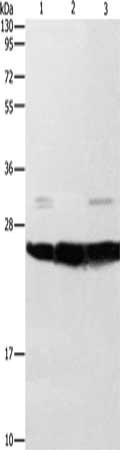
The antibody against SIGMAR1 was raised in rabbit using the Fusion protein of Human SIGMAR1 as the immunogen. This antibody exists as a non-conjugated isotype IgG, Antigen affinity purified. This antibody has been validated on ELISA, WB, IHC.
$299.00
| Cat.No | ADC-30750A | Clonality | Polyclonal |
|---|---|---|---|
| Host Species | Rabbit | Target Name | SIGMAR1 |
| Target Synonyms | Aging associated gene 8 protein antibody; Aging-associated gene 8 protein antibody; AL024364 antibody; hSigmaR1 antibody; mSigmaR1 antibody; opioid receptor, sigma 1 antibody; opioid receptor | Form | Liquid |
| Species Reactivity | Human, Mouse, Rat | Isotype | IgG |
| Storage Buffer | 0.05% NaN3, 40% Glycerol., pH7.4 PBS | Purification Method | Antigen affinity purified |
| Conjugate | Non-conjugated | Application | ELISA, IHC, WB |
| Storage | Upon receipt |
| Immunogen Description | Fusion protein of Human SIGMAR1 | Target Species | Human |
|---|---|---|---|
| Immunogen Sequence | Complete sequences for the immunogen, target protein, and peptides are available upon request. | Uniprot ID | Q99720 |
Uniprot Id
Q99720
Target Species
Human
Target Name
SIGMAR1
Target Full Name
Sigma non-opioid intracellular receptor 1
Target Function
Functions in lipid transport from the endoplasmic reticulum and is involved in a wide array of cellular functions probably through regulation of the biogenesis of lipid microdomains at the plasma membrane. Involved in the regulation of different receptors it plays a role in BDNF signaling and EGF signaling. Also regulates ion channels like the potassium channel and could modulate neurotransmitter release. Plays a role in calcium signaling through modulation together with ANK2 of the ITP3R-dependent calcium efflux at the endoplasmic reticulum. Plays a role in several other cell functions including proliferation, survival and death. Originally identified for its ability to bind various psychoactive drugs it is involved in learning processes, memory and mood alteration. Necessary for proper mitochondrial axonal transport in motor neurons, in particular the retrograde movement of mitochondria. Plays a role in protecting cells against oxidative stress-induced cell death via its interaction with RNF112.
Target Involvement
Amyotrophic lateral sclerosis 16, juvenile (ALS16); Distal spinal muscular atrophy, autosomal recessive, 2 (DSMA2)
Target Subcellular Location
Nucleus inner membrane. Nucleus outer membrane. Nucleus envelope. Cytoplasmic vesicle. Endoplasmic reticulum membrane. Membrane; Single-pass membrane protein. Lipid droplet. Cell junction. Cell membrane. Cell projection, growth cone. Cell junction, synapse, postsynaptic density membrane.
Target Protein Families
ERG2 family
Target Tissue Specificity
Widely expressed with higher expression in liver, colon, prostate, placenta, small intestine, heart and pancreas. Expressed in the retina by retinal pigment epithelial cells. Expressed in alpha-motor neurons.
Target Synonyms
Aging associated gene 8 protein; Aging-associated gene 8 protein; AL024364; hSigmaR1; mSigmaR1; opioid receptor, sigma 1; opioid receptor, sigma 1 isoform 1; RP23 167I12.6; SGMR1_HUMAN; SIG 1R; SIG-1R; Sigma 1-type opioid receptor; Sigma non-opioid intracellular receptor 1; sigma1 receptor; Sigma1-receptor; Sigma1R; Sigmar1; SR BP; SR-BP; SR31747 binding protein; SR31747-binding protein; SRBP
Target Background
This gene encodes a receptor protein that interacts with a variety of psychotomimetic drugs, including cocaine and amphetamines. The receptor is believed to play an important role in the cellular functions of various tissues associated with the endocrine, immune, and nervous systems. As indicated by its previous name, opioid receptor sigma 1 (OPRS1), the product of this gene was erroneously thought to function as an opioid receptor; it is now thought to be a non-opioid receptor. Mutations in this gene has been associated with juvenile amyotrophic lateral sclerosis 16. Alternative splicing of this gene results in transcript variants encoding distinct isoforms.
Notification