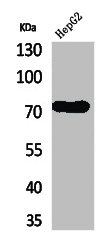
-
Chinese (Simplified)
-
English
-
German
-
Korean
-
Spanish
Chinese (Simplified)
English
German
Korean
Spanish
Sign up for an account to enjoy easy online shopping and instant order tracking.
The antibody against LY9 was raised in rabbit using the Synthesized peptide derived from the Internal region of Human CD229. as the immunogen. This antibody exists as a non-conjugated isotype IgG. The antibody was affinity-purified from rabbit antiserum by affinity-chromatography using epitope-specific immunogen. This antibody has been validated on WB, ELISA.
$167.00
| Cat.No | ADC-33042A | Clonality | Polyclonal |
|---|---|---|---|
| Host Species | Rabbit | Target Name | LY9 |
| Form | Liquid | Species Reactivity | Human |
| Isotype | IgG | Storage Buffer | 0.5% BSA and 0.02% sodium azide., Liquid in PBS containing 50% glycerol |
| Purification Method | The antibody was affinity-purified from rabbit antiserum by affinity-chromatography using epitope-specific immunogen. | Conjugate | Non-conjugated |
| Application | ELISA, WB | Storage | Upon receipt |
| Immunogen Description | Synthesized peptide derived from the Internal region of Human CD229. | Target Species | Human |
|---|---|---|---|
| Immunogen Sequence | Complete sequences for the immunogen, target protein, and peptides are available upon request. | Uniprot ID | Q9HBG7 |
Uniprot Id
Q9HBG7
Target Species
Human
Target Name
LY9
Target Full Name
T-lymphocyte surface antigen Ly-9
Target Function
Self-ligand receptor of the signaling lymphocytic activation molecule (SLAM) family. SLAM receptors triggered by homo- or heterotypic cell-cell interactions are modulating the activation and differentiation of a wide variety of immune cells and thus are involved in the regulation and interconnection of both innate and adaptive immune response. Activities are controlled by presence or absence of small cytoplasmic adapter proteins, SH2D1A/SAP and/or SH2D1B/EAT-2. May participate in adhesion reactions between T lymphocytes and accessory cells by homophilic interaction. Promotes T-cell differentiation into a helper T-cell Th17 phenotype leading to increased IL-17 secretion; the costimulatory activity requires SH2D1A. Promotes recruitment of RORC to the IL-17 promoter. May be involved in the maintenance of peripheral cell tolerance by serving as a negative regulator of the immune response. May disable autoantibody responses and inhibit IFN-gamma secretion by CD4(+) T-cells. May negatively regulate the size of thymic innate CD8(+) T-cells and the development of invariant natural killer T (iNKT) cells.
Target Subcellular Location
Membrane; Single-pass type I membrane protein. Cell membrane.
Target Tissue Specificity
Increased surface expression on T-cells of systemic lupus erythematosus (SLE) patients.
Target Synonyms
CD229; Cell surface molecule Ly-9; Cell surface molecule Ly9; hly9; LY 9; Ly9; LY9_HUMAN; Lymphocyte antigen 9; mLY9 ; Signaling lymphocytic activation molecule 3; SLAM family member 3; SLAMF3; T lymphocyte surface antigen Ly9 precursor ; T-lymphocyte surface antigen Ly-9
Target Background
LY9 belongs to the SLAM family of immunomodulatory receptors (see SLAMF1; MIM 603492) and interacts with the adaptor molecule SAP (SH2D1A; MIM 300490) (Graham et al., 2006 [PubMed 16365421]).
Notification