• Contact info@abtriva.com for inquiries and orders.
  • Chinese (Simplified)

  • English

  • German

  • Korean

  • Spanish

United States (English / $ USD)

Rabbit anti-Human EMR2 Polyclonal Antibody

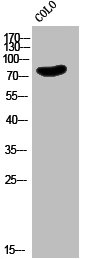
The antibody against ADGRE2 was raised in rabbit using the Synthesized peptide derived from the C-terminal region of Human EMR2. as the immunogen. This antibody exists as a non-conjugated isotype IgG. The antibody was affinity-purified from rabbit antiserum by affinity-chromatography using epitope-specific immunogen. This antibody has been validated on WB, IF, ELISA.

ADC-35413A

The antibody against ADGRE2 was raised in rabbit using the Synthesized peptide derived from the C-terminal region of Human EMR2. as the immunogen. This antibody exists as a non-conjugated isotype IgG. The antibody was affinity-purified from rabbit antiserum by affinity-chromatography using epitope-specific immunogen. This antibody has been validated on WB, IF, ELISA.

$167.00

Number
Order Exclusive Products Now

Request a Quote
High Purity LevelsPrecision and ReliabilityCustomization Options

Specifications


Cat.No ADC-35413A ClonalityPolyclonal
Host SpeciesRabbitTarget NameADGRE2
Target SynonymsADGRE2; EMR2; Adhesion G protein-coupled receptor E2; EGF-like module receptor 2; EGF-like module-containing mucin-like hormone receptor-like 2; CD antigen CD312FormLiquid
Species ReactivityHumanIsotypeIgG
Storage Buffer0.5% BSA and 0.02% sodium azide., Liquid in PBS containing 50% glycerolPurification MethodThe antibody was affinity-purified from rabbit antiserum by affinity-chromatography using epitope-specific immunogen.
ConjugateNon-conjugatedApplicationELISA, IF, WB
StorageUpon receipt

Immunogen Information


Immunogen DescriptionSynthesized peptide derived from the C-terminal region of Human EMR2.Target SpeciesHuman
Immunogen SequenceComplete sequences for the immunogen, target protein, and peptides are available upon request.Uniprot IDQ9UHX3
Background Information
  • Uniprot Id

    Q9UHX3

  • Target Species

    Human

  • Target Name

    ADGRE2

  • Target Full Name

    Adhesion G protein-coupled receptor E2

  • Target Function

    Cell surface receptor that binds to the chondroitin sulfate moiety of glycosaminoglycan chains and promotes cell attachment. Promotes granulocyte chemotaxis, degranulation and adhesion. In macrophages, promotes the release of inflammatory cytokines, including IL8 and TNF. Signals probably through G-proteins. Is a regulator of mast cell degranulation.

  • Target Involvement

    Vibratory urticaria (VBU)

  • Target Subcellular Location

    Cell membrane; Multi-pass membrane protein. Cell projection, ruffle membrane; Multi-pass membrane protein.

  • Target Protein Families

    G-protein coupled receptor 2 family, Adhesion G-protein coupled receptor (ADGR) subfamily

  • Target Tissue Specificity

    Expression is restricted to myeloid cells. Highest expression was found in peripheral blood leukocytes, followed by spleen and lymph nodes, with intermediate to low levels in thymus, bone marrow, fetal liver, placenta, and lung, and no expression in heart

  • Target Synonyms

    ADGRE2; EMR2; Adhesion G protein-coupled receptor E2; EGF-like module receptor 2; EGF-like module-containing mucin-like hormone receptor-like 2; CD antigen CD312

  • Target Background

    This gene encodes a member of the class B seven-span transmembrane (TM7) subfamily of G-protein coupled receptors. These proteins are characterized by an extended extracellular region with a variable number of N-terminal epidermal growth factor-like domains coupled to a TM7 domain via a mucin-like spacer domain. The encoded protein is expressed mainly in myeloid cells where it promotes cell-cell adhesion through interaction with chondroitin sulfate chains. This gene is situated in a cluster of related genes on chromosome 19. Alternatively spliced transcript variants encoding multiple isoforms have been observed for this gene.

Inquire Rabbit anti-Human EMR2 Polyclonal Antibody Now


AbTriva respects your privacy and protects your personal data in accordance with AbTriva. For more information, please see our data protection statement. *

Notification