-
Chinese (Simplified)
-
English
-
German
-
Korean
-
Spanish
Chinese (Simplified)
English
German
Korean
Spanish
Sign up for an account to enjoy easy online shopping and instant order tracking.
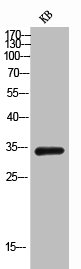
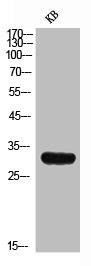
The antibody against AIMP1 was raised in rabbit using the Synthesized peptide derived from the Internal region of Human EMAP II. as the immunogen. This antibody exists as a non-conjugated isotype IgG. The antibody was affinity-purified from rabbit antiserum by affinity-chromatography using epitope-specific immunogen. This antibody has been validated on WB, ELISA.
$167.00
| Cat.No | ADC-36740A | Clonality | Polyclonal |
|---|---|---|---|
| Host Species | Rabbit | Target Name | AIMP1 |
| Target Synonyms | formerly antibody, formerly antibody; Small inducible cytokine subfamily E member 1 antibody; Small inducible cytokine subfamily E, member 1, member 1 (endothelial monocyte-activating) antibody; Small inducible cytokine subfamily E | Form | Liquid |
| Species Reactivity | Human | Isotype | IgG |
| Storage Buffer | 0.5% BSA and 0.02% sodium azide., Liquid in PBS containing 50% glycerol | Purification Method | The antibody was affinity-purified from rabbit antiserum by affinity-chromatography using epitope-specific immunogen. |
| Conjugate | Non-conjugated | Application | ELISA, WB |
| Storage | Upon receipt |
| Immunogen Description | Synthesized peptide derived from the Internal region of Human EMAP II. | Target Species | Human |
|---|---|---|---|
| Immunogen Sequence | Complete sequences for the immunogen, target protein, and peptides are available upon request. | Uniprot ID | Q12904 |
Uniprot Id
Q12904
Target Species
Human
Target Name
AIMP1
Target Full Name
Aminoacyl tRNA synthase complex-interacting multifunctional protein 1
Target Function
Non-catalytic component of the multisynthase complex. Stimulates the catalytic activity of cytoplasmic arginyl-tRNA synthase. Binds tRNA. Possesses inflammatory cytokine activity. Negatively regulates TGF-beta signaling through stabilization of SMURF2 by binding to SMURF2 and inhibiting its SMAD7-mediated degradation. Involved in glucose homeostasis through induction of glucagon secretion at low glucose levels. Promotes dermal fibroblast proliferation and wound repair. Regulates KDELR1-mediated retention of HSP90B1/gp96 in the endoplasmic reticulum. Plays a role in angiogenesis by inducing endothelial cell migration at low concentrations and endothelian cell apoptosis at high concentrations. Induces maturation of dendritic cells and monocyte cell adhesion. Modulates endothelial cell responses by degrading HIF-1A through interaction with PSMA7.
Target Involvement
Leukodystrophy, hypomyelinating, 3 (HLD3)
Target Subcellular Location
Nucleus. Cytoplasm, cytosol. Secreted. Endoplasmic reticulum. Golgi apparatus.
Target Synonyms
AIMP 1; Aimp1; AIMP1/p43; AIMP1_HUMAN; Aminoacyl tRNA synthetase complex-interacting multifunctional protein 1; ARS interacting multifunctional protein 1; EMAP 2; EMAP-2; EMAP-II; EMAP2; EMAPII; Endothelial monocyte activating polypeptide 2; Endothelial monocyte activating polypeptide; Endothelial monocyte-activating polypeptide 2; Endothelial monocyte-activating polypeptide II; HLD3; Multisynthase complex auxiliary component p43; Multisynthetase complex auxiliary component p43; OTTHUMP00000219673; p43; Scye 1; Scye1; Scye1, formerly; Small inducible cytokine subfamily E member 1; Small inducible cytokine subfamily E, member 1 (endothelial monocyte-activating); Small inducible cytokine subfamily E, member 1, formerly
Target Background
The protein encoded by this gene is a cytokine that is specifically induced by apoptosis, and it is involved in the control of angiogenesis, inflammation, and wound healing. The release of this cytokine renders the tumor-associated vasculature sensitive to tumor necrosis factor. The precursor protein is identical to the p43 subunit, which is associated with the multi-tRNA synthetase complex, and it modulates aminoacylation activity of tRNA synthetase in normal cells. This protein is also involved in the stimulation of inflammatory responses after proteolytic cleavage in tumor cells. Multiple transcript variants encoding different isoforms have been found for this gene. A pseudogene has been identified on chromosome 20.
Notification