-
Chinese (Simplified)
-
English
-
German
-
Korean
-
Spanish
Chinese (Simplified)
English
German
Korean
Spanish
Sign up for an account to enjoy easy online shopping and instant order tracking.
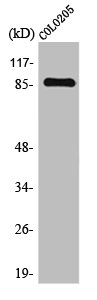
The antibody against TLK2 was raised in rabbit using the Synthesized peptide derived from the Internal region of Human TLK2. as the immunogen. This antibody exists as a non-conjugated isotype IgG. The antibody was affinity-purified from rabbit antiserum by affinity-chromatography using epitope-specific immunogen. This antibody has been validated on WB, ELISA.
$167.00
| Cat.No | ADC-37455A | Clonality | Polyclonal |
|---|---|---|---|
| Host Species | Rabbit | Target Name | TLK2 |
| Form | Liquid | Species Reactivity | Human, Mouse |
| Isotype | IgG | Storage Buffer | 0.5% BSA and 0.02% sodium azide., Liquid in PBS containing 50% glycerol |
| Purification Method | The antibody was affinity-purified from rabbit antiserum by affinity-chromatography using epitope-specific immunogen. | Conjugate | Non-conjugated |
| Application | ELISA, WB | Storage | Upon receipt |
| Immunogen Description | Synthesized peptide derived from the Internal region of Human TLK2. | Target Species | Human |
|---|---|---|---|
| Immunogen Sequence | Complete sequences for the immunogen, target protein, and peptides are available upon request. | Uniprot ID | Q86UE8 |
Uniprot Id
Q86UE8
Target Species
Human
Target Name
TLK2
Target Full Name
Serine/threonine-protein kinase tousled-like 2
Target Function
Serine/threonine-protein kinase involved in the process of chromatin assembly and probably also DNA replication, transcription, repair, and chromosome segregation. Phosphorylates the chromatin assembly factors ASF1A AND ASF1B. Phosphorylation of ASF1A prevents its proteasome-mediated degradation, thereby enhancing chromatin assembly. Negative regulator of amino acid starvation-induced autophagy.
Target Subcellular Location
Nucleus. Cytoplasm, perinuclear region. Cytoplasm, cytoskeleton. Note=Colocalizes with the cytoplasmic intermediate filament system during the G1 phase of the cell cycle. Present in the perinuclear region at S phase and in the nucleus at late G2.
Target Protein Families
Protein kinase superfamily, Ser/Thr protein kinase family
Target Tissue Specificity
Ubiquitous. Detected in placenta, fetal liver, kidney, pancreas, heart and skeletal muscle. Highly expressed in testis. Detected in spleen, thymus, colon, ovary, small intestine, prostate and peripheral blood leukocytes.
Target Synonyms
MGC44450; PKU alpha; PKU-alpha; Serine/threonine kinase; Serine/threonine protein kinase tousled like 2; Serine/threonine-protein kinase tousled-like 2; TLK 2; tlk2; TLK2_HUMAN; Tousled like kinase 2; Tousled-like kinase 2
Target Background
This gene encodes a nuclear serine/threonine kinase that was first identified in Arabidopsis. The encoded protein is thought to function in the regulation of chromatin assembly in the S phase of the cell cycle by regulating the levels of a histone H3/H4 chaperone. This protein is associated with double-strand break repair of DNA damage caused by radiation. Pseudogenes of this gene are present on chromosomes 10 and 17. Alternate splicing results in multiple transcript variants.
Notification