• Contact info@abtriva.com for inquiries and orders.
  • Chinese (Simplified)

  • English

  • German

  • Korean

  • Spanish

United States (English / $ USD)

Rabbit anti-Human CCR5 Polyclonal Antibody

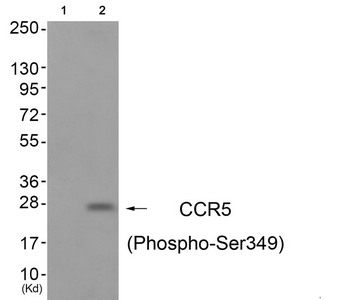
The antibody against CCR5 was raised in rabbit using the Peptide sequence around phosphorylation site of Serine 349 (E-I-S(p)-V-G) derived from Human CCR5. as the immunogen. Antibodies were produced by immunizing rabbits with synthetic phosphopeptide and KLH conjugates. Antibodies were purified by affinity-chromatography using epitope-specific phosphopeptide. Non-phospho specific antibodies were removed by chromatogramphy usi This antibody has been validated on ELISA, WB.

ADC-42797A

The antibody against CCR5 was raised in rabbit using the Peptide sequence around phosphorylation site of Serine 349 (E-I-S(p)-V-G) derived from Human CCR5. as the immunogen. Antibodies were produced by immunizing rabbits with synthetic phosphopeptide and KLH conjugates. Antibodies were purified by affinity-chromatography using epitope-specific phosphopeptide. Non-phospho specific antibodies were removed by chromatogramphy usi This antibody has been validated on ELISA, WB.

$360.00

Number
Order Exclusive Products Now

Request a Quote
High Purity LevelsPrecision and ReliabilityCustomization Options

Specifications


Cat.No ADC-42797A ClonalityPolyclonal
Host SpeciesRabbitTarget NameCCR5
Target SynonymsCCR5; CMKBR5; C-C chemokine receptor type 5; C-C CKR-5; CC-CKR-5; CCR-5; CCR5; CHEMR13; HIV-1 fusion coreceptor; CD antigen CD195FormLiquid
Species ReactivityHumanStorage BufferPH 7.4, 0.02% sodium azide and 50% glycerol., 150mM NaCl, Rabbit IgG in phosphate buffered saline (without Mg2+ and Ca2+)
ApplicationELISA, WBStorageUpon receipt

Immunogen Information


Immunogen DescriptionPeptide sequence around phosphorylation site of Serine 349 (E-I-S(p)-V-G) derived from Human CCR5.Target SpeciesHuman
Immunogen SequenceComplete sequences for the immunogen, target protein, and peptides are available upon request.Uniprot IDP51681
Background Information
  • Uniprot Id

    P51681

  • Target Species

    Human

  • Target Name

    CCR5

  • Target Full Name

    C-C chemokine receptor type 5

  • Target Function

    Receptor for a number of inflammatory CC-chemokines including CCL3/MIP-1-alpha, CCL4/MIP-1-beta and RANTES and subsequently transduces a signal by increasing the intracellular calcium ion level. May play a role in the control of granulocytic lineage proliferation or differentiation. Participates in T-lymphocyte migration to the infection site by acting as a chemotactic receptor.; (Microbial infection) Acts as a coreceptor (CD4 being the primary receptor) of human immunodeficiency virus-1/HIV-1.

  • Target Involvement

    Diabetes mellitus, insulin-dependent, 22 (IDDM22)

  • Target Subcellular Location

    Cell membrane; Multi-pass membrane protein.

  • Target Protein Families

    G-protein coupled receptor 1 family

  • Target Tissue Specificity

    Highly expressed in spleen, thymus, in the myeloid cell line THP-1, in the promyeloblastic cell line KG-1a and on CD4+ and CD8+ T-cells. Medium levels in peripheral blood leukocytes and in small intestine. Low levels in ovary and lung.

  • Target Synonyms

    CCR5; CMKBR5; C-C chemokine receptor type 5; C-C CKR-5; CC-CKR-5; CCR-5; CCR5; CHEMR13; HIV-1 fusion coreceptor; CD antigen CD195

  • Target Background

    This gene encodes a member of the beta chemokine receptor family, which is predicted to be a seven transmembrane protein similar to G protein-coupled receptors. This protein is expressed by T cells and macrophages, and is known to be an important co-receptor for macrophage-tropic virus, including HIV, to enter host cells. Defective alleles of this gene have been associated with the HIV infection resistance. The ligands of this receptor include monocyte chemoattractant protein 2 (MCP-2), macrophage inflammatory protein 1 alpha (MIP-1 alpha), macrophage inflammatory protein 1 beta (MIP-1 beta) and regulated on activation normal T expressed and secreted protein (RANTES). Expression of this gene was also detected in a promyeloblastic cell line, suggesting that this protein may play a role in granulocyte lineage proliferation and differentiation. This gene is located at the chemokine receptor gene cluster region. An allelic polymorphism in this gene results in both functional and non-functional alleles; the reference genome represents the functional allele. Two transcript variants encoding the same protein have been found for this gene.

Inquire Rabbit anti-Human CCR5 Polyclonal Antibody Now


AbTriva respects your privacy and protects your personal data in accordance with AbTriva. For more information, please see our data protection statement. *

Notification