• Contact info@abtriva.com for inquiries and orders.
  • Chinese (Simplified)

  • English

  • German

  • Korean

  • Spanish

United States (English / $ USD)

Rabbit anti-Human A2ML1 Polyclonal Antibody

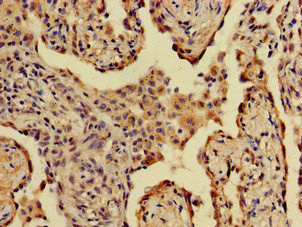
The antibody against A2ML1 was raised in rabbit using the Recombinant Human Alpha-2-macroglobulin-like protein 1 protein (625-751AA) as the immunogen. This antibody exists as a non-conjugated isotype IgG, purified by protein G with a purity greater than 95%. This antibody has been validated on ELISA, WB, IHC.

ADC-09969A

The antibody against A2ML1 was raised in rabbit using the Recombinant Human Alpha-2-macroglobulin-like protein 1 protein (625-751AA) as the immunogen. This antibody exists as a non-conjugated isotype IgG, purified by protein G with a purity greater than 95%. This antibody has been validated on ELISA, WB, IHC.

$299.00

Number
Order Exclusive Products Now

Request a Quote
High Purity LevelsPrecision and ReliabilityCustomization Options

Specifications


Cat.No ADC-09969A ClonalityPolyclonal
Host SpeciesRabbitTarget NameA2ML1
Target SynonymsA2ML1 antibody; CPAMD9Alpha-2-macroglobulin-like protein 1 antibody; C3 and PZP-like alpha-2-macroglobulin domain-containing protein 9 antibodyFormLiquid
Species ReactivityHumanIsotypeIgG
Storage Buffer0.01M PBS, 0.03% Proclin 300; Constituents: 50% Glycerol, PH 7.4Purification Method>95%, Protein G purified
ConjugateNon-conjugatedApplicationELISA, IHC, WB
StorageUpon receipt

Immunogen Information


Immunogen DescriptionRecombinant Human Alpha-2-macroglobulin-like protein 1 protein (625-751AA)Target SpeciesHuman
Immunogen SequenceComplete sequences for the immunogen, target protein, and peptides are available upon request.Uniprot IDA8K2U0
Background Information
  • Uniprot Id

    A8K2U0

  • Target Species

    Human

  • Target Name

    A2ML1

  • Target Full Name

    Alpha-2-macroglobulin-like protein 1

  • Target Function

    Is able to inhibit all four classes of proteinases by a unique 'trapping' mechanism. This protein has a peptide stretch, called the 'bait region' which contains specific cleavage sites for different proteinases. When a proteinase cleaves the bait region, a conformational change is induced in the protein which traps the proteinase. The entrapped enzyme remains active against low molecular weight substrates (activity against high molecular weight substrates is greatly reduced). Following cleavage in the bait region a thioester bond is hydrolyzed and mediates the covalent binding of the protein to the proteinase. Displays inhibitory activity against chymotrypsin, papain, thermolysin, subtilisin A and, to a lesser extent, elastase but not trypsin. May play an important role during desquamation by inhibiting extracellular proteases.

  • Target Subcellular Location

    Secreted.

  • Target Protein Families

    Protease inhibitor I39 (alpha-2-macroglobulin) family

  • Target Tissue Specificity

    In the epidermis, expressed predominantly in the granular layer at the apical edge of keratinocytes (at protein level). Also detected in placenta, testis and thymus but not in epithelia of kidney, lung, small intestine or colon.

  • Target Synonyms

    A2ML1; CPAMD9Alpha-2-macroglobulin-like protein 1; C3 and PZP-like alpha-2-macroglobulin domain-containing protein 9

  • Target Background

    This gene encodes a member of the alpha-macroglobulin superfamily. The encoded protein is thought to be an N-glycosylated monomeric protein that acts as an inhibitor of several proteases. It has been shown to form covalent interactions with proteases, and has been reported as the p170 antigen recognized by autoantibodies in the autoimmune disease paraneoplastic pemphigus (PNP; PMID:20805888). Mutations in these gene have also been associated with some cases of Noonan syndrome (NS; PMID:24939586) as well as some cases of otitis media (PMID:26121085). Alternative splicing results in multiple transcript variants encoding different isoforms.

Inquire Rabbit anti-Human A2ML1 Polyclonal Antibody Now


AbTriva respects your privacy and protects your personal data in accordance with AbTriva. For more information, please see our data protection statement. *

Notification