-
Chinese (Simplified)
-
English
-
German
-
Korean
-
Spanish
Chinese (Simplified)
English
German
Korean
Spanish
Sign up for an account to enjoy easy online shopping and instant order tracking.
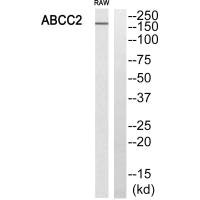
The antibody against ABCC2 was raised in rabbit using the Synthesized peptide derived from internal of Human ABCC2. as the immunogen. The antibody was affinity-purified from rabbit antiserum by affinity-chromatography using epitope-specific immunogen. This antibody has been validated on ELISA, WB.
$297.00
| Cat.No | ADC-41385A | Clonality | Polyclonal |
|---|---|---|---|
| Host Species | Rabbit | Target Name | ABCC2 |
| Form | Liquid | Species Reactivity | Human |
| Storage Buffer | PH 7.4, 0.02% sodium azide and 50% glycerol., 150mM NaCl, Rabbit IgG in phosphate buffered saline (without Mg2+ and Ca2+) | Purification Method | The antibody was affinity-purified from rabbit antiserum by affinity-chromatography using epitope-specific immunogen. |
| Application | ELISA, WB | Storage | Upon receipt |
| Immunogen Description | Synthesized peptide derived from internal of Human ABCC2. | Target Species | Human |
|---|---|---|---|
| Immunogen Sequence | Complete sequences for the immunogen, target protein, and peptides are available upon request. | Uniprot ID | Q92887 |
Uniprot Id
Q92887
Target Species
Human
Target Name
ABCC2
Target Full Name
ATP-binding cassette sub-family C member 2
Target Function
ATP-dependent transporter of the ATP-binding cassette (ABC) family that binds and hydrolyzes ATP to enable active transport of various substrates including many drugs, toxicants and endogenous compound across cell membranes. Transports a wide variety of conjugated organic anions such as sulfate-, glucuronide- and glutathione (GSH)-conjugates of endo- and xenobiotics substrates. Mediates hepatobiliary excretion of mono- and bis-glucuronidated bilirubin molecules and therefore play an important role in bilirubin detoxification. Mediates also hepatobiliary excretion of others glucuronide conjugates such as 17beta-estradiol 17-glucosiduronic acid and leukotriene C4. Transports sulfated bile salt such as taurolithocholate sulfate. Transport various anticancer drugs, such as anthracycline, vinca alkaloid and methotrexate and HIV-drugs such as protease inhibitors. Confers resistance to several anti-cancer drugs including cisplatin, doxorubicin, epirubicin, methotrexate, etoposide and vincristine.
Target Involvement
Dubin-Johnson syndrome (DJS)
Target Subcellular Location
Apical cell membrane; Multi-pass membrane protein.
Target Protein Families
ABC transporter superfamily, ABCC family, Conjugate transporter (TC 3.A.1.208) subfamily
Target Tissue Specificity
Expressed by polarized cells in liver, kidney and intestine. The highest expression is found in liver.
Target Synonyms
ABC30; abcC2; ATP binding cassette sub family C (CFTR/MRP) member 2; ATP binding cassette subfamily C member 2; ATP-binding cassette sub-family C member 2; Canalicular multidrug resistance protein; Canalicular multispecific organic anion transporter 1; CMOAT; CMOAT1; cMRP; DJS; KIAA1010; MRP 2; MRP2_HUMAN; Multidrug resistance associated protein 2; Multidrug resistance-associated protein 2
Target Background
The protein encoded by this gene is a member of the superfamily of ATP-binding cassette (ABC) transporters. ABC proteins transport various molecules across extra- and intra-cellular membranes. ABC genes are divided into seven distinct subfamilies (ABC1, MDR/TAP, MRP, ALD, OABP, GCN20, White). This protein is a member of the MRP subfamily which is involved in multi-drug resistance. This protein is expressed in the canalicular (apical) part of the hepatocyte and functions in biliary transport. Substrates include anticancer drugs such as vinblastine; therefore, this protein appears to contribute to drug resistance in mammalian cells. Several different mutations in this gene have been observed in patients with Dubin-Johnson syndrome (DJS), an autosomal recessive disorder characterized by conjugated hyperbilirubinemia.
Notification