-
Chinese (Simplified)
-
English
-
German
-
Korean
-
Spanish

Chinese (Simplified)
English
German
Korean
Spanish
Sign up for an account to enjoy easy online shopping and instant order tracking.
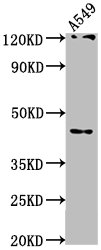
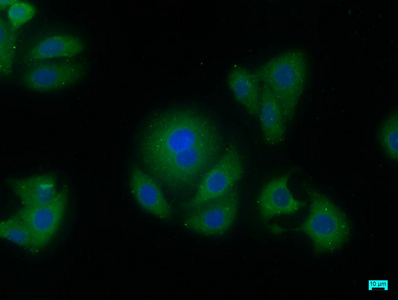
The antibody against AIFM2 was raised in rabbit using the Recombinant Human Apoptosis-inducing factor 2 protein (110-373AA) as the immunogen. This antibody exists as a non-conjugated isotype IgG, Antigen affinity purified. This antibody has been validated on ELISA, WB, IHC, IF.
$299.00
| Cat.No | ADC-01389A | Clonality | Polyclonal |
|---|---|---|---|
| Host Species | Rabbit | Target Name | AIFM2 |
| Form | Liquid | Species Reactivity | Human |
| Isotype | IgG | Storage Buffer | 0.01M PBS, 0.03% Proclin 300; Constituents: 50% Glycerol, PH 7.4 |
| Purification Method | Antigen affinity purified | Conjugate | Non-conjugated |
| Application | ELISA, IF, IHC, WB | Storage | Upon receipt |
| Immunogen Description | Recombinant Human Apoptosis-inducing factor 2 protein (110-373AA) | Target Species | Human |
|---|---|---|---|
| Immunogen Sequence | Complete sequences for the immunogen, target protein, and peptides are available upon request. | Uniprot ID | Q9BRQ8 |
Uniprot Id
Q9BRQ8
Target Species
Human
Target Name
AIFM2
Target Full Name
Ferroptosis suppressor protein 1
Target Function
A NAD(P)H-dependent oxidoreductase involved in cellular oxidative stress response. At the plasma membrane, catalyzes reduction of coenzyme Q/ubiquinone-10 to ubiquinol-10, a lipophilic radical-trapping antioxidant that prevents lipid oxidative damage and consequently ferroptosis. Cooperates with GPX4 to suppress phospholipid peroxidation and ferroptosis. This anti-ferroptotic function is independent of cellular glutathione levels. May play a role in mitochondrial stress signaling. Upon oxidative stress, associates with the lipid peroxidation end product 4-hydroxy-2-nonenal (HNE) forming a lipid adduct devoid of oxidoreductase activity, which then translocates from mitochondria into the nucleus triggering DNA damage and cell death. Capable of DNA binding in a non-sequence specific way.
Target Subcellular Location
Lipid droplet. Cell membrane; Lipid-anchor. Cytoplasm. Mitochondrion membrane. Nucleus.
Target Protein Families
FAD-dependent oxidoreductase family
Target Tissue Specificity
Detected in most normal tissues as two transcripts of 1.8 and 4.0 kb in length, respectively. Highly expressed in heart, moderately in liver and skeletal muscles, and expressed at low levels in placenta, lung, kidney, and pancreas. Both transcripts expres
Target Synonyms
5430437E11Rik; aifm2; AIFM2_HUMAN; AMID; Apoptosis inducing factor (AIF) homologous mitochondrion associated inducer of death; Apoptosis inducing factor (AIF) like mitochondrion associated inducer of death; Apoptosis inducing factor mitochondrion associated 2; Apoptosis-inducing factor 2; Apoptosis-inducing factor homologous mitochondrion-associated inducer of death; Apoptosis-inducing factor-like mitochondrion-associated inducer of death; Cys51Stop; HGNC11998; p53 responsive gene 3; p53 tumor suppressor; p53-responsive gene 3 protein; PRG3; TRP53; Tumor protein p53
Target Background
This gene encodes a flavoprotein oxidoreductase that binds single stranded DNA and is thought to contribute to apoptosis in the presence of bacterial and viral DNA. The expression of this gene is also found to be induced by tumor suppressor protein p53 in colon cancer cells.
Notification