-
Chinese (Simplified)
-
English
-
German
-
Korean
-
Spanish
Chinese (Simplified)
English
German
Korean
Spanish
Sign up for an account to enjoy easy online shopping and instant order tracking.
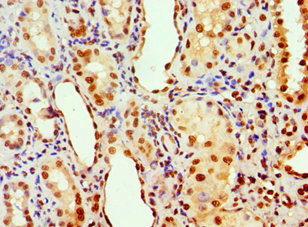
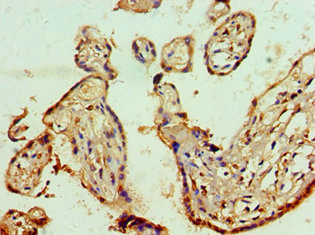
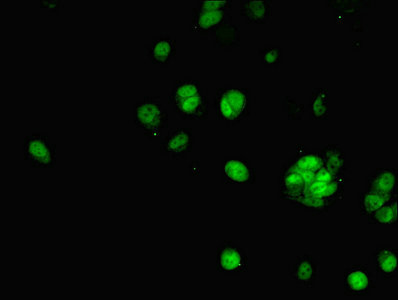
The antibody against ANP32A was raised in rabbit using the Recombinant Human Acidic leucine-rich nuclear phosphoprotein 32 family member A protein (1-170AA) as the immunogen. This antibody exists as a non-conjugated isotype IgG, Antigen affinity purified. This antibody has been validated on ELISA, IHC, IF.
$299.00
| Cat.No | ADC-44451A | Clonality | Polyclonal |
|---|---|---|---|
| Host Species | Rabbit | Target Name | ANP32A |
| Form | Liquid | Species Reactivity | Human |
| Isotype | IgG | Storage Buffer | 50% Glycerol, PBS with 0.02% sodium azide, pH7.3. |
| Purification Method | Antigen affinity purified | Conjugate | Non-conjugated |
| Application | ELISA, IF, IHC | Storage | Upon receipt |
| Immunogen Description | Recombinant Human Acidic leucine-rich nuclear phosphoprotein 32 family member A protein (1-170AA) | Target Species | Human |
|---|---|---|---|
| Immunogen Sequence | Complete sequences for the immunogen, target protein, and peptides are available upon request. | Uniprot ID | P39687 |
Uniprot Id
P39687
Target Species
Human
Target Name
ANP32A
Target Full Name
Acidic leucine-rich nuclear phosphoprotein 32 family member A
Target Function
Multifunctional protein that is involved in the regulation of many processes including tumor suppression, apoptosis, cell cycle progression or transcription. Promotes apoptosis by favouring the activation of caspase-9/CASP9 and allowing apoptosome formation. In addition, plays a role in the modulation of histone acetylation and transcription as part of the INHAT (inhibitor of histone acetyltransferases) complex. Inhibits the histone-acetyltranferase activity of EP300/CREBBP (CREB-binding protein) and EP300/CREBBP-associated factor by histone masking. Preferentially binds to unmodified histone H3 and sterically inhibiting its acetylation and phosphorylation leading to cell growth inhibition. Participates in other biochemical processes such as regulation of mRNA nuclear-to-cytoplasmic translocation and stability by its association with ELAVL1 (Hu-antigen R). Plays a role in E4F1-mediated transcriptional repression as well as inhibition of protein phosphatase 2A.; (Microbial infection) Plays an essential role in influenza A, B and C viral genome replication. Mechanistically, mediates the assembly of the viral replicase asymmetric dimers composed of PB1, PB2 and PA via its N-terminal region. Plays also an essential role in foamy virus mRNA export from the nucleus.
Target Subcellular Location
Nucleus. Cytoplasm. Endoplasmic reticulum.
Target Protein Families
ANP32 family
Target Tissue Specificity
Expressed in all tissues tested. Highly expressed in kidney and skeletal muscle, moderate levels of expression in brain, placenta and pancreas, and weakly expressed in lung. Found in all regions of the brain examined (amygdala, caudate nucleus, corpus cal
Target Synonyms
acidic (leucine-rich) nuclear phosphoprotein 32 family; member A; Acidic leucine-rich nuclear phosphoprotein 32 family member A; Acidic nuclear phosphoprotein 32 family member A; Acidic nuclear phosphoprotein pp32; AN32A_HUMAN; ANP32A; C15orf1; Cerebellar leucine rich acidic nuclear protein; Hepatopoietin Cn; HPPCn; I1PP2A; Inhibitor 1 of protein phosphatase 2A; inhibitor-1 of protein phosphatase-2A; Lanp; Leucine rich acidic nuclear protein; Leucine-rich acidic nuclear protein; MAPM; Mapmodulin; MGC119787; MGC150373; PHAPI; Potent heat stable protein phosphatase 2A inhibitor I1PP2A; Potent heat-stable protein phosphatase 2A inhibitor I1PP2A; PP32; Putative HLA DR associated protein I; Putative HLA-DR-associated protein I; Putative human HLA class II associated protein I; Putative human HLA class II-associated protein
Target Background
Enables RNA binding activity. Involved in nucleocytoplasmic transport. Located in endoplasmic reticulum; nucleus; and perinuclear region of cytoplasm.
Notification