-
Chinese (Simplified)
-
English
-
German
-
Korean
-
Spanish

Chinese (Simplified)
English
German
Korean
Spanish
Sign up for an account to enjoy easy online shopping and instant order tracking.
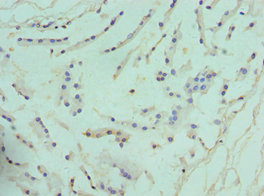
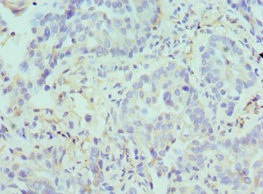
The antibody against ARG2 was raised in rabbit using the Recombinant Human Arginase-2, mitochondrial protein (1-354AA) as the immunogen. This antibody exists as a non-conjugated isotype IgG, Antigen affinity purified. This antibody has been validated on ELISA, WB, IHC, IP.
$299.00
| Cat.No | ADC-45008A | Clonality | Polyclonal |
|---|---|---|---|
| Host Species | Rabbit | Target Name | Arg2 |
| Target Synonyms | ARG2 antibody; ARGI2_HUMAN antibody; Arginase II mitochondrial antibody; Arginase type II antibody; Arginase-2 antibody; arginase-2 | Form | Liquid |
| Species Reactivity | Human, Mouse | Isotype | IgG |
| Storage Buffer | 50% Glycerol, PBS with 0.02% sodium azide, pH7.3. | Purification Method | Antigen affinity purified |
| Conjugate | Non-conjugated | Application | ELISA, IHC, WB, IP |
| Storage | Upon receipt |
| Immunogen Description | Recombinant Human Arginase-2, mitochondrial protein (1-354AA) | Target Species | Human |
|---|---|---|---|
| Immunogen Sequence | Complete sequences for the immunogen, target protein, and peptides are available upon request. | Uniprot ID | P78540 |
Uniprot Id
P78540
Target Species
Human
Target Name
ARG2
Target Full Name
Arginase-2, mitochondrial
Target Function
May play a role in the regulation of extra-urea cycle arginine metabolism and also in down-regulation of nitric oxide synthesis. Extrahepatic arginase functions to regulate L-arginine bioavailability to nitric oxid synthase (NOS). Arginine metabolism is a critical regulator of innate and adaptive immune responses. Seems to be involved in negative regulation of the survival capacity of activated CD4(+) and CD8(+) T cells. May suppress inflammation-related signaling in asthmatic airway epithelium. May contribute to the immune evasion of H.pylori by restricting M1 macrophage activation and polyamine metabolism. In fetal dendritic cells may play a role in promoting immune suppression and T cell TNF-alpha production during gestation. Regulates RPS6KB1 signaling, which promotes endothelial cell senescence and inflammation and implicates NOS3/eNOS dysfunction. Can inhibit endothelial autophagy independently of its enzymatic activity implicating mTORC2 signaling. Involved in vascular smooth muscle cell senescence and apoptosis independently of its enzymatic activity. Since NOS is found in the penile corpus cavernosum smooth muscle, the clitoral corpus cavernosum and the vagina, arginase-2 plays a role in both male and female sexual arousal.
Target Subcellular Location
Mitochondrion.
Target Protein Families
Arginase family
Target Tissue Specificity
Expressed most strongly in kidney and prostate, much less strongly in the brain, skeletal muscle, placenta, lung, mammary gland, macrophage, uterus, testis and gut, but apparently not in the liver, heart and pancreas. Expressed in activated T cells.
Target Research Area
Signal Transduction
Target Synonyms
ARG2; ARGI2_HUMAN; Arginase II mitochondrial ; Arginase type II; Arginase-2; arginase-2, mitochondrial; Kidney arginase; Kidney type arginase ; Kidney-type arginase; L arginine amidinohydrolase; L arginine ureahydrolase; mitochondrial; Non hepatic arginase; Non-hepatic arginase; Nonhepatic arginase; Type II arginase
Target Background
Arginase catalyzes the hydrolysis of arginine to ornithine and urea. At least two isoforms of mammalian arginase exists (types I and II) which differ in their tissue distribution, subcellular localization, immunologic crossreactivity and physiologic function. The type II isoform encoded by this gene, is located in the mitochondria and expressed in extra-hepatic tissues, especially kidney. The physiologic role of this isoform is poorly understood; it is thought to play a role in nitric oxide and polyamine metabolism. Transcript variants of the type II gene resulting from the use of alternative polyadenylation sites have been described.
Notification