-
Chinese (Simplified)
-
English
-
German
-
Korean
-
Spanish
Chinese (Simplified)
English
German
Korean
Spanish
Sign up for an account to enjoy easy online shopping and instant order tracking.
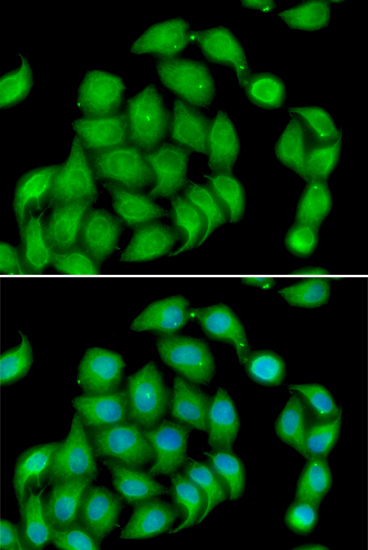
The antibody against ASPH was raised in Rabbit using the recombinant fusion protein containing a sequence corresponding to amino acids 81-270 of human ASPH (NP_001158227.1) as the immunogen. The polyclonal antibody exists as a isotype IgG, by affinity purification. This antibody has been validated on IF/ICC, ELISA.
| Cat.No | ADA-02816A | Clonality | Polyclonal |
|---|---|---|---|
| Host Species | Rabbit | Target Name | ASPH |
| Target Synonyms | AAH; BAH; HAAH; JCTN; FDLAB; junctin; CASQ2BP1; ASPH | Form | Liquid |
| Species Reactivity | Human | Isotype | IgG |
| Storage Buffer | 50% Glycerol, PBS with 0.02% sodium azide, pH7.3. | Purification Method | Affinity purification |
| Application | ELISA, IF/ICC |
| Immunogen Description | Recombinant fusion protein containing a sequence corresponding to amino acids 81-270 of human ASPH (NP_001158227.1). | Target Species | Human |
|---|---|---|---|
| Immunogen Sequence | EEVLGKLGIYDADGDGDFDVDDAKVLLGLKERSTSEPAVPPEEAEPHTEPEEQVPVEAEPQNIEDEAKEQIQSLLHEMVHAEHETEHSYHVEETVSQDCNQDMEEMMSEQENPDSSEPVVEDERLHHDTDDVTYQVYEEQAVYEPLENEGIEITEVTAPPEDNPVEDSQVIVEEVSIFPVEEQQEVPPDT | Uniprot ID | Q12797 |
Uniprot Id
Q12797
Target Species
Human
Target Name
ASPH
Target Full Name
Aspartyl/asparaginyl beta-hydroxylase
Target Function
specifically hydroxylates an Asp or Asn residue in certain epidermal growth factor-like (EGF) domains of a number of proteins.; membrane-bound Ca(2+)-sensing protein, which is a structural component of the ER-plasma membrane junctions. Isoform 8 regulates the activity of Ca(+2) released-activated Ca(+2) (CRAC) channels in T-cells.
Target Involvement
Facial dysmorphism, lens dislocation, anterior segment abnormalities, and spontaneous filtering blebs (FDLAB)
Target Subcellular Location
[Isoform 1]: Endoplasmic reticulum membrane; Single-pass type II membrane protein.; [Isoform 4]: Sarcoplasmic reticulum membrane; Single-pass type II membrane protein.; [Isoform 8]: Endoplasmic reticulum membrane; Single-pass type II membrane protein.
Target Protein Families
Aspartyl/asparaginyl beta-hydroxylase family
Target Tissue Specificity
Isoform 1 is detected in all tissues tested. Isoform 8 is mainly expressed in pancreas, heart, brain, kidney and liver. Isoform 8 is expressed in kidney (at protein level).
Target Research Area
Signal Transduction
Target Synonyms
ASPH; BAHAspartyl/asparaginyl beta-hydroxylase; EC 1.14.11.16; Aspartate beta-hydroxylase; ASP beta-hydroxylase; Peptide-aspartate beta-dioxygenase
Target Background
This gene is thought to play an important role in calcium homeostasis. The gene is expressed from two promoters and undergoes extensive alternative splicing. The encoded set of proteins share varying amounts of overlap near their N-termini but have substantial variations in their C-terminal domains resulting in distinct functional properties. The longest isoforms (a and f) include a C-terminal Aspartyl/Asparaginyl beta-hydroxylase domain that hydroxylates aspartic acid or asparagine residues in the epidermal growth factor (EGF)-like domains of some proteins, including protein C, coagulation factors VII, IX, and X, and the complement factors C1R and C1S. Other isoforms differ primarily in the C-terminal sequence and lack the hydroxylase domain, and some have been localized to the endoplasmic and sarcoplasmic reticulum. Some of these isoforms are found in complexes with calsequestrin, triadin, and the ryanodine receptor, and have been shown to regulate calcium release from the sarcoplasmic reticulum. Some isoforms have been implicated in metastasis.
Notification