-
Chinese (Simplified)
-
English
-
German
-
Korean
-
Spanish
Chinese (Simplified)
English
German
Korean
Spanish
Sign up for an account to enjoy easy online shopping and instant order tracking.
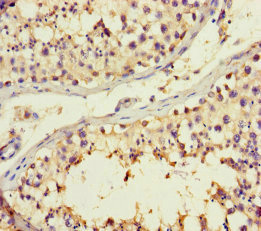
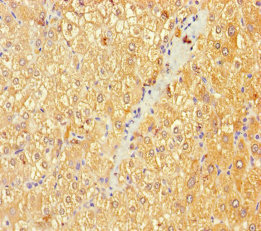
The antibody against B4GALT3 was raised in rabbit using the Recombinant Human Beta-1,4-galactosyltransferase 3 protein (34-393AA) as the immunogen. This antibody exists as a non-conjugated isotype IgG, purified by protein G with a purity greater than 95%. This antibody has been validated on ELISA, WB, IHC.
$299.00
| Cat.No | ADC-50479A | Clonality | Polyclonal |
|---|---|---|---|
| Host Species | Rabbit | Target Name | B4GALT3 |
| Target Synonyms | 4 galactosyltransferase 3 antibody; Beta 1, 4 galactosyltransferase 3 antibody; UDP-Gal:beta-GlcNAc beta-1 antibody; UDP-galactose:beta-N-acetylglucosamine beta-1 antibody, 4 GalTase 3 antibody; Beta-1 antibody; Beta-N-acetylglucosaminyl-glycolipid beta-1 antibody; Beta4Gal T3 antibody; Beta4Gal-T3 antibody; Nal synthase antibody; UDP Gal:beta GlcNAc beta-1, 4-galactosyltransferase 3 antibody; 4-galactosyltransferase antibody; 4-GalTase 3 antibody; b4Gal T3 antibody; b4Gal-T3 antibody; B4GALT3 antibody; B4GT3_HUMAN antibody; Beta 1 | Form | Liquid |
| Species Reactivity | Human | Isotype | IgG |
| Storage Buffer | 0.01M PBS, 0.03% Proclin 300; Constituents: 50% Glycerol, PH 7.4 | Purification Method | >95%, Protein G purified |
| Conjugate | Non-conjugated | Application | ELISA, IHC, WB |
| Storage | Upon receipt |
| Immunogen Description | Recombinant Human Beta-1,4-galactosyltransferase 3 protein (34-393AA) | Target Species | Human |
|---|---|---|---|
| Immunogen Sequence | Complete sequences for the immunogen, target protein, and peptides are available upon request. | Uniprot ID | O60512 |
Uniprot Id
O60512
Target Species
Human
Target Name
B4GALT3
Target Full Name
Beta-1,4-galactosyltransferase 3
Target Function
Responsible for the synthesis of complex-type N-linked oligosaccharides in many glycoproteins as well as the carbohydrate moieties of glycolipids.
Target Subcellular Location
Golgi apparatus, Golgi stack membrane; Single-pass type II membrane protein. Note=Trans cisternae of Golgi stack.
Target Protein Families
Glycosyltransferase 7 family
Target Tissue Specificity
Found in various tissues. Highest expression in placenta, prostate, testis, ovary, intestine and muscle, and in fetal brain.
Target Research Area
Metabolism
Target Synonyms
4-galactosyltransferase 3; 4-galactosyltransferase; 4-GalTase 3; b4Gal T3; b4Gal-T3; B4GALT3; B4GT3_HUMAN; Beta 1,4 galactosyltransferase 3 ; Beta 1,4 GalTase 3; Beta-1; Beta-N-acetylglucosaminyl-glycolipid beta-1; Beta4Gal T3; Beta4Gal-T3; Nal synthase; UDP Gal:beta GlcNAc beta-1,4 galactosyltransferase 3; UDP-Gal:beta-GlcNAc beta-1; UDP-galactose:beta-N-acetylglucosamine beta-1
Target Background
This gene is one of seven beta-1, 4-galactosyltransferase (beta4GalT) genes. They encode type II membrane-bound glycoproteins that appear to have exclusive specificity for the donor substrate UDP-galactose; all transfer galactose in a beta1, 4 linkage to similar acceptor sugars: GlcNAc, Glc, and Xyl. Each beta4GalT has a distinct function in the biosynthesis of different glycoconjugates and saccharide structures. As type II membrane proteins, they have an N-terminal hydrophobic signal sequence that directs the protein to the Golgi apparatus and which then remains uncleaved to function as a transmembrane anchor. By sequence similarity, the beta4GalTs form four groups: beta4GalT1 and beta4GalT2, beta4GalT3 and beta4GalT4, beta4GalT5 and beta4GalT6, and beta4GalT7. This gene encodes an enzyme that may be mainly involved in the synthesis of the first N-acetyllactosamine unit of poly-N-acetyllactosamine chains. Multiple alternatively spliced transcript variants encoding the same protein have been found for this gene.
Notification