• Contact info@abtriva.com for inquiries and orders.
  • Chinese (Simplified)

  • English

  • German

  • Korean

  • Spanish

United States (English / $ USD)

Rabbit anti-Human BCAM Polyclonal Antibody

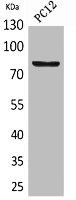
The antibody against BCAM was raised in rabbit using the Synthesized peptide derived from the Internal region of Human CD239. as the immunogen. This antibody exists as a non-conjugated isotype IgG. The antibody was affinity-purified from rabbit antiserum by affinity-chromatography using epitope-specific immunogen. This antibody has been validated on WB, ELISA.

ADC-36894A

The antibody against BCAM was raised in rabbit using the Synthesized peptide derived from the Internal region of Human CD239. as the immunogen. This antibody exists as a non-conjugated isotype IgG. The antibody was affinity-purified from rabbit antiserum by affinity-chromatography using epitope-specific immunogen. This antibody has been validated on WB, ELISA.

$167.00

Number
Order Exclusive Products Now

Request a Quote
High Purity LevelsPrecision and ReliabilityCustomization Options

Specifications


Cat.No ADC-36894A ClonalityPolyclonal
Host SpeciesRabbitTarget NameBCAM
FormLiquidSpecies ReactivityHuman, Mouse, Rat
IsotypeIgGStorage Buffer0.5% BSA and 0.02% sodium azide., Liquid in PBS containing 50% glycerol
Purification MethodThe antibody was affinity-purified from rabbit antiserum by affinity-chromatography using epitope-specific immunogen.ConjugateNon-conjugated
ApplicationELISA, WBStorageUpon receipt

Immunogen Information


Immunogen DescriptionSynthesized peptide derived from the Internal region of Human CD239.Target SpeciesHuman
Immunogen SequenceComplete sequences for the immunogen, target protein, and peptides are available upon request.Uniprot IDP50895
Background Information
  • Uniprot Id

    P50895

  • Target Species

    Human

  • Target Name

    BCAM

  • Target Full Name

    Basal cell adhesion molecule

  • Target Function

    Laminin alpha-5 receptor. May mediate intracellular signaling.

  • Target Subcellular Location

    Membrane; Single-pass type I membrane protein.

  • Target Tissue Specificity

    Wide tissue distribution (highest in the pancreas and very low in brain). Closely associated with the basal layer of cells in epithelia and the endothelium of blood vessel walls.

  • Target Synonyms

    Antigen identified by monoclonal F8 ; AU; Auberger B antigen; B CAM cell surface glycoprotein; B cell adhesion molecule; B-CAM cell surface glycoprotein; Basal cell adhesion molecule (Lu and Au blood groups); Basal cell adhesion molecule (Lutheran blood group); Basal cell adhesion molecule; Basal cell adhesion molecule Lu and Au blood groups; Basal cell adhesion molecule Lutheran blood group; Bcam; BCAM_HUMAN; CD239; CD239 antigen; F8/G253 antigen; Glycoprotein 95kDa; LU; Lutheran; Lutheran antigen; Lutheran blood group (Auberger b antigen included); Lutheran blood group Auberger b antigen included ; Lutheran blood group glycoprotein; MSK19

  • Target Background

    This gene encodes Lutheran blood group glycoprotein, a member of the immunoglobulin superfamily and a receptor for the extracellular matrix protein, laminin. The protein contains five extracellular immunoglobulin domains, a single transmembrane domain, and a short C-terminal cytoplasmic tail. This protein may play a role in epithelial cell cancer and in vaso-occlusion of red blood cells in sickle cell disease. Polymorphisms in this gene define some of the antigens in the Lutheran system and also the Auberger system. Inactivating variants of this gene result in the recessive Lutheran null phenotype, Lu(a-b-), of the Lutheran blood group. Two transcript variants encoding different isoforms have been found for this gene.

Inquire Rabbit anti-Human BCAM Polyclonal Antibody Now


AbTriva respects your privacy and protects your personal data in accordance with AbTriva. For more information, please see our data protection statement. *

Notification