-
Chinese (Simplified)
-
English
-
German
-
Korean
-
Spanish
Chinese (Simplified)
English
German
Korean
Spanish
Sign up for an account to enjoy easy online shopping and instant order tracking.
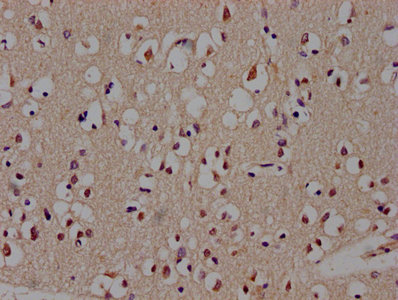
The antibody against BCL11B was raised in rabbit using the Recombinant Human B-cell lymphoma/leukemia 11B protein (500-550AA) as the immunogen. This antibody exists as a non-conjugated isotype IgG, purified by protein G with a purity greater than 95%. This antibody has been validated on ELISA, IHC.
$299.00
| Cat.No | ADC-14964A | Clonality | Polyclonal |
|---|---|---|---|
| Host Species | Rabbit | Target Name | BCL11B |
| Form | Liquid | Species Reactivity | Human |
| Isotype | IgG | Storage Buffer | 0.01M PBS, 0.03% Proclin 300; Constituents: 50% Glycerol, PH 7.4 |
| Purification Method | >95%, Protein G purified | Conjugate | Non-conjugated |
| Application | ELISA, IHC | Storage | Upon receipt |
| Immunogen Description | Recombinant Human B-cell lymphoma/leukemia 11B protein (500-550AA) | Target Species | Human |
|---|---|---|---|
| Immunogen Sequence | Complete sequences for the immunogen, target protein, and peptides are available upon request. | Uniprot ID | Q9C0K0 |
Uniprot Id
Q9C0K0
Target Species
Human
Target Name
BCL11B
Target Full Name
B-cell lymphoma/leukemia 11B
Target Function
Key regulator of both differentiation and survival of T-lymphocytes during thymocyte development in mammals. Essential in controlling the responsiveness of hematopoietic stem cells to chemotactic signals by modulating the expression of the receptors CCR7 and CCR9, which direct the movement of progenitor cells from the bone marrow to the thymus. Is a regulator of IL2 promoter and enhances IL2 expression in activated CD4(+) T-lymphocytes. Tumor-suppressor that represses transcription through direct, TFCOUP2-independent binding to a GC-rich response element. May also function in the P53-signaling pathway.
Target Involvement
Immunodeficiency 49 (IMD49)
Target Subcellular Location
Nucleus.
Target Tissue Specificity
Highly expressed in brain and in malignant T-cell lines derived from patients with adult T-cell leukemia/lymphoma.
Target Research Area
Others
Target Synonyms
ATL1 alpha; ATL1; ATL1 beta; ATL1 gamma; ATL1-delta; B cell CLL/lymphoma 11B/T cell receptor delta constant region fusion protein; B cell lymphoma/leukemia 11B; B-cell CLL/lymphoma 11B (zinc finger protein); B-cell CLL/lymphoma 11B; B-cell lymphoma/leukemia 11B; BC11B_HUMAN; BCL-11B; Bcl11b; BCL11B/TRDC fusion; COUP TF interacting protein 2; COUP-TF interacting protein 2; COUP-TF-interacting protein 2; Ctip 2; CTIP-2; CTIP2; hRIT1 alpha; hRit1; Radiation induced tumor suppressor gene 1; Radiation induced tumor suppressor gene 1 protein; Radiation-induced tumor suppressor gene 1 protein; Rit 1; Rit1; zinc finger protein hRit1 alpha; ZNF856B
Target Background
This gene encodes a C2H2-type zinc finger protein and is closely related to BCL11A, a gene whose translocation may be associated with B-cell malignancies. Although the specific function of this gene has not been determined, the encoded protein is known to be a transcriptional repressor, and is regulated by the NURD nucleosome remodeling and histone deacetylase complex. Four alternatively spliced transcript variants encoding distinct isoforms have been found for this gene.
Notification