-
Chinese (Simplified)
-
English
-
German
-
Korean
-
Spanish
Chinese (Simplified)
English
German
Korean
Spanish
Sign up for an account to enjoy easy online shopping and instant order tracking.
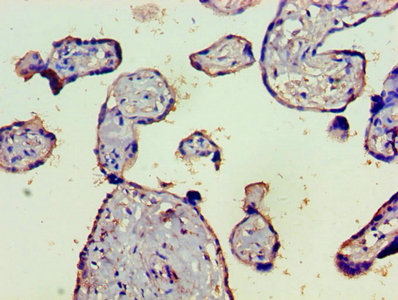
The antibody against C4B was raised in rabbit using the Recombinant Human Complement C4-B protein (1454-1744AA) as the immunogen. This antibody exists as a non-conjugated isotype IgG, purified by protein G with a purity greater than 95%. This antibody has been validated on ELISA, IHC.
$299.00
| Cat.No | ADC-45661A | Clonality | Polyclonal |
|---|---|---|---|
| Host Species | Rabbit | Target Name | C4B |
| Form | Liquid | Species Reactivity | Human |
| Isotype | IgG | Storage Buffer | 0.01M PBS, 0.03% Proclin 300; Constituents: 50% Glycerol, PH 7.4 |
| Purification Method | >95%, Protein G purified | Conjugate | Non-conjugated |
| Application | ELISA, IHC | Storage | Upon receipt |
| Immunogen Description | Recombinant Human Complement C4-B protein (1454-1744AA) | Target Species | Human |
|---|---|---|---|
| Immunogen Sequence | Complete sequences for the immunogen, target protein, and peptides are available upon request. | Uniprot ID | P0C0L5 |
Uniprot Id
P0C0L5
Target Species
Human
Target Name
C4B
Target Full Name
Complement C4-B
Target Function
Non-enzymatic component of the C3 and C5 convertases and thus essential for the propagation of the classical complement pathway. Covalently binds to immunoglobulins and immune complexes and enhances the solubilization of immune aggregates and the clearance of IC through CR1 on erythrocytes. C4A isotype is responsible for effective binding to form amide bonds with immune aggregates or protein antigens, while C4B isotype catalyzes the transacylation of the thioester carbonyl group to form ester bonds with carbohydrate antigens.; Derived from proteolytic degradation of complement C4, C4a anaphylatoxin is a mediator of local inflammatory process. It induces the contraction of smooth muscle, increases vascular permeability and causes histamine release from mast cells and basophilic leukocytes.
Target Involvement
Systemic lupus erythematosus (SLE); Complement component 4B deficiency (C4BD)
Target Subcellular Location
Secreted. Cell junction, synapse. Cell projection, axon. Cell projection, dendrite.
Target Tissue Specificity
Complement component C4 is expressed at highest levels in the liver, at moderate levels in the adrenal cortex, adrenal medulla, thyroid gland, and the kidney, and at lowest levels in the heart, ovary, small intestine, thymus, pancreas and spleen. The extr
Target Research Area
Immunology
Target Synonyms
Basic complement C4; C2B5; C3 and PZP-like alpha-2-macroglobulin domain-containing protein 3; C4b; C4B1; C4B2; C4B3; CO4B_HUMAN; Complement C4 gamma chain; Complement component 4B; CPAMD3
Target Background
This gene encodes the basic form of complement factor 4, and together with the C4A gene, is part of the classical activation pathway. The protein is expressed as a single chain precursor which is proteolytically cleaved into a trimer of alpha, beta, and gamma chains prior to secretion. The trimer provides a surface for interaction between the antigen-antibody complex and other complement components. The alpha chain may be cleaved to release C4 anaphylatoxin, a mediator of local inflammation. Deficiency of this protein is associated with systemic lupus erythematosus. This gene localizes to the major histocompatibility complex (MHC) class III region on chromosome 6. Varying haplotypes of this gene cluster exist, such that individuals may have 1, 2, or 3 copies of this gene. In addition, this gene exists as a long form and a short form due to the presence or absence of a 6.4 kb endogenous HERV-K retrovirus in intron 9.
Notification