• Contact info@abtriva.com for inquiries and orders.
  • Chinese (Simplified)

  • English

  • German

  • Korean

  • Spanish

United States (English / $ USD)

Rabbit anti-Human CALHM1 Polyclonal Antibody

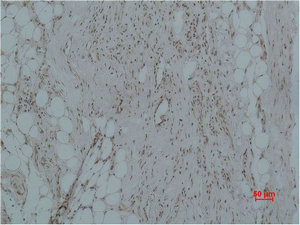
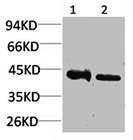
The antibody against CALHM1 was raised in rabbit using the Synthetic Peptide as the immunogen. This antibody exists as a non-conjugated isotype IgG. This antibody has been validated on WB, IHC.

ADC-33126A

The antibody against CALHM1 was raised in rabbit using the Synthetic Peptide as the immunogen. This antibody exists as a non-conjugated isotype IgG. This antibody has been validated on WB, IHC.

$167.00

Number
Order Exclusive Products Now

Request a Quote
High Purity LevelsPrecision and ReliabilityCustomization Options

Specifications


Cat.No ADC-33126A ClonalityPolyclonal
Host SpeciesRabbitTarget NameCALHM1
Target SynonymsCALHM1; FAM26C; Calcium homeostasis modulator protein 1; Protein FAM26CFormLiquid
Species ReactivityHuman, RatIsotypeIgG
Storage BufferPH 7.4, containing 0.02% sodium azide as Preservative and 50% Glycerol., PBSConjugateNon-conjugated
ApplicationIHC, WBStorageUpon receipt

Immunogen Information


Immunogen DescriptionSynthetic PeptideTarget SpeciesHuman
Immunogen SequenceComplete sequences for the immunogen, target protein, and peptides are available upon request.Uniprot IDQ8IU99
Background Information
  • Uniprot Id

    Q8IU99

  • Target Species

    Human

  • Target Name

    CALHM1

  • Target Full Name

    Calcium homeostasis modulator protein 1

  • Target Function

    Pore-forming subunit of a voltage-gated ion channel required for sensory perception of sweet, bitter and umami tastes. Specifically present in type II taste bud cells, where it plays a central role in sweet, bitter and umami taste perception by inducing ATP release from the cell, ATP acting as a neurotransmitter to activate afferent neural gustatory pathways. Together with CALHM3, forms a fast-activating voltage-gated ATP-release channel in type II taste bud cells (TBCs). Acts both as a voltage-gated and calcium-activated ion channel: mediates neuronal excitability in response to changes in extracellular Ca(2+) concentration. Has poor ion selectivity and forms a wide pore (around 14 Angstroms) that mediates permeation of Ca(2+), Na(+) and K(+), as well as permeation of monovalent anions. Acts as an activator of the ERK1 and ERK2 cascade. Triggers endoplasmic reticulum stress by reducing the calcium content of the endoplasmic reticulum. May indirectly control amyloid precursor protein (APP) proteolysis and aggregated amyloid-beta (Abeta) peptides levels in a Ca(2+) dependent manner.

  • Target Subcellular Location

    Cell membrane; Multi-pass membrane protein. Endoplasmic reticulum membrane; Multi-pass membrane protein. Basolateral cell membrane; Multi-pass membrane protein.

  • Target Protein Families

    CALHM family

  • Target Tissue Specificity

    Predominantly expressed in adult brain. Detected also in retinoic acid-differentiated SH-SY5Y cells. Specifically expressed in circumvallate taste bud cells.

  • Target Synonyms

    CALHM1; FAM26C; Calcium homeostasis modulator protein 1; Protein FAM26C

  • Target Background

    This gene encodes a calcium channel that plays a role in processing of amyloid-beta precursor protein. A polymorphism at this locus has been reported to be associated with susceptibility to late-onset Alzheimer's disease in some populations, but the pathogenicity of this polymorphism is unclear.

Inquire Rabbit anti-Human CALHM1 Polyclonal Antibody Now


AbTriva respects your privacy and protects your personal data in accordance with AbTriva. For more information, please see our data protection statement. *

Notification