• Contact info@abtriva.com for inquiries and orders.
  • Chinese (Simplified)

  • English

  • German

  • Korean

  • Spanish

United States (English / $ USD)

Rabbit anti-Human CARD8 Polyclonal Antibody

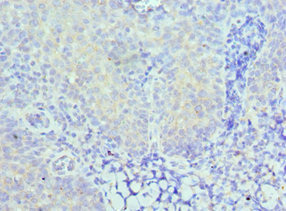
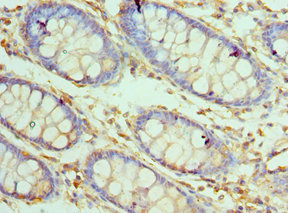
The antibody against CARD8 was raised in rabbit using the Recombinant Human Caspase recruitment domain-containing protein 8 protein (1-200AA) as the immunogen. This antibody exists as a non-conjugated isotype IgG, Antigen affinity purified. This antibody has been validated on ELISA, IHC.

ADC-45171A

The antibody against CARD8 was raised in rabbit using the Recombinant Human Caspase recruitment domain-containing protein 8 protein (1-200AA) as the immunogen. This antibody exists as a non-conjugated isotype IgG, Antigen affinity purified. This antibody has been validated on ELISA, IHC.

$299.00

Number
Order Exclusive Products Now

Request a Quote
High Purity LevelsPrecision and ReliabilityCustomization Options

Specifications


Cat.No ADC-45171A ClonalityPolyclonal
Host SpeciesRabbitTarget NameCARD8
FormLiquidSpecies ReactivityHuman
IsotypeIgGStorage Buffer50% Glycerol, PBS with 0.02% sodium azide, pH7.3.
Purification MethodAntigen affinity purifiedConjugateNon-conjugated
ApplicationELISA, IHCStorageUpon receipt

Immunogen Information


Immunogen DescriptionRecombinant Human Caspase recruitment domain-containing protein 8 protein (1-200AA)Target SpeciesHuman
Immunogen SequenceComplete sequences for the immunogen, target protein, and peptides are available upon request.Uniprot IDQ9Y2G2
Background Information
  • Uniprot Id

    Q9Y2G2

  • Target Species

    Human

  • Target Name

    CARD8

  • Target Full Name

    Caspase recruitment domain-containing protein 8

  • Target Function

    Inflammasome sensor, which mediates inflammasome activation in response to various pathogen-associated signals, leading to subsequent pyroptosis of CD4(+) T-cells and macrophages. Inflammasomes are supramolecular complexes that assemble in the cytosol in response to pathogens and other damage-associated signals and play critical roles in innate immunity and inflammation. Acts as a recognition receptor (PRR): recognizes specific pathogens and other damage-associated signals, such as HIV-1 protease activity or Val-boroPro inhibitor, and mediates CARD8 inflammasome activation. In response to pathogen-associated signals, the N-terminal part of CARD8 is degraded by the proteasome, releasing the cleaved C-terminal part of the protein (Caspase recruitment domain-containing protein 8, C-terminus), which polymerizes to initiate the formation of the inflammasome complex: the CARD8 inflammasome directly recruits pro-caspase-1 (proCASP1) independently of PYCARD/ASC and promotes caspase-1 (CASP1) activation, which subsequently cleaves and activates inflammatory cytokines IL1B and IL18 and gasdermin-D (GSDMD), leading to pyroptosis. Ability to sense HIV-1 protease activity leads to the clearance of latent HIV-1 in patient CD4(+) T-cells after viral reactivation; in contrast, HIV-1 can evade CARD8-sensing when its protease remains inactive in infected cells prior to viral budding. Also acts as a negative regulator of the NLRP3 inflammasome. May also act as an inhibitor of NF-kappa-B activation.; Constitutes the precusor of the CARD8 inflammasome, which mediates autoproteolytic processing within the FIIND domain to generate the N-terminal and C-terminal parts, which are associated non-covalently in absence of pathogens and other damage-associated signals.; Regulatory part that prevents formation of the CARD8 inflammasome: in absence of pathogens and other damage-associated signals, interacts with the C-terminal part of CARD8 (Caspase recruitment domain-containing protein 8, C-terminus), preventing activation of the CARD8 inflammasome. In response to pathogen-associated signals, this part is ubiquitinated by the N-end rule pathway and degraded by the proteasome, releasing the cleaved C-terminal part of the protein, which polymerizes and forms the CARD8 inflammasome (Probable).; Constitutes the active part of the CARD8 inflammasome. In absence of pathogens and other damage-associated signals, interacts with the N-terminal part of CARD8 (Caspase recruitment domain-containing protein 8, N-terminus), preventing activation of the CARD8 inflammasome. In response to pathogen-associated signals, the N-terminal part of CARD8 is degraded by the proteasome, releasing this form, which polymerizes to form the CARD8 inflammasome complex: the CARD8 inflammasome complex then directly recruits pro-caspase-1 (proCASP1) and promotes caspase-1 (CASP1) activation, leading to gasdermin-D (GSDMD) cleavage and subsequent pyroptosis.

  • Target Subcellular Location

    Cytoplasm. Nucleus.; [Caspase recruitment domain-containing protein 8, C-terminus]: Inflammasome.

  • Target Tissue Specificity

    High expression in lung, ovary, testis and placenta. Lower expression in heart, kidney and liver. Also expressed in spleen, lymph node and bone marrow.

  • Target Synonyms

    Apoptotic protein NDPP 1; Apoptotic protein NDPP1; CARD 8; CARD inhibitor of NF kappa B activating ligand; CARD inhibitor of NF kappaB activating ligand; CARD inhibitor of NF kappaB activating ligands; CARD-inhibitor of NF-kappa-B-activating ligand; CARD8; CARD8_HUMAN; CARDINAL; Caspase recruitment domain containing protein 8; Caspase recruitment domain family member 8; Caspase recruitment domain protein 8; Caspase recruitment domain-containing protein 8; DACAR; Dakar; DKFZp779L0366; FLJ18119; FLJ18121; KIAA0955; MGC57162; NDPP 1; NDPP; NDPP1; TUCAN; Tumor up regulated CARD containing antagonist of CASP9; Tumor up regulated CARD containing antagonist of caspase 9; Tumor up-regulated CARD-containing antagonist of CASP9; tumor up-regulated CARD-containing antagonist of caspase nine; Tumor upregulated CARD containing antagonist of CASP9

  • Target Background

    The protein encoded by this gene belongs to the caspase recruitment domain (CARD)-containing family of proteins, which are involved in pathways leading to activation of caspases or nuclear factor kappa-B (NFKB). This protein may be a component of the inflammasome, a protein complex that plays a role in the activation of proinflammatory caspases. It is thought that this protein acts as an adaptor molecule that negatively regulates NFKB activation, CASP1-dependent IL1B secretion, and apoptosis. Polymorphisms in this gene may be associated with a susceptibility to rheumatoid arthritis. Alternatively spliced transcript variants have been described for this gene.

Inquire Rabbit anti-Human CARD8 Polyclonal Antibody Now


AbTriva respects your privacy and protects your personal data in accordance with AbTriva. For more information, please see our data protection statement. *

Notification