• Contact info@abtriva.com for inquiries and orders.
  • Chinese (Simplified)

  • English

  • German

  • Korean

  • Spanish

United States (English / $ USD)

Rabbit anti-Human CHP1 Polyclonal Antibody

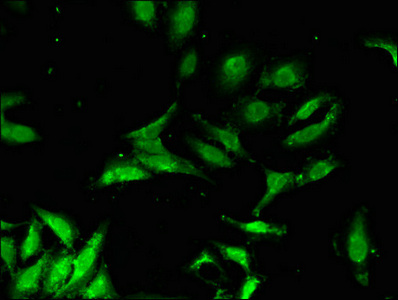
The antibody against CHP1 was raised in rabbit using the Recombinant Human Calcineurin B homologous protein 1 protein (2-195AA) as the immunogen. This antibody exists as a non-conjugated isotype IgG, purified by protein G with a purity greater than 95%. This antibody has been validated on ELISA, WB, IHC, IF.

ADC-11328A

The antibody against CHP1 was raised in rabbit using the Recombinant Human Calcineurin B homologous protein 1 protein (2-195AA) as the immunogen. This antibody exists as a non-conjugated isotype IgG, purified by protein G with a purity greater than 95%. This antibody has been validated on ELISA, WB, IHC, IF.

$299.00

Number
Order Exclusive Products Now

Request a Quote
High Purity LevelsPrecision and ReliabilityCustomization Options

Specifications


Cat.No ADC-11328A ClonalityPolyclonal
Host SpeciesRabbitTarget NameCHP1
FormLiquidSpecies ReactivityHuman, Mouse, Rat
IsotypeIgGStorage Buffer0.01M PBS, 0.03% Proclin 300; Constituents: 50% Glycerol, PH 7.4
Purification Method>95%, Protein G purifiedConjugateNon-conjugated
ApplicationELISA, IF, IHC, WBStorageUpon receipt

Immunogen Information


Immunogen DescriptionRecombinant Human Calcineurin B homologous protein 1 protein (2-195AA)Target SpeciesHuman
Immunogen SequenceComplete sequences for the immunogen, target protein, and peptides are available upon request.Uniprot IDQ99653
Background Information
  • Uniprot Id

    Q99653

  • Target Species

    Human

  • Target Name

    CHP1

  • Target Full Name

    Calcineurin B homologous protein 1

  • Target Function

    Calcium-binding protein involved in different processes such as regulation of vesicular trafficking, plasma membrane Na(+)/H(+) exchanger and gene transcription. Involved in the constitutive exocytic membrane traffic. Mediates the association between microtubules and membrane-bound organelles of the endoplasmic reticulum and Golgi apparatus and is also required for the targeting and fusion of transcytotic vesicles (TCV) with the plasma membrane. Functions as an integral cofactor in cell pH regulation by controlling plasma membrane-type Na(+)/H(+) exchange activity. Affects the pH sensitivity of SLC9A1/NHE1 by increasing its sensitivity at acidic pH. Required for the stabilization and localization of SLC9A1/NHE1 at the plasma membrane. Inhibits serum- and GTPase-stimulated Na(+)/H(+) exchange. Plays a role as an inhibitor of ribosomal RNA transcription by repressing the nucleolar UBF1 transcriptional activity. May sequester UBF1 in the nucleoplasm and limit its translocation to the nucleolus. Associates to the ribosomal gene promoter. Acts as a negative regulator of the calcineurin/NFAT signaling pathway. Inhibits NFAT nuclear translocation and transcriptional activity by suppressing the calcium-dependent calcineurin phosphatase activity. Also negatively regulates the kinase activity of the apoptosis-induced kinase STK17B. Inhibits both STK17B auto- and substrate-phosphorylations in a calcium-dependent manner.

  • Target Subcellular Location

    Nucleus. Cytoplasm. Cytoplasm, cytoskeleton. Endomembrane system. Endoplasmic reticulum-Golgi intermediate compartment. Endoplasmic reticulum. Cell membrane. Membrane; Lipid-anchor.

  • Target Protein Families

    Calcineurin regulatory subunit family, CHP subfamily

  • Target Tissue Specificity

    Ubiquitously expressed. Has been found in fetal eye, lung, liver, muscle, heart, kidney, thymus and spleen.

  • Target Synonyms

    Calcineurin B homolog; Calcineurin B homologous protein; Calcineurin homologous protein; Calcineurin like EF hand protein 1; Calcium binding protein CHP; Calcium binding protein p22; Calcium-binding protein CHP; Calcium-binding protein p22; chp; CHP1_HUMAN; Sid 470; Sid470; SLC9A1 binding protein; SLC9A1BP; Wrch2

  • Target Background

    This gene encodes a phosphoprotein that binds to the Na+/H+ exchanger NHE1. This protein serves as an essential cofactor which supports the physiological activity of NHE family members and may play a role in the mitogenic regulation of NHE1. The protein shares similarity with calcineurin B and calmodulin and it is also known to be an endogenous inhibitor of calcineurin activity.

Inquire Rabbit anti-Human CHP1 Polyclonal Antibody Now


AbTriva respects your privacy and protects your personal data in accordance with AbTriva. For more information, please see our data protection statement. *

Notification