• Contact info@abtriva.com for inquiries and orders.
  • Chinese (Simplified)

  • English

  • German

  • Korean

  • Spanish

United States (English / $ USD)

Rabbit anti-Human CLCN4 Polyclonal Antibody

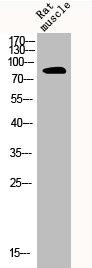
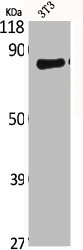
The antibody against CLCN4 was raised in rabbit using the Synthesized peptide derived from the Internal region of Human CLC-4. as the immunogen. This antibody exists as a non-conjugated isotype IgG. The antibody was affinity-purified from rabbit antiserum by affinity-chromatography using epitope-specific immunogen. This antibody has been validated on WB, IF, ELISA.

ADC-39010A

The antibody against CLCN4 was raised in rabbit using the Synthesized peptide derived from the Internal region of Human CLC-4. as the immunogen. This antibody exists as a non-conjugated isotype IgG. The antibody was affinity-purified from rabbit antiserum by affinity-chromatography using epitope-specific immunogen. This antibody has been validated on WB, IF, ELISA.

$167.00

Number
Order Exclusive Products Now

Request a Quote
High Purity LevelsPrecision and ReliabilityCustomization Options

Specifications


Cat.No ADC-39010A ClonalityPolyclonal
Host SpeciesRabbitTarget NameCLCN4
FormLiquidSpecies ReactivityHuman, Mouse, Rat
IsotypeIgGStorage Buffer0.5% BSA and 0.02% sodium azide., Liquid in PBS containing 50% glycerol
Purification MethodThe antibody was affinity-purified from rabbit antiserum by affinity-chromatography using epitope-specific immunogen.ConjugateNon-conjugated
ApplicationELISA, IF, WBStorageUpon receipt

Immunogen Information


Immunogen DescriptionSynthesized peptide derived from the Internal region of Human CLC-4.Target SpeciesHuman
Immunogen SequenceComplete sequences for the immunogen, target protein, and peptides are available upon request.Uniprot IDP51793
Background Information
  • Uniprot Id

    P51793

  • Target Species

    Human

  • Target Name

    CLCN4

  • Target Full Name

    H(+)/Cl(-) exchange transporter 4

  • Target Function

    Strongly outwardly rectifying, electrogenic H(+)/Cl(-)exchanger which mediates the exchange of chloride ions against protons. The CLC channel family contains both chloride channels and proton-coupled anion transporters that exchange chloride or another anion for protons. The presence of conserved gating glutamate residues is typical for family members that function as antiporters.

  • Target Involvement

    Mental retardation, X-linked 49 (MRX49)

  • Target Subcellular Location

    Early endosome membrane; Multi-pass membrane protein. Late endosome membrane; Multi-pass membrane protein. Endoplasmic reticulum membrane; Multi-pass membrane protein. Lysosome membrane; Multi-pass membrane protein. Recycling endosome membrane; Multi-pass membrane protein.

  • Target Protein Families

    Chloride channel (TC 2.A.49) family, ClC-4/CLCN4 subfamily

  • Target Tissue Specificity

    Abundant in skeletal muscle and also detectable in brain and heart.

  • Target Synonyms

    Chloride channel 4; Chloride channel protein 4; Chloride channel; voltage sensitive 4; Chloride transporter ClC-4; ClC 4A; ClC-4; CLC4; ClC4A; CLCN4; CLCN4_HUMAN; H(+)/Cl(-) exchange transporter 4; MGC163150

  • Target Background

    The CLCN family of voltage-dependent chloride channel genes comprises nine members (CLCN1-7, Ka and Kb) which demonstrate quite diverse functional characteristics while sharing significant sequence homology. Chloride channel 4 has an evolutionary conserved CpG island and is conserved in both mouse and hamster. This gene is mapped in close proximity to APXL (Apical protein Xenopus laevis-like) and OA1 (Ocular albinism type I), which are both located on the human X chromosome at band p22.3. The physiological role of chloride channel 4 remains unknown but may contribute to the pathogenesis of neuronal disorders. Alternate splicing results in two transcript variants that encode different proteins.

Inquire Rabbit anti-Human CLCN4 Polyclonal Antibody Now


AbTriva respects your privacy and protects your personal data in accordance with AbTriva. For more information, please see our data protection statement. *

Notification