• Contact info@abtriva.com for inquiries and orders.
  • Chinese (Simplified)

  • English

  • German

  • Korean

  • Spanish

United States (English / $ USD)

Rabbit anti-Human CREBBP Polyclonal Antibody

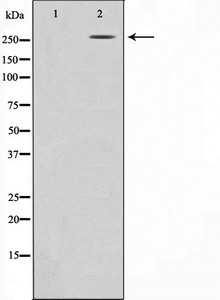
The antibody against CREBBP was raised in rabbit using a synthesized peptide derived from Human CBP as the immunogen. This antibody exists as a polyclonal antibody to the immunogen, Antigen affinity purified. This antibody has been validated on ELISA, WB, IHC, IF.

ADC-43023A

The antibody against CREBBP was raised in rabbit using a synthesized peptide derived from Human CBP as the immunogen. This antibody exists as a polyclonal antibody to the immunogen, Antigen affinity purified. This antibody has been validated on ELISA, WB, IHC, IF.

$295.00

Number
Order Exclusive Products Now

Request a Quote
High Purity LevelsPrecision and ReliabilityCustomization Options

Specifications


Cat.No ADC-43023A ClonalityPolyclonal
Host SpeciesRabbitTarget NameCREBBP
FormLiquidSpecies ReactivityHuman, Mouse, Rat
Storage BufferPH 7.4, 0.02% sodium azide and 50% glycerol., 150mM NaCl, Rabbit IgG in phosphate buffered salinePurification MethodAntigen affinity purified
ApplicationELISA, IF, IHC, WBStorageUpon receipt

Immunogen Information


Immunogen DescriptionA synthesized peptide derived from Human CBPTarget SpeciesHuman
Immunogen SequenceComplete sequences for the immunogen, target protein, and peptides are available upon request.Uniprot IDQ92793
Background Information
  • Uniprot Id

    Q92793

  • Target Species

    Human

  • Target Name

    CREBBP

  • Target Full Name

    CREB-binding protein

  • Target Function

    Acetylates histones, giving a specific tag for transcriptional activation. Also acetylates non-histone proteins, like DDX21, FBL, IRF2, MAFG, NCOA3, POLR1E/PAF53 and FOXO1. Binds specifically to phosphorylated CREB and enhances its transcriptional activity toward cAMP-responsive genes. Acts as a coactivator of ALX1. Acts as a circadian transcriptional coactivator which enhances the activity of the circadian transcriptional activators: NPAS2-ARNTL/BMAL1 and CLOCK-ARNTL/BMAL1 heterodimers. Acetylates PCNA; acetylation promotes removal of chromatin-bound PCNA and its degradation during nucleotide excision repair (NER). Acetylates POLR1E/PAF53, leading to decreased association of RNA polymerase I with the rDNA promoter region and coding region. Acetylates DDX21, thereby inhibiting DDX21 helicase activity. Acetylates FBL, preventing methylation of 'Gln-105' of histone H2A (H2AQ104me). Functions as a transcriptional coactivator for SMAD4 in the TGF-beta signaling pathway.

  • Target Involvement

    Rubinstein-Taybi syndrome 1 (RSTS1)

  • Target Subcellular Location

    Cytoplasm. Nucleus. Note=Recruited to nuclear bodies by SS18L1/CREST. In the presence of ALX1 relocalizes from the cytoplasm to the nucleus.

  • Target Research Area

    Cancer

  • Target Synonyms

    CBP; CBP_HUMAN; CREB binding protein; CREB-binding protein; Crebbp; Cyclic AMP responsive enhancer binding protein; KAT3A; RSTS; RTS; Rubinstein Taybi syndrome

  • Target Background

    This gene is ubiquitously expressed and is involved in the transcriptional coactivation of many different transcription factors. First isolated as a nuclear protein that binds to cAMP-response element binding protein (CREB), this gene is now known to play critical roles in embryonic development, growth control, and homeostasis by coupling chromatin remodeling to transcription factor recognition. The protein encoded by this gene has intrinsic histone acetyltransferase activity and also acts as a scaffold to stabilize additional protein interactions with the transcription complex. This protein acetylates both histone and non-histone proteins. This protein shares regions of very high sequence similarity with protein p300 in its bromodomain, cysteine-histidine-rich regions, and histone acetyltransferase domain. Mutations in this gene cause Rubinstein-Taybi syndrome (RTS). Chromosomal translocations involving this gene have been associated with acute myeloid leukemia. Alternative splicing results in multiple transcript variants encoding different isoforms.

Inquire Rabbit anti-Human CREBBP Polyclonal Antibody Now


AbTriva respects your privacy and protects your personal data in accordance with AbTriva. For more information, please see our data protection statement. *

Notification